If you’ve ever felt overwhelmed by the visual side of book marketing—cover mockups, social media graphics, reels, and everything in between—this episode will feel like a breath of fresh air.
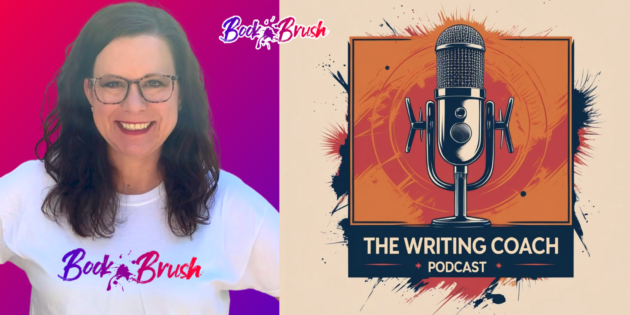
In this conversation, I’m joined by Kathleen Sweeney, co-founder of Book Brush, a visual marketing platform built specifically for authors. We talk about how Book Brush evolved by listening to writers, why so many authors struggle with consistency and branding, and how to think about marketing before your book launches—not after.
We also dig into the difference between DIY marketing and done-for-you support, when it makes sense to outsource, and how authors can stop trying to be “everything” and focus on what actually matters: writing great books.
If you want book marketing to feel clearer, lighter, and more manageable, this episode is for you.
In this episode, you’ll learn:
- How authors can stop trying to do everything and focus on writing, without their marketing falling apart
- How Book Brush accidentally became one of the most author-focused marketing tools by listening to what writers actually wanted
- Why visual marketing feels so overwhelming for authors—and how to simplify it without losing quality
- The biggest social media mistakes authors make (including the infamous random cactus post)
- Why consistency and brand clarity matter more than posting every day
- When authors should start thinking about marketing (hint: way earlier than launch day)
- The difference between DIY marketing, à la carte help, and full-service support—and how to know which one is right for you
Check out the episode now!
Audio:
Video:
The Writing Coach Episode #220 Show Notes
Check out all these great Book Brush links:
Book Brush Website: https://bookbrush.com/
Book Brush Social Media Management: https://bookbrush.com/social-media-management/
Book Brush Custom Cover Design: https://bookbrush.com/customcovers/
Book Brush Hourly Concepts (for individual “done for you” items like reels): https://bookbrush.com/hourly-concepts/
Book Brush YouTube Channel: https://www.youtube.com/@BookBrush
Get a FREE copy of Kevin’s book: The Science (and Magic) of Writing Retreats.
Buy a copy of Kevin’s new book: The Frustrated Writer’s Colouring Book.

Enroll now in the February 2026 edition of Story Plan Intensive:
The Writing Coach Episode #220 Transcript
Podcast: Play in new window | Download
Subscribe: RSS
Today on the podcast, I have Kathleen Sweeney. Kathleen, welcome to the Ready Coach Podcast.
Hey, I’m so excited to be here.
Take us back to the origins. Take us back to the beginning of Book Brush. How did it all begin?
You know, it’s kind of a fun story. What we thought we were going to do was build an email platform for authors—kind of like a Mailchimp, but for authors. We had this teeny, tiny image-creation piece. Guess what? The authors liked the image-creation piece.
So over time, we shut down the email service. It was a fun idea, but it didn’t pan out. Instead, we really built up the image-creation part. It was so, so simple at the beginning, and authors were like, “That’s really cool.” You know, authors tell you where they want you to go.
So we just kept building and building, renamed it Book Brush, and I’ll say the rest is kind of history—but that isn’t even what we thought we were going to do.
That’s amazing. I think there’s a huge lesson there for small businesses, but for authors as well—listening to what your audience wants. You might have a vision for where you’re going, but you also have to be willing to pivot to respond to the needs of your clients, your audience, or your readers. Does that sound right to you?
Yeah, absolutely. I mean, you can have your plan and be straight as an arrow—but guess what? That might not be what everybody wants.
So there are lots of image-creation tools out there. Every time I have to make a blog post, I’m like, “Am I doing this in Canva? Am I doing this in Photoshop?” There are a zillion different tools out there. What makes Book Brush focused on authors—and unique for authors?
I love that you asked that, because I love talking about Book Brush. Like you said, there are lots of design tools out there, and many of them are great—but they’re not focused specifically on authors.
People mention Canva a lot. They call us “Canva for authors.” What we did was drill down into all the authory things and really beef those up. For example, 3D versions of your book—we have about 300 of them. Physical books, ebooks, books on phones, books on devices with hands, all kinds of cool things.
So every time you turn around in Book Brush, it’s something author-centered. I think that really helps authors, because everything is already there—more so than in tools made for everyone, where you’re constantly asking, “Which parts are actually for me?”
And yes, I’m making authory a word. I’m not sure it is, but it should be.
Well, let’s dig into authory. Why were authors your target audience to begin with? Have you always had an interest in books and writing, or where did that focused audience come from?
Two answers to that. Ever since I won the reading contest in first grade, I’ve been all in on reading—but I’m never going to be an author. So I need everyone else to keep writing so I can keep reading.
And then the co-founder and I have been friends since 1998—so a very long time. He started in the Christian niche and built up a whole email platform, which is why he was going to build the author side of the email platform. But that just wasn’t what authors wanted.
So it all kind of came together. When he wanted to work in the author space, he knew I had this love of books, and he said, “You’re the person I want to bring over.” We’ve been friends for a really long time.
You say you’ll never write a book. Give me twelve hours and we’ll have The Book Brush Storybook ready to go on Amazon.
Believe me, as a writing coach, talent and interest matter—but writing is also a skill set with foundational elements that anyone can learn and execute well, just like building a platform or an online tool like Book Brush.
I should never say never. Because the moment you say never, here it comes—like, “Oh, my kids would never do that,” and then here they come doing exactly that thing. And you’re like, “Well, now I look really stupid.”
So I guess we never know.
You mentioned tools like the 3D image generator. First off, let me say the thing that really blew my mind about Book Brush: I’ve used all kinds of tools to generate 3D book cover images over my publishing career, but all of them produced one image at a time.
Even working quickly, it’s five to fifteen minutes per image. With Book Brush, it’s like—twelve images. Instantly.
As a busy coach and a busy author, I’m always looking to save time. When I saw I could create a dozen amazing images in one click, I thought, “Okay, I need to become friends with Kathleen. This tool is awesome.”
So tell me about that functionality.
Well, the technical term here is lickety-split. You want to do these lickety-split.
You bring in your flat 2D cover, and with a click, you magically drop it into whichever format you want and download it. You can choose lots and lots at once, and you get the book facing all kinds of different directions.
Most of the physical books don’t require a spine, which is great—you can just use that front 2D image and make it look fantastic. We do have options with spines, because people asked for them. You can bring your own spine in, or even create one inside Book Brush.
I think that’s one of the most attractive features. If you’re spending—even if you’re good at it—five minutes per image, imagine what other people are spending. With Book Brush, you can create standalone images or graphics for promotions all over the place.
So we’ve talked about the 3D book cover generator—but that’s really just the beginning. You’ve got all sorts of other tools in Book Brush that authors can use to promote their books and even create covers. Tell us about the different tools you have inside Book Brush.
The Custom Creator is our flagship tool—that’s the first thing we built. You can create 3D images there and all the assets you need for social media.
For example, if you see the Facebook icon, all the image sizes are there—correct dimensions, correct pixels. No more Googling, “What size do I need?”
All the major platforms are covered. You can also design swag—bookmarks, coasters, book plates, stickers—then send them to a printer.
You can design Amazon A+ Content yourself. When authors gained access to their own KDP dashboards, it was really hard for them to build those three-stack modules cleanly. Now you design it as one piece, and Book Brush chops it perfectly into the three images you need for upload.
We also added animation and video backgrounds, so you can create reels and motion graphics—which are gold on social media because motion catches the reader’s eye.
People kept saying, “We like making things here. We want to make our own covers.” So we built the Cover Creator. It handles ebook, paperback, and hardcover formats. You just enter your trim size, page count, and paper type, and it gives you exactly what you need for Amazon or IngramSpark—no math required.
There’s also a Trailer Creator, a Box Set Creator—no elves making real boxes, sadly, just images—but still incredibly useful for marketing. Lots and lots of functionality.
One thing I really like is that a lot of authors—especially indie authors—are handy. You have to figure out how to get things done affordably.
What I love about Book Brush is that it’s one tool. I don’t need CapCut for reels, Canva for social media, something else for 3D covers. It’s all in one place. I learn one platform, spend a bit of time getting comfortable, and then I can produce everything I need visually.
That was exactly our goal. We wanted it to be easy, without a steep learning curve.
You can get incredible results with Photoshop—but it’s hard to learn and not for everyone. And it’s expensive. I don’t even use Photoshop.
Yeah, because it’s part of the Adobe suite. You just want one tool, but you end up paying for everything—like wanting Microsoft Word but being forced to pay for Excel, which you hate.
Photoshop is definitely not for the indie author who wants to create a cover or a social media image once in a while.
Exactly. We wanted tools that make people who feel like they have no design skills look good. You can drop your book in, use one of the many pre-made templates, personalize it, download it—and suddenly you look really polished on social media. And you can say, “I did that myself.”
That’s huge. I can put images together, but I’m always second-guessing myself: Is this the right font? Should the book be positioned differently?
With your templates, the designer has already done the thinking. I just drop my cover in and go. It removes so much pressure—authors already have to be everything and do everything.
Exactly. You write a book, and suddenly you’re a jack-of-all-trades. Book Brush makes that part less stressful—and still gets great results.
So Book Brush includes a cover designer, but what if I don’t have the time or confidence to design my own cover—even with a great tool? What should I do?
You’re not alone. We offer custom cover design services, and honestly, if it’s in your budget, you may be happier in the long run working with a professional.
That doesn’t mean you can’t do it yourself—but we’ve designed covers for many authors who say, “I just want to write.”
You work with a project manager—usually me—and a designer. We call it guilt-free, because many authors don’t advocate for themselves with designers. They end up with a cover they don’t love because they didn’t want to hurt anyone’s feelings.
We hit 100,000 users last year, and we’ve seen this a lot. Our process ensures you get a cover you love—and one readers love too.
We talked about learning the tool, and you have an incredible library of training material—mostly hosted by you. Is that intentional?
Mostly me, yes. We’re a small company with big dreams—about six and a half of us. If you see a YouTube video, it’s probably me.
I’ve been here since the beginning, and I love showing people what’s possible—even if it’s new to them, not to me. I’ve done probably 350 Zooms with author groups, walking them through Book Brush. It’s always fun.
So yes—it’s me.
Is that a conscious decision—to be so accessible? You’re in the videos, meeting with groups, and incredibly open to conversation. Is that part of how you want to run the company?
Both a conscious choice and a necessity. We’re a small, small group of people, and I’ve been here since the beginning. I know the program inside and out, and I can usually see when there’s a bug—or when we can make an improvement.
And I’ll tell you, our small dev team is probably like, “Oh no, here she comes again with an idea.” And I’m like, “Guys, I bet we can make this even better.”
For example, in one of our tools we just added a new search feature where you can type in a color and it shows all the images that include that color—like pink. I was absolutely nerding out about it, and that feature just launched last Wednesday.
So we’re always looking at what we can add or improve. And yes, we want to be right there—easy to access. I still handle a lot of help desk tickets myself, and someone once wrote back and said, “I have never giggled while reading and corresponding with a help desk person.”
That’s because I always tell myself—and anyone else helping—smile while you’re typing. People can tell. So yes, we’re very accessible. Partly because we’re small and need to be, but also because that’s the image we want to put out into the world.
I love it. I think a lot of authors—and indie authors in particular—are frustrated with Amazon’s monopoly. In a world where it often feels like Amazon or Walmart or nothing, I really like supporting small businesses focused on authors.
That’s another thing I think is fantastic about your company. You’re not some nameless corporation—you’re a group of people working very, very hard to serve my audience.
I should also give a shout-out to author Sandy Day, a client of mine and the author of Odd Mom Out. She’s the one who turned me on to Book Brush. She said, “Kevin, Book Brush is incredible. You have to check it out.” So shout-out to Sandy.
But yes, I really appreciate the personal nature of the company.
Well, thank you. That’s exactly what we want to hear.
Okay, so as someone who’s basically an expert in creating social media images, are there things you see authors doing wrong? And how can authors get more consistent in how they promote their books visually?
Yes, I have a couple of suggestions. I could give a whole laundry list, but one big thing is consistency—and that often comes from batching.
If you plan to post twice a week, at minimum, you can prepare those in advance. Do two weeks at a time. Make four images and schedule them. That way, you’re not sitting at dinner thinking, “Ugh, I didn’t post today,” and feeling bad about it. It’s already done.
The other thing is variety. You don’t want to post the same glamor shot of your book every time or constantly say, “Buy my book.” That gets tiresome. Instead, think about creating an experience on your page.
Mix in graphics about the book, character posts, snippets, quotes, reader reviews, trope graphics—with those adorably flirty arrows we have, by the way. When you rotate through those, it doesn’t feel like, “Oh, the book is on sale for 99 cents again.”
Stay on brand, too. Don’t post about a cactus if your book is a beachy, clean romance. Get your brand dialed in, rotate your content, and stay consistent.
Okay, that was more than one tip—but I wanted to pack as much in as I could.
Did I mishear you, or did you just say, “Don’t post about a cactus”?
Yes! Some people are like, “Oh, I’m on vacation,” and that’s fine—but if you write sci-fi, that random post doesn’t help.
Readers are detectives now. When they look you up and scroll your social media, they’re trying to find your vibe. If they see turtles eating lettuce, then a cactus, then one post about your book, the signal is muddy.
So stay on brand—especially on your author pages.
I love that. I tell my clients something similar. There’s this misconception that social media is about posting once and immediately selling books.
What I usually say is: social media is about what happens after someone discovers you. They go to your Instagram and think, “Oh, this is clearly a mystery writer,” or “This person writes historical fiction.” It signals professionalism and longevity.
It’s not just about selling—it’s about brand-building. You’re saying, “I know this genre. I deliver what you like. Trust me.”
And as we know in marketing, it’s know, like, and trust—and trust is huge. Social media helps build that foundation. It’s a mindset shift authors really need to make.
Exactly. Think about the experience you’re creating. Step back and look at your feed. What vibe do you get?
Is it pink and purple flowers? Is it dark and gritty with crime scene tape? Both are great—but not at the same time. One is for one author, the other for a different author.
When someone discovers you and checks out your page, there should be something to sink into. If instead they see one cactus and a post from six months ago, they move on.
I’m curious: so many authors say, “I’ll worry about marketing when the book comes out.” For a first-time author, when do you recommend they start exploring a tool like Book Brush? Is it launch day—or earlier?
Probably way before that. I think there are a couple of parts to this. You want to have your cover reveal and build momentum, and you want your author pages ready.
Book Brush can create a lot of graphics—even before your book is finished—to help set the tone and seed your author brand. If you’re writing in a particular niche, you can start posting about that niche early.
And even within romance—oh my gosh—there’s a whole spectrum, from sweet and clean to spicy. So it’s important to define where you fit. The sooner you explore that and get your pages set up, the better.
If you’re creating Facebook and Instagram author pages, use similar handles so it’s easy for people to find you. You can post just once a week at first—that’s fine. It may not get seen much, and that’s okay. But when people do find you, there’s a longer tail there.
So I’d say don’t delay. And of course, if you don’t have your cover yet and need cover design, that’s another reason to get started early.
Absolutely. Marketing—social media, any kind of marketing—has a learning curve, like anything else. I always say: start now.
Even if your book is coming out a year from now, start playing with this stuff. Start posting. And if those early posts don’t get views or likes, that’s actually a good thing—because you’re probably not amazing at it yet.
Get into Book Brush early. Start experimenting. That way, when your book launches, you’ve already built the platform, you’ve had that long tail, and you actually know what you’re doing. You’re not launching a book and learning how to market it at the same time.
Exactly. Get in there, get educated, get handy, and get comfortable using everything.
Well, it’s January—the beginning of the year. A lot of authors are looking at their careers, their businesses, their lives, and asking, “What do I want to achieve in 2026?”
What would you say to authors who are in planning mode right now and setting goals for the year?
This January, we actually talked about this before we went live—I was meal prepping and doing all those things, thinking, “What can I do for myself and my life?”
I think it’s a great time to look at your plans for January and all of 2026 and decide what you want to tackle yourself and what might be better outsourced.
For example, we offer a full-service social media option. If that’s not something you want to take the wheel on—but you know you need it—this could be the time to put that in place.
You can say, “For 2026, my social media is going to rock—and I’m not the one rocking it. Someone else is taking the wheel.” And that’s amazing.
So you’ll actually run people’s social media for them?
We do. Of course, we have all the DIY tools with over 100,000 users. But we also hear from people through the help desk and webinars who say, “I just want to write. I don’t want to do all these other things—but I know I need them.”
As a writing coach, I’m sure you hear that a lot: “I thought I was just going to write this book.”
So we have a full-service option where we take over Facebook and Instagram. We create all the posts, write captions, handle hashtags—if hashtags give you anxiety, no problem, we’ve got it covered.
It’s not for everyone, but some authors absolutely love it. One woman emailed me and said she was scrolling Facebook, saw an image she loved, and then realized—it was hers. We had posted it for her. She was thrilled. That’s exactly how it should feel.
So if I’m an author who likes to DIY some things but I’m short on time, how do I know when it’s the right moment to switch from “I’ll do it myself” to “Please just do this for me”?
It’s different for everyone. If you try the DIY route and love it, great—maybe that’s your thing.
But if you also like sleeping at night—and I do—there may just not be time. Writing is something you really have to do yourself. Social media? That’s something you can outsource.
If something has to give and you know you need a social media presence, that might be the moment. We talk with people all the time, walk through what it would look like, show examples from their genre, and see if it’s a good fit.
There is a price tag, of course—but for the right person, it makes sense. I never want to tell someone not to explore it. Try it, see how it feels.
And if you have several books, it’s even better. Not everyone sees every post, so we rotate through your backlist, feature different books at different times, and keep everything fresh. We really love the full-service side too.
When you say “full service,” does that mean I’m making the images and you’re posting them?
No—we do everything.
Some full-service clients still dabble and create a few things themselves, but for the most part, we handle it all. We usually start over email, but we can meet on Zoom to plan the month.
In a typical setup, we create five static graphics and one reel per week—so six posts a week. That’s fantastic for the author, but pretty overwhelming to do on your own.
We handle the professional graphics, content rotation—engagement posts, snippets, character posts—everything. We build the content calendar, write captions, add hashtags, schedule and post across platforms.
If you have sales or a new release coming up, you just let us know, and we build that into the graphics. It’s very streamlined.
So I hand it all over to you, sleep at night, and focus on my writing—while you create a beautiful marketing campaign for me.
Exactly. And we make sure it’s on brand for you. We learn about your vibe.
If you’re a cat person and want some cat images sprinkled in—great. Tea, coffee, whatever your thing is—we can include that. It still feels personal. It still feels like you. You’re just not the one doing it.
One thing I’ve noticed is the video reels you create. It’s cool to post a 3D image of a book or someone reading on a beach—but the reels feel like little stories. Almost like mini films or clips from the book. I love that.
Tell us about the video side of things.
We are amazing at that. Our vertical videos—the reels—are really on point.
There’s also a middle ground between DIY and full service called Hourly Concepts, where you can order things à la carte. So if you want to handle your own static graphics but order some reels, you can do that.
The reels are like mini book trailers—around 30 seconds, vertical, perfectly sized for your phone. You’re maximizing the real estate. They include text animations, background video, music—everything.
When you combine music, motion, animation, and your book, you’re hitting different sensory triggers. Something will grab the viewer—whether it’s the music, the movement, or the visuals—and it’s all branded to your genre. Cozy mystery feels cozy. Gritty thrillers feel gritty.
I honestly love them. I could sit and watch them all day—but then nothing else would get done, and you wouldn’t have any YouTube tutorials from me. So I try to restrain myself. But they’re fantastic.
Amazing. Fantastic.
Well, if folks have watched or listened to this and they’re thinking, “Okay, I’ve got to check out Book Brush”—and I highly recommend they do—I’ll just say this: when Sandy turned me on to your tool, I checked it out and instantly thought, Oh my god, I love this.
And then I met you, and I was like, Oh my god, I love her.
I really want to support this tool and your company because I like you, I like your approach, and I love that your tool exists for the people I work with. My job is to make life easier for writers, and knowing that you offer a full spectrum—from DIY all the way up to “we’ll do everything for you”—is huge for me.
I work with authors who want to do everything themselves, and others who want to do nothing themselves. So the fact that you have different tiers and options is incredibly exciting.
So where can we send folks to check out Book Brush and learn more?
BookBrush.com. Just head to the website. It’s an online platform, which is great—anytime we make updates or add new features, they’re instantly available. There’s no app to download or anything like that.
You can also check out the social media link there for our full-service option, and I’ll make sure you have that. You can probably include it in the captions or show notes.
And honestly, if you’re just thinking, “I’m not sure,” email us. It’s support@bookbrush.com. I answer a lot of those myself. We’re a small team.
You can say, “Hey, I heard Kathleen on Kevin’s podcast, and here’s what I want to know,” and we can always hop on a call and figure out what suits you best.
Kathleen, thank you so much for taking the time to join me on the Ready Coach Podcast today.
I had a great time. Thanks for having me.
—
Kevin T. Johns is a writing coach who helps authors stop struggling in isolation and start finishing books with clarity, confidence, and momentum. Book a consultation call with him here.