In my recent article, How to Become a Freelance Writer, I argued that the faster a freelancer writer can produce work, the more money they will ultimately make.
It’s not any different for fiction authors.
The more books you write and publish, the more books you will sell, and the quicker you will build your author career.
Writing fast, while still producing high quality work, however, isn’t easy an easy task. Below you’ll find 5 books that will help you out.
Aaron’s book explores the significant role factors like writing location and time of day can play in producing writing output. Through a structured productivity analysis, Aaron determined where, when, and what length of writing session produced her quickest writing. Using what she learned, she was able to take her writing output from 2000 words a day, to 10,000. Not bad, eh?
As he explained when I interviewed him in this episode of The Writing Coach podcast, Steve Windsor prefers to write his books using week-and-a-half long marathon writing sessions. In this book (part of his 9 Day Novel series of writing instructional books), he explains how you can do it too! This book as a particular emphasis on the importance of story structure.
Cox’s book outlines a training system for building up your writing speed via “micro sprints”. Micro-sprint are small blocks of time dedicated to getting as many words written as possible. By building up those blocks through a structured program, Cox was able to significantly improve his writing output. As an extra cool bonus, he even created an iPhone app to support his faster writing system!
Monica Leonelle is another Writing Coach podcast veteran who knows a thing or two about productivity. In this book, she explains the process of experimentation, including a diary chronically the writing of 100K words in just two months time, that led to her significantly increasing her writing productivity. Leonelle approaches increased productivity from a “growth hacker” perspective focusing on data analysis and tracking to improve output. Check out the original blog post that inspired the book here.
In this short ebook, Laura Roberts explains how she wrote her first novel in just three days(!!!). Roberts’ writing has a distinct voice that spices things up nicely, and this book provides a surprisingly in-depth discussion of food prep necessities when banging out a book over a long weekend.
Kevin T. Johns is an author, writing coach, and ghostwriter. He has helped hundreds of writers from around the world get ideas out of their heads, onto the page, and into readers’ hands. Get your free copy of his short guide for authors below.
[/feature_box]
[optin_box style=”21″ alignment=”center” email_field=”email” email_default=”Enter your email address” email_order=”2″ integration_type=”aweber” double_optin=”Y” thank_you_page=”https://www.kevintjohns.com/newsletter-confirmation/” list=”3224178″ name_field=”name” name_default=”Enter your first name” name_order=”1″ name_required=”Y” opm_packages=””][optin_box_field name=”headline”]Do you know the 12 ESSENTIAL steps to creating a novel readers will love?[/optin_box_field][optin_box_field name=”paragraph”]PHA+RHJvcCB5b3VyIG5hbWUgYW5kIGJlc3TCoGVtYWlsIGFkZHJlc3MgaW50byB0aGUgZm9ybSBiZWxvdyB0byBhY2Nlc3MgeW91ciBmcmVlIGNvcHkgb2YgPHN0cm9uZz48ZW0+VGhlIE5vdmVsIFdyaXRlcidzIFJvYWRtYXA8L2VtPjwvc3Ryb25nPiwgYSBzaG9ydCBhbmQgc2ltcGxlIGd1aWRlIHRvIHdyaXRpbmcgeW91ciBmaXJzdCBib29rLiBJdCdsbCB3YWxrIHlvdSB0aHJvdWdoIHRoZcKgPHN0cm9uZz4xMiBlc3NlbnRpYWwgc3RlcHM8L3N0cm9uZz7CoHRvIHdyaXRpbmcgYW5kIHB1Ymxpc2hpbmcgYSBub3ZlbCByZWFkZXJzIHdpbGwgZmFsbCBpbiBsb3ZlIHdpdGguwqA8L3A+Cg==[/optin_box_field][optin_box_field name=”privacy”]I value your privacy and would never spam you[/optin_box_field][optin_box_field name=”top_color”]undefined[/optin_box_field][optin_box_button type=”0″ button_below=”Y”]Send me the Roadmap >>[/optin_box_button] [/optin_box]
As a writing coach, it’s a rare week that goes by without someone asking me whether or not they should purchase Scrivener.
Here’s my response:
Scrivener is a fantastic program for writers and novelists. In fact, a mobile app version was just released that makes it an even more useful writing tool for authors on the go.
So, just to be clear: Scrivener is a top notch writing program.
BUT…
It’s not the magical solution to your writing woes that you’ve been looking for.
Software will have zero impact on whether or not you write a great book.
There is no one tool or one technique for writing a masterpiece. There is no secret answer for you to uncover or tool for you to purchase.
As Seth Godin recently put it,“There isn’t a magic formula, the perfect combination of tools to use or to avoid. What matters more is the decision to matter.”
Hemingway wrote his unforgettable novels and short stories while standing up at a typewriter.
Jack Kerouac typed On the Road as one long unbroken paragraph on a 120-foot scroll.
Virginia Woolf wrote To the Lighthouse with a pen and paper.
Shakespeare crafted his plays using a quill made from goose feathers dipped in an inkwell.
The Marquis De Sade wrote 120 Days of Sodom in tiny letters on a 12 meter roll of paper while imprisoned.
John Milton composed Paradise Lost by memory and then dictated it to friends.
Truman Capote wrote Breakfast at Tiffany’s using a pencil while always lying down on a couch or bed.
Vladimir Nabokov wrote using 3 x 5 inch cards, paper-clipped and stored in boxes.
There is no “right answer”.
There’s no “secret technique”.
Writing software isn’t the solution.
Each of these master writers found a system that worked for them, given their unique circumstance, and put it to work.
Kevin T. Johns is an author, writing coach, and ghostwriter. He has helped hundreds of writers from around the world get ideas out of their heads, onto the page, and into readers’ hands. Get your free copy of his short guide for authors below.
[/feature_box]
[optin_box style=”21″ alignment=”center” email_field=”email” email_default=”Enter your email address” email_order=”2″ integration_type=”aweber” double_optin=”Y” thank_you_page=”https://www.kevintjohns.com/newsletter-confirmation/” list=”3224178″ name_field=”name” name_default=”Enter your first name” name_order=”1″ name_required=”Y” opm_packages=””][optin_box_field name=”headline”]Do you know the 12 ESSENTIAL steps to creating a novel readers will love?[/optin_box_field][optin_box_field name=”paragraph”]PHA+RHJvcCB5b3VyIG5hbWUgYW5kIGJlc3TCoGVtYWlsIGFkZHJlc3MgaW50byB0aGUgZm9ybSBiZWxvdyB0byBhY2Nlc3MgeW91ciBmcmVlIGNvcHkgb2YgPHN0cm9uZz48ZW0+VGhlIE5vdmVsIFdyaXRlcidzIFJvYWRtYXA8L2VtPjwvc3Ryb25nPiwgYSBzaG9ydCBhbmQgc2ltcGxlIGd1aWRlIHRvIHdyaXRpbmcgeW91ciBmaXJzdCBib29rLiBJdCdsbCB3YWxrIHlvdSB0aHJvdWdoIHRoZcKgPHN0cm9uZz4xMiBlc3NlbnRpYWwgc3RlcHM8L3N0cm9uZz7CoHRvIHdyaXRpbmcgYW5kIHB1Ymxpc2hpbmcgYSBub3ZlbCByZWFkZXJzIHdpbGwgZmFsbCBpbiBsb3ZlIHdpdGguwqA8L3A+Cg==[/optin_box_field][optin_box_field name=”privacy”]I value your privacy and would never spam you[/optin_box_field][optin_box_field name=”top_color”]undefined[/optin_box_field][optin_box_button type=”0″ button_below=”Y”]Send me the Roadmap >>[/optin_box_button] [/optin_box]
The dichotomy between plan and execution can be a difficult and frustrating concept to come to terms with. In fact, I’m certain it’s why many people give up on artistic endeavors like writing a novel.
Part of the process of turning pro, as an author or writer, involves coming to terms with the fact that the final version of the story/magazine article/blog post that ends up on the page or screen is never as good as the version you had in your head.
Working as a writing coach, I have spoken with many writers who successfully completed NaNoWriMo (writing a 50K word manuscript in 30 days), but never published the book they wrote. The manuscript didn’t turn out as perfect as they had hoped or intended, and rather than revising their first draft and improving on its weaknesses, they put the book in a drawer and gave up on it.
As Ira Glass notes in his much-quoted observation, “All of us who do creative work, we get into it because we have good taste. But there is this gap. For the first couple years you make stuff, it’s just not that good. It’s trying to be good, it has potential, but it’s not. But your taste, the thing that got you into the game, is still killer. And your taste is why your work disappoints you.”
This sense of disappointment can be crippling if a writer has not prepared themselves for it. Until you accept your own imperfections as a writer, you’ll forever be chasing the ‘perfect version’ of your story, and thus forever disappointed by your creative output.
When grappling with my own gap between taste and ability, I often return to the concept of “mimesis” as discussed by Plato and Aristotle. For these ancient Greek thinkers, mimesis meant to copy or imitate.
According to Plato, all things in the material world including art were a lesser copy of the more perfect metaphysical version of that thing or concept. A chair here on earth, no matter how beautifully constructed, would never be as perfect as the true version of that chair in Heaven. The same went for poetry.
Aristotle argued, contrary to Plato, that “the arts have a certain healing power because they are imaginative, and that the healing catharsis of tragedy is generated only because they are imitative and detached from reality.” (New World Encyclopedia entry on “mimesis”)
As such, rather than getting down on yourself and your art and labeling it as a poor imitation of what you intended to create, I urge you to embrace the dissidence between the real and the imagined. You are never going to achieve that perfect vision that exists in your mind, but, as Aristotle notes, there is value in imperfection.
Kevin T. Johns is an author, writing coach, and ghostwriter. He has helped hundreds of writers from around the world get ideas out of their heads, onto the page, and into readers’ hands. Get your free copy of his short guide for authors below.
[/feature_box]
[optin_box style=”21″ alignment=”center” email_field=”email” email_default=”Enter your email address” email_order=”2″ integration_type=”aweber” double_optin=”Y” thank_you_page=”https://www.kevintjohns.com/newsletter-confirmation/” list=”3224178″ name_field=”name” name_default=”Enter your first name” name_order=”1″ name_required=”Y” opm_packages=””][optin_box_field name=”headline”]Do you know the 12 ESSENTIAL steps to creating a novel readers will love?[/optin_box_field][optin_box_field name=”paragraph”]PHA+RHJvcCB5b3VyIG5hbWUgYW5kIGJlc3TCoGVtYWlsIGFkZHJlc3MgaW50byB0aGUgZm9ybSBiZWxvdyB0byBhY2Nlc3MgeW91ciBmcmVlIGNvcHkgb2YgPHN0cm9uZz48ZW0+VGhlIE5vdmVsIFdyaXRlcidzIFJvYWRtYXA8L2VtPjwvc3Ryb25nPiwgYSBzaG9ydCBhbmQgc2ltcGxlIGd1aWRlIHRvIHdyaXRpbmcgeW91ciBmaXJzdCBib29rLiBJdCdsbCB3YWxrIHlvdSB0aHJvdWdoIHRoZcKgPHN0cm9uZz4xMiBlc3NlbnRpYWwgc3RlcHM8L3N0cm9uZz7CoHRvIHdyaXRpbmcgYW5kIHB1Ymxpc2hpbmcgYSBub3ZlbCByZWFkZXJzIHdpbGwgZmFsbCBpbiBsb3ZlIHdpdGguwqA8L3A+Cg==[/optin_box_field][optin_box_field name=”privacy”]I value your privacy and would never spam you[/optin_box_field][optin_box_field name=”top_color”]undefined[/optin_box_field][optin_box_button type=”0″ button_below=”Y”]Send me the Roadmap >>[/optin_box_button] [/optin_box]
There’s a major roadblock that stops many aspiring authors from finding success. I see it time and time again with my coaching clients.
They take their book too seriously.
These aspiring authors believe that, once completed and published, their novel will define who they are; nay, it will define their very value as a human being.
They believe the book will launch their professional author careers and transform their lives, bringing them wealth and fame. Paradoxically they also believe it will bring them ridicule, shame, and distain.
They also believe that unless their book is perfect, it will never be appreciated by anyone. In fact, they think it needs to be as good as INSERT YOUR CRITICALLY-BELOVED FAVOURITE-BOOK-EVER HERE.
These writers have so much of their hopes and dreams and heart and soul invested in these beliefs that it becomes overwhelming. It causes blocks, insecurities, second guessing, and procrastination.
If this sounds like you, then I’m going to share a cold hard truth with you today.
Ready for it?
Here we go:
You’re book isn’t that big a deal.
It’s really not.
Over 300,000 books will be published this year. Yours will be one of them. Stop making it more important than it really is.
That book will be something you have created for the enjoyment or education of others, but it won’t BE you. It won’t define you. Whether people love it or hate it (or the most likely option of all: are indifferent to it) will say absolutely nothing about your value as a human being.
Publishing a book will be the start of your life as an author, but it won’t turn into an instant career. A sustainable career as an author means writing and publishing more books. (Usually many books.)
Even if you’re book is a huge hit, it almost certainly won’t bring you wealth and fame. (If wealth and fame is what you’re after, a career as an author is the wrong path.) Book publishing isn’t a growth industry. Most people watch Netflix, not read books. The New York Times called Americanah the best novel of 2013. Did you read it? Didn’t think so.
Oh, and guess what? You’re book isn’t going to be as good as INSERT YOUR CRITICALLY-BELOVED FAVOURITE-BOOK-EVER HERE. That author’s next book wasn’t as good as that one either, so why should yours be?
Stop taking yourself and your book so damn seriously.
Have some FUN writing!
If we can’t have fun making art and telling stories, then what hope is there for joy in this world?
Your responsibility as an artist and writer is not to create the greatest novel ever written (because that thing doesn’t even exist!).
Your job is to CREATE.
Your job is to tell stories. LOTS of them. They don’t have to be perfect. They don’t have to be the greatest thing ever. They just have to BE.
Don’t stand in the way of your book existing by piling unrealistic expectations on yourself and your writing.
Kevin T. Johns is an author, writing coach, and ghostwriter. He has helped hundreds of writers from around the world get ideas out of their heads, onto the page, and into readers’ hands. Get your free copy of his short guide for authors below.
[/feature_box]
[optin_box style=”21″ alignment=”center” email_field=”email” email_default=”Enter your email address” email_order=”2″ integration_type=”aweber” double_optin=”Y” thank_you_page=”https://www.kevintjohns.com/newsletter-confirmation/” list=”3224178″ name_field=”name” name_default=”Enter your first name” name_order=”1″ name_required=”Y” opm_packages=””][optin_box_field name=”headline”]Do you know the 12 ESSENTIAL steps to creating a novel readers will love?[/optin_box_field][optin_box_field name=”paragraph”]PHA+RHJvcCB5b3VyIG5hbWUgYW5kIGJlc3TCoGVtYWlsIGFkZHJlc3MgaW50byB0aGUgZm9ybSBiZWxvdyB0byBhY2Nlc3MgeW91ciBmcmVlIGNvcHkgb2YgPHN0cm9uZz48ZW0+VGhlIE5vdmVsIFdyaXRlcidzIFJvYWRtYXA8L2VtPjwvc3Ryb25nPiwgYSBzaG9ydCBhbmQgc2ltcGxlIGd1aWRlIHRvIHdyaXRpbmcgeW91ciBmaXJzdCBib29rLiBJdCdsbCB3YWxrIHlvdSB0aHJvdWdoIHRoZcKgPHN0cm9uZz4xMiBlc3NlbnRpYWwgc3RlcHM8L3N0cm9uZz7CoHRvIHdyaXRpbmcgYW5kIHB1Ymxpc2hpbmcgYSBub3ZlbCByZWFkZXJzIHdpbGwgZmFsbCBpbiBsb3ZlIHdpdGguwqA8L3A+Cg==[/optin_box_field][optin_box_field name=”privacy”]I value your privacy and would never spam you[/optin_box_field][optin_box_field name=”top_color”]undefined[/optin_box_field][optin_box_button type=”0″ button_below=”Y”]Send me the Roadmap >>[/optin_box_button] [/optin_box]
A coaching client of mine recently confessed she fears she might be too old to launch her writing career.
She’s in her early 30’s.
I assured her that she was not too old.
And neither are you.
A career as an author isn’t like professional sports, or modeling, or becoming a pop star. You’re chances of hitting it big don’t decline with age. Rather, they improve because long-form fiction writing is a skill-set that takes many years to develop and perfect.
Much the wisdom that informs great writing is gained through life experience. The more triumphs you experience and tragedies you endure, the better perspective you’ll have as an author.
Hemingway’s time spent as an expatriate, WWI ambulance driver, and Spanish Civil War combatant undoubtedly led to him writing masterpieces like The Sun Also Rises, A Farewell to Arms, and For Whom the Bell Tolls respectively.
Reaching middle age isn’t a reason to give up on your dreams of becoming an author; it is reason to pursue them all the more vigorously.
As Malcom Gladwell points out in his New Yorker article Late Bloomers, which explores late blooming painters as well as authors, “The Cézannes of the world bloom late not as a result of some defect in character, or distraction, or lack of ambition, but because the kind of creativity that proceeds through trial and error necessarily takes a long time to come to fruition.”
If you do publish later in life, you won’t be alone:
William S. Burroughs was 39 when his first book, Queer, was published.
Henry Miller debuted with Tropic of Cancer at the age of 44.
Charles Bukowski wrote Post Office and became a published novelist at 49 years old.
Raymond Chandler’s first book, The Big Sleep, came out when he was 51.
Richard Adam’s debut effort, Watership Down, was published at age 52.
Frank McCourt was a 66 year old retiree when he wrote his first novel, Angela’s Ashes.
Norman McLean launched an author career at the ripe age of 74 with A River Runs Through It.
Age wasn’t a factor for any of these authors, and it shouldn’t be for you either.
There is even a website, Bloom, dedicated to “authors whose first books were published when they were 40 or older; who bloomed in their own good time”.
When it comes to writing and publishing your first novel, it’s never too late.
Remember the Chinese Proverb: “The best time to plant a tree was twenty years ago. The second best time is now.”
Kevin T. Johns is an author, writing coach, and ghostwriter. He has helped hundreds of writers from around the world get ideas out of their heads, onto the page, and into readers’ hands. Get your free copy of his short guide for authors below.
[/feature_box]
[optin_box style=”21″ alignment=”center” email_field=”email” email_default=”Enter your email address” email_order=”2″ integration_type=”aweber” double_optin=”Y” thank_you_page=”https://www.kevintjohns.com/newsletter-confirmation/” list=”3224178″ name_field=”name” name_default=”Enter your first name” name_order=”1″ name_required=”Y” opm_packages=””][optin_box_field name=”headline”]Do you know the 12 ESSENTIAL steps to creating a novel readers will love?[/optin_box_field][optin_box_field name=”paragraph”]PHA+RHJvcCB5b3VyIG5hbWUgYW5kIGJlc3TCoGVtYWlsIGFkZHJlc3MgaW50byB0aGUgZm9ybSBiZWxvdyB0byBhY2Nlc3MgeW91ciBmcmVlIGNvcHkgb2YgPHN0cm9uZz48ZW0+VGhlIE5vdmVsIFdyaXRlcidzIFJvYWRtYXA8L2VtPjwvc3Ryb25nPiwgYSBzaG9ydCBhbmQgc2ltcGxlIGd1aWRlIHRvIHdyaXRpbmcgeW91ciBmaXJzdCBib29rLiBJdCdsbCB3YWxrIHlvdSB0aHJvdWdoIHRoZcKgPHN0cm9uZz4xMiBlc3NlbnRpYWwgc3RlcHM8L3N0cm9uZz7CoHRvIHdyaXRpbmcgYW5kIHB1Ymxpc2hpbmcgYSBub3ZlbCByZWFkZXJzIHdpbGwgZmFsbCBpbiBsb3ZlIHdpdGguwqA8L3A+Cg==[/optin_box_field][optin_box_field name=”privacy”]I value your privacy and would never spam you[/optin_box_field][optin_box_field name=”top_color”]undefined[/optin_box_field][optin_box_button type=”0″ button_below=”Y”]Send me the Roadmap >>[/optin_box_button] [/optin_box]
You want (and need) to get paid for your writing. We all do.
While book sales will hopefully bring in significant revenue down the road in your author career, it can often be helpful for writers to pick-up freelance writing gigs to bring in some cashflow while drafting longer books and novels.
Here’s an image capturing the 10 tips discussed in the article. These are the steps you’ll need to take if you want to start getting paid for putting words on the page as a freelance writer.
Kevin T. Johns is an author, writing coach, and ghostwriter. He has helped hundreds of writers from around the world get ideas out of their heads, onto the page, and into readers’ hands. Get your free copy of his short guide for authors below.
[/feature_box]
[optin_box style=”21″ alignment=”center” email_field=”email” email_default=”Enter your email address” email_order=”2″ integration_type=”aweber” double_optin=”Y” thank_you_page=”https://www.kevintjohns.com/newsletter-confirmation/” list=”3224178″ name_field=”name” name_default=”Enter your first name” name_order=”1″ name_required=”Y” opm_packages=””][optin_box_field name=”headline”]Do you know the 12 ESSENTIAL steps to creating a novel readers will love?[/optin_box_field][optin_box_field name=”paragraph”]PHA+RHJvcCB5b3VyIG5hbWUgYW5kIGJlc3TCoGVtYWlsIGFkZHJlc3MgaW50byB0aGUgZm9ybSBiZWxvdyB0byBhY2Nlc3MgeW91ciBmcmVlIGNvcHkgb2YgPHN0cm9uZz48ZW0+VGhlIE5vdmVsIFdyaXRlcidzIFJvYWRtYXA8L2VtPjwvc3Ryb25nPiwgYSBzaG9ydCBhbmQgc2ltcGxlIGd1aWRlIHRvIHdyaXRpbmcgeW91ciBmaXJzdCBib29rLiBJdCdsbCB3YWxrIHlvdSB0aHJvdWdoIHRoZcKgPHN0cm9uZz4xMiBlc3NlbnRpYWwgc3RlcHM8L3N0cm9uZz7CoHRvIHdyaXRpbmcgYW5kIHB1Ymxpc2hpbmcgYSBub3ZlbCByZWFkZXJzIHdpbGwgZmFsbCBpbiBsb3ZlIHdpdGguwqA8L3A+Cg==[/optin_box_field][optin_box_field name=”privacy”]I value your privacy and would never spam you[/optin_box_field][optin_box_field name=”top_color”]undefined[/optin_box_field][optin_box_button type=”0″ button_below=”Y”]Send me the Roadmap >>[/optin_box_button] [/optin_box]
A couple of years ago my wife gave me an awesome toolbox as a birthday present.
It has a sturdy handle and it’s filled with all kinds of tools: electric drills, adjustable wrenches, hammers, nails, and screws galore. It’s always exciting to dig down inside and pull out the exact tool I need when confronted with a home fix-it project.
Most of the time my toolbox sits in my storage room, unused and untouched. I only pull it out when a new cabinet needs construction, a screw in a door handle need tightening, or a kitchen drawer needs fixing. When those fix-it jobs arise, the toolbox is invaluable. The rest of the time, I put it away and forget about.
For authors, the tools in our toolbox are the essential elements of writer’s craft. Grammar, story structure, genre conventions, tenses, point of view, character arcs, and literary styles are the hammers and wrenches we can use to fix our story when we run into a problem.
For many of the aspiring authors I work with through my one-on-one coaching and group coaching program, writer’s craft can be extremely intimidating. When presented with the complexity of storytelling craft, many succumb to analysis paralysis. Ignoring writer’s craft is a surefire road to ruin, but too much educational information can be overwhelming and even discouraging.
What’s a first-time author to do?
My advice is to use the toolbox method.
Seek out educational resources. Learn the rules of storytelling. Respect the foundational tools of the trade. Read thebooks, take the courses, continually seek out knowledge about your chosen craft. Do all of the story and character planning work necessary to set yourself up for success.
But then, when it comes time to work on the first draft of your manuscript, take those tools, put them in the tool box, and put the tool box away in the storage room.
The first draft is about one thing; call it what you will, “a shitty first draft” or “covering the canvass“, the point is getting the damn story out of your head and onto the page, grammar be damned! The rules of writer’s craft are there to help you tell your story in an effective manner, not get in your way.
When the story is flowing, ride that wave as long as you can, baby!
But when you run into trouble with your story, when you find yourself faced with a story problem that blocking you or preventing your story from being as effective as you intended, that’s when it’s time to pull out the toolbox and put your writer’s craft tools to work. Is the pacing of your story not working? Are you not sure what your character should do next? Does it feel like the stakes haven’t properly escalated? Go to the toolbox and pull out your writing craft tool that is right for the problem.
Continually improving as a writer means continually educating yourself, but it also means continually putting words on the page. Don’t let your education as a writer overwhelm you. Put that knowledge aside when you need to, and then pull it out when the time is right.
[vertical_spacing]
Kevin T. Johns is an author, writing coach, and ghostwriter. He has helped hundreds of writers from around the world get ideas out of their heads, onto the page, and into readers’ hands. Get your free copy of his short guide for authors below.
[/feature_box]
[optin_box style=”21″ alignment=”center” email_field=”email” email_default=”Enter your email address” email_order=”2″ integration_type=”aweber” double_optin=”Y” thank_you_page=”https://www.kevintjohns.com/newsletter-confirmation/” list=”3224178″ name_field=”name” name_default=”Enter your first name” name_order=”1″ name_required=”Y” opm_packages=””][optin_box_field name=”headline”]Do you know the 12 ESSENTIAL steps to creating a novel readers will love?[/optin_box_field][optin_box_field name=”paragraph”]PHA+RHJvcCB5b3VyIG5hbWUgYW5kIGJlc3TCoGVtYWlsIGFkZHJlc3MgaW50byB0aGUgZm9ybSBiZWxvdyB0byBhY2Nlc3MgeW91ciBmcmVlIGNvcHkgb2YgPHN0cm9uZz48ZW0+VGhlIE5vdmVsIFdyaXRlcidzIFJvYWRtYXA8L2VtPjwvc3Ryb25nPiwgYSBzaG9ydCBhbmQgc2ltcGxlIGd1aWRlIHRvIHdyaXRpbmcgeW91ciBmaXJzdCBib29rLiBJdCdsbCB3YWxrIHlvdSB0aHJvdWdoIHRoZcKgPHN0cm9uZz4xMiBlc3NlbnRpYWwgc3RlcHM8L3N0cm9uZz7CoHRvIHdyaXRpbmcgYW5kIHB1Ymxpc2hpbmcgYSBub3ZlbCByZWFkZXJzIHdpbGwgZmFsbCBpbiBsb3ZlIHdpdGguwqA8L3A+Cg==[/optin_box_field][optin_box_field name=”privacy”]I value your privacy and would never spam you[/optin_box_field][optin_box_field name=”top_color”]undefined[/optin_box_field][optin_box_button type=”0″ button_below=”Y”]Send me the Roadmap >>[/optin_box_button] [/optin_box]
Like so many authors before me, I only learned this lesson after publishing my first novel. And when book sales dried up, I realized I knew absolutely nothing about business, sales, or marketing.
Thus began a multi-year self-education in business fundamentals.
The internet offers no shortage of opportunities to learn about business building strategies and tactics. Online courses, podcasts, ebooks, workshops and communities abound, many promising to help aspiring entrepreneurs reap the rewards of “passive income” easily and quickly. The “quit your job and follow your passion” hype is nearly ever-present amongst this racket, and it didn’t take long to realize determining who to learn business from was going to be nearly as difficult as developing and implementing the knowledge itself.
Then Fizzle came into the picture.
Fizzle.co is a membership site for creative entrepreneurs looking to build a business around something they care about. In addition to over 40 courses on the fundamentals of business, Fizzle includes an active forum where a vibrant community of entrepreneurs engage and support one another on a daily basis.
Rather than promising the quick path to wealth and riches, the marketing copy on Fizzle’s home page offers only “Honest online training… and a community of entrepreneurs who won’t let you quit.” It’s a humble approach to sales copy in a niche otherwise filled with hyperbole.
Fizzle members are affectionately known as “Fizzlers” and many of them are seeing startlingly success.
Lawyer and entrepreneur John Corcoran of Smart Business Revolution has grown his business in leaps and bounds since joining Fizzle several years ago, and he continues to offer support and advice to new Fizzlers in the community forums.
“It’s important to surround yourself with people who are similarly building their businesses and who believe in you,” says Corcoran. “So often, in our day-to-day life, we’re surrounded by people who don’t understand what we’re doing or why we’re doing it. It helps tremendously to have other aspiring entrepreneurs around us who encourage us, especially when we have setbacks.”
Fizzler Julia Tunstall of A Bar Above shares a similar sentiment. “I used to agonize for hours or days, Googling stuff and over analyzing everything,” she recalls. “Now I’ll go to Fizzle and search the forums first. It’s so much faster than being stuck in ‘analysis paralysis’ mode. There are so many smart people in there.”
In addition to the community support, Fizzle offers high quality training courses focusing on the fundamentals of business. Everything from choosing a business idea, to setting up a website, to having customer conversations gets covered in the course catalogue. Fizzler Andy Pardue of Great Northwest Wine found the courses particularly helpful. “The video lessons are invaluable,” he insists. “I still think about how I set up my podcast by simply following Caleb’s instructions [in the Podcasting Fundamentals course].”
When speaking with Fizzlers, the topic of “fundamentals” often comes up. As content marketer and copywriter Bea Kylene Jumarang explains, Fizzle taught her, “Business comes down to a few basic things: knowing the people you serve and then having a solid process for getting in touch with them until they trust you enough to form a buying relationship.” Much of what is taught in the Fizzle courses is based around this simple premise, but, as Jumarang notes, “Just because it’s simple, doesn’t mean it comes easy.”
Jarratt Horton also stresses fundamentals when asked about his biggest Fizzle take-away. “The challenge isn’t working out how to do it; the challenge is focusing your efforts for a sustained period of time and working towards a single goal.” After struggling with multiple ideas, about twelve months ago Horton decided to pick a single business idea to focus on exclusively. “I started as a complete beginner, but fast forward to now and I’ve developed specialist skills and knowledge in my chosen field.”
Like many Fizzlers, after much learning and hard work, Horton is starting to see results. “I’m on the right path,” he says, enthusiastically. “I wake up with a burning desire to keep working, keep improving, keep pushing forwards. Everything has built slowly, but looking back I can see the benefit of continued focus and effort. I’m still working my day job, but I’ve built a solid platform that I’m hoping to grow into a sustainable full time income in the next year.”
While Horton’s goal of leaving his day job is shared by most Fizzlers, former Fizzle employee Barrett Brooks suggests what’s being taught at Fizzle is about more than just money.
“Entrepreneurs with a mission, or a connection to the meaning behind why they do what they do in their business, are much more potent than entrepreneurs just trying to make a buck,” says Brooks, a former student of Seth Godin and a strong proponent of socially conscious businesses. “The pursuit of money will only carry you so far as an entrepreneur, but the pursuit of a mission, doing something because you believe it should exist in the world or solving a problem because you believe it should be solved, is so much more powerful than anything else.”
My own entrepreneurial journey has been a surprising one, full of twists and turns. I came to Fizzle as an fiction author hoping to learn how to sell my novel to readers. Today, in addition to authoring five books, I run a successful ghostwriting business, as well as an author coaching business. Every day, I help people get ideas out of their heads, onto the page, and into reader’s hands. I’m generating revenue doing work I love, and I’m doing so in an honest and ethical manner.
I’m confident my business, like so many small businesses being built by Fizzlers, will continue to grow and flourish thanks to the strong foundations Fizzle has taught me.
Kevin T. Johns is an author, writing coach, and ghostwriter. He has helped hundreds of writers from around the world get ideas out of their heads, onto the page, and into readers’ hands. Get your free copy of his short guide for authors below.
[/feature_box]
[optin_box style=”21″ alignment=”center” email_field=”email” email_default=”Enter your email address” email_order=”2″ integration_type=”aweber” double_optin=”Y” thank_you_page=”https://www.kevintjohns.com/newsletter-confirmation/” list=”3224178″ name_field=”name” name_default=”Enter your first name” name_order=”1″ name_required=”Y” opm_packages=””][optin_box_field name=”headline”]Do you know the 12 ESSENTIAL steps to creating a novel readers will love?[/optin_box_field][optin_box_field name=”paragraph”]PHA+RHJvcCB5b3VyIG5hbWUgYW5kIGJlc3TCoGVtYWlsIGFkZHJlc3MgaW50byB0aGUgZm9ybSBiZWxvdyB0byBhY2Nlc3MgeW91ciBmcmVlIGNvcHkgb2YgPHN0cm9uZz48ZW0+VGhlIE5vdmVsIFdyaXRlcidzIFJvYWRtYXA8L2VtPjwvc3Ryb25nPiwgYSBzaG9ydCBhbmQgc2ltcGxlIGd1aWRlIHRvIHdyaXRpbmcgeW91ciBmaXJzdCBib29rLiBJdCdsbCB3YWxrIHlvdSB0aHJvdWdoIHRoZcKgPHN0cm9uZz4xMiBlc3NlbnRpYWwgc3RlcHM8L3N0cm9uZz7CoHRvIHdyaXRpbmcgYW5kIHB1Ymxpc2hpbmcgYSBub3ZlbCByZWFkZXJzIHdpbGwgZmFsbCBpbiBsb3ZlIHdpdGguwqA8L3A+Cg==[/optin_box_field][optin_box_field name=”privacy”]I value your privacy and would never spam you[/optin_box_field][optin_box_field name=”top_color”]undefined[/optin_box_field][optin_box_button type=”0″ button_below=”Y”]Send me the Roadmap >>[/optin_box_button] [/optin_box]
Welcome to The Writing Coach. On this podcast, I speak with the instructors, editors, coaches, and mentors that help writers and authors create their art, build their audience, and sell their work.
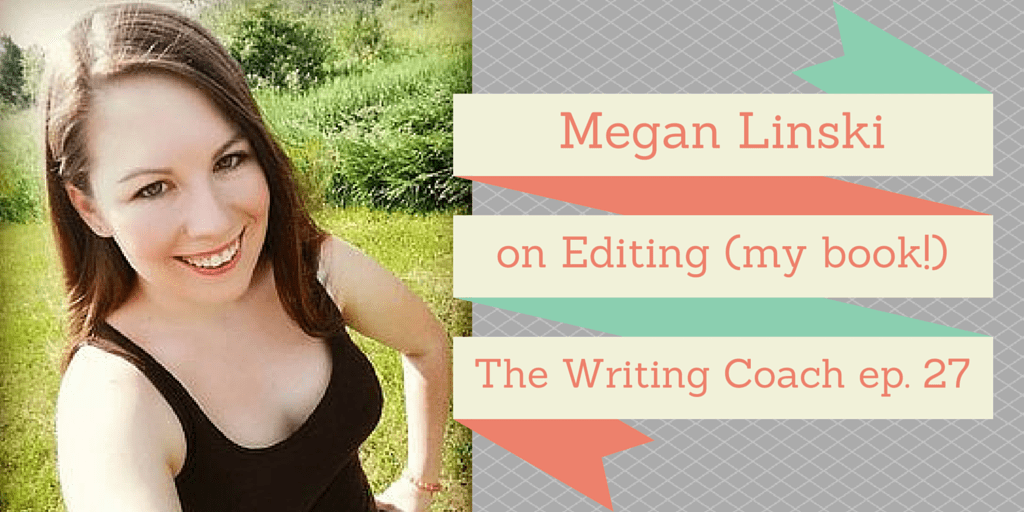
Megan Linski is the owner of Gryfyn Publishing and the author of almost 20 books(!!!).
She’s also a freelance editor.
MY editor to be exact!
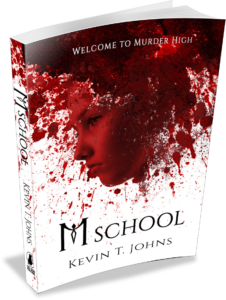
As such, this is a particularly unique episode of The Writing Coach. Megan just finished editing my upcoming thriller novel, M School, so in addition to discussing her experiences as an editor and publisher, this episode also gives a behind the scenes glimpse into the author/editor relationship as Megan and I discuss the difference between mainstream and niche books.
During our conversation, Megan describes:
Her no holds barred approach to the editing process;
Why she recommends writers pay close attention the advice they get from editors;
How she wrote her first novel at 14 years old;
The advice she heard about entrepreneurism that lead her to starting her own publishing company;
Why she’s transitioned from a purely artistic mindset to a business mindset;
The benefits of working as an independent freelancer vs. a cog in the corporate structure;
How an editor can tell whether an author needs supportive or direct feedback;
The common problems she sees in manuscripts time and time again;
Kevin T. Johns is an author, writing coach, and ghostwriter. He has helped hundreds of writers from around the world get ideas out of their heads, onto the page, and into readers’ hands. Get your free copy of his short guide for authors below.
[/feature_box]
[optin_box style=”21″ alignment=”center” email_field=”email” email_default=”Enter your email address” email_order=”2″ integration_type=”aweber” double_optin=”Y” thank_you_page=”https://www.kevintjohns.com/newsletter-confirmation/” list=”3224178″ name_field=”name” name_default=”Enter your first name” name_order=”1″ name_required=”Y” opm_packages=””][optin_box_field name=”headline”]Do you know the 12 ESSENTIAL steps to creating a novel readers will love?[/optin_box_field][optin_box_field name=”paragraph”]PHA+RHJvcCB5b3VyIG5hbWUgYW5kIGJlc3TCoGVtYWlsIGFkZHJlc3MgaW50byB0aGUgZm9ybSBiZWxvdyB0byBhY2Nlc3MgeW91ciBmcmVlIGNvcHkgb2YgPHN0cm9uZz48ZW0+VGhlIE5vdmVsIFdyaXRlcidzIFJvYWRtYXA8L2VtPjwvc3Ryb25nPiwgYSBzaG9ydCBhbmQgc2ltcGxlIGd1aWRlIHRvIHdyaXRpbmcgeW91ciBmaXJzdCBib29rLiBJdCdsbCB3YWxrIHlvdSB0aHJvdWdoIHRoZcKgPHN0cm9uZz4xMiBlc3NlbnRpYWwgc3RlcHM8L3N0cm9uZz7CoHRvIHdyaXRpbmcgYW5kIHB1Ymxpc2hpbmcgYSBub3ZlbCByZWFkZXJzIHdpbGwgZmFsbCBpbiBsb3ZlIHdpdGguwqA8L3A+Cg==[/optin_box_field][optin_box_field name=”privacy”]I value your privacy and would never spam you[/optin_box_field][optin_box_field name=”top_color”]undefined[/optin_box_field][optin_box_button type=”0″ button_below=”Y”]Send me the Roadmap >>[/optin_box_button] [/optin_box]
Kevin T. Johns is an author, writing coach, and ghostwriter. He has helped hundreds of writers from around the world get ideas out of their heads, onto the page, and into readers’ hands. Get your free copy of his short guide for authors below.
[/feature_box]
[optin_box style=”21″ alignment=”center” email_field=”email” email_default=”Enter your email address” email_order=”2″ integration_type=”aweber” double_optin=”Y” thank_you_page=”https://www.kevintjohns.com/newsletter-confirmation/” list=”3224178″ name_field=”name” name_default=”Enter your first name” name_order=”1″ name_required=”Y” opm_packages=””][optin_box_field name=”headline”]Do you know the 12 ESSENTIAL steps to creating a novel readers will love?[/optin_box_field][optin_box_field name=”paragraph”]PHA+RHJvcCB5b3VyIG5hbWUgYW5kIGJlc3TCoGVtYWlsIGFkZHJlc3MgaW50byB0aGUgZm9ybSBiZWxvdyB0byBhY2Nlc3MgeW91ciBmcmVlIGNvcHkgb2YgPHN0cm9uZz48ZW0+VGhlIE5vdmVsIFdyaXRlcidzIFJvYWRtYXA8L2VtPjwvc3Ryb25nPiwgYSBzaG9ydCBhbmQgc2ltcGxlIGd1aWRlIHRvIHdyaXRpbmcgeW91ciBmaXJzdCBib29rLiBJdCdsbCB3YWxrIHlvdSB0aHJvdWdoIHRoZcKgPHN0cm9uZz4xMiBlc3NlbnRpYWwgc3RlcHM8L3N0cm9uZz7CoHRvIHdyaXRpbmcgYW5kIHB1Ymxpc2hpbmcgYSBub3ZlbCByZWFkZXJzIHdpbGwgZmFsbCBpbiBsb3ZlIHdpdGguwqA8L3A+Cg==[/optin_box_field][optin_box_field name=”privacy”]I value your privacy and would never spam you[/optin_box_field][optin_box_field name=”top_color”]undefined[/optin_box_field][optin_box_button type=”0″ button_below=”Y”]Send me the Roadmap >>[/optin_box_button] [/optin_box]



 Kevin T. Johns is an author, writing coach, and ghostwriter. He has helped hundreds of writers from around the world get ideas out of their heads, onto the page, and into readers’ hands. Get your free copy of his short guide for authors below.