The 8 (or 9) Literary Elements — The Writing Coach Episode 164

In this episode of The Writing Coach Podcast, writing coach Kevin T. Johns discusses the “literary elements” he considers the building blocks of any scene. He covers the four external literary elements and the four internal literary elements, and then asks whether a ninth should be included.

Listen to the episode or read the transcript below:

The Writing Coach Episode #164 Show Notes

Get Kevin’s FREE book: NOVEL ADVICE: MOTIVATION, INSPIRATION, AND CREATIVE WRITING TIPS FOR ASPIRING AUTHORS.
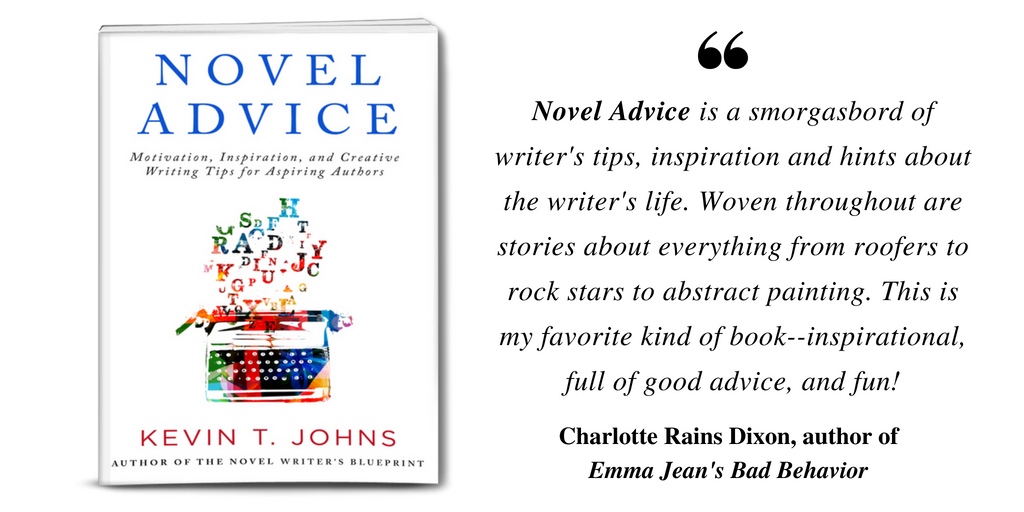
Click the above image to get the book for free now!

The Writing Coach Episode #164 Transcript

Hello, beloved listeners and welcome back to The Writing Coach podcast. I’m your host, as always, writing coach, Kevin T. John’s.

I have a Facebook group for writers called Always Writing. If you’re looking for a small community of creatives and writers to connect with on Facebook, head on over to Always Writing with Kevin T. Johns and join our community.

In this episode of The Writing Coach podcast, I want a little bit of help. I’ve been developing this theory, it came out of a course I put together for my First Draft program—that’s a group coaching program focused on helping folks get their first draft written while also continuing to develop their writer’s craft skill set. And in that program, I have a course called “The Card Shuffling Technique.” It started with me thinking about what are the building blocks of a scene. If an artist has paint to work with when painting an image, what is the writer’s equivalent of primary colours of paint? And what I came up with was when I call them the literary elements, but metaphorically, I think of them as kind of the bricks in the brick wall that is a scene.

What I really like to see when I’m reviewing clients’ work is a nice mixture of all of these elements. What I tend to find is that writers, especially during first drafts, will lean on their strengths. Some people are really great at environmental descriptions and so the scene will be all descriptions of the environment. Other people are great at dialogue, iso we have pure dialogue scenes with not enough physical action. Other people focus on action, and we don’t get enough internal narration. These are all just different literary elements that we can use to tell a story. And I think story works best when we’re really using a nice mixture of all of these elements.

Recently, during a coaching call with a client in First Draft—Fancy shout out to you if you’re listening to this—Fancy had some elements in her story that I’m not sure are necessarily identified or included in the elements in the course. So for this episode, I’m asking for a little help from you, dear listener. I am going to lay out what I see as the eight literary elements, and then I’ll mention to you another element that Fancy was using, and I want to hear from you. Let me know if I should be expanding my list of elements out or whether the eight I already have capture the element that Fancy was using in her story.

Okay, let’s get to the literary elements. I broke them down into four external elements and four internal elements. I think you’ll see what I’m talking about here as we dive into it.

External element number one is environmental description. This is just information about where the scene is taking place, the setting, the atmosphere, the mood of the environment that the characters are in. Far too often, I would say I look at clients’ work, and we don’t get enough of a sense of where the scene is taking place. We don’t get the mood. An abandoned church has a very different feel than an office boardroom. That feeling can be emphasized via more language, more description about that space. So in any given scene, yeah, I’d like to see some environmental description and that’s external literary element number one, because it’s external to our point of view narration.

Next up is physical actions or blocking. I take the term blocking from cinema and theater. If you’ve ever been in a play, you know your lines but you need the director there to tell you, “Stand over here, then on this line, walk over there and pick up that prop.” That’s blocking. And that’s physical action. And that is a part of storytelling. So we’ve established the environment that our characters are in, but then we need to know where the characters are located in that space in relation to each other and in relation to objects and props in the room, as well as what are characters doing with their bodies over the course of a scene. Are they running their hands through their hair? Are they smoking a cigarette? Are they taking a gun out of their pocket and firing it? Are they cleaning up trash on the side of the road? How far is the first trash picker away from the second trash picker? All of these physical elements in terms of where people are, how far apart they are from each other, how close they are from each other, and what they’re doing is literary element number two.

Literary element number three is the big one, ad that’s dialogue, Dialogue is pretty obvious: it’s what characters say to one another throughout the story. There seems to be a general acknowledgement that in most scenes in contemporary modern storytelling, 30% to 50% of any given scene is likely going to be dialogue. Obviously, you can have dialogue-heavy scenes, and you can have dialogue-light scenes, but in general, you’re probably looking at 30% to 50% of the scene being dialogue. In which case, this is probably our most featured literary element; you’re going to see more dialogue than you are going to see physical blocking, or environmental description in any given scene. And again, we’re including dialogue under the external elements because the words leave the POV character’s body and going out into the world externally.

Now, the final external literary element is point of view character sense descriptions. This is what the scene’s point of view character sees, hears, smells, tastes and touches. Over the course of a scene, almost across the board with every writer I work with myself included, we all default to sight. Sight is our number one sensory experience that we use. And so as writers, we’re always describing what things look like, but when I’m telling you I want to hear environmental description, I want to hear physical blocking, well, that doesn’t always have to be described through sight. Maybe the character hears something in the distance. Maybe the character smells something strange in the environment. Maybe that character reaches over and touches another character because they’re right beside them. And so when you’re looking at your scenes, especially in the revisions process, make sure you’re not always just describing what things look like. Get those other senses in there because as human beings, that’s how we experience life a variety of sense, not just sight.

Alright, so there are our four external elements, environmental description, physical actions, dialogue and point of view character sense descriptions. So now let’s go internal. These are the things that are not external elements of the story, but rather taking place within the point of view character or within the narration itself.

Internal element number one is internal thoughts and feelings. This is the internal experience of novels. It’s the insight that novels are able to provide into a point of view, characters, mind or soul. It’s what differentiates literature from virtually every other art form. We can get some voiceovers in cinema, we can get soliloquy in theater, but literature is really the art form that allows us to go inside a character’s body and see what it’s like to be them and experience life through them and

to hear exactly what they’re hearing or experience the feelings that they’re feeling in that moment in a very specific manner. So internal element number one is thoughts and feelings

External element number two is narrative exposition. This is the contextual information the reader needs in order to understand a story. Now, we had a discussion in First Draft this week about exposition, and I think it can be demonized, and people can think, “Oh, I need to remove all exposition from my story.” I disagree. Exposition is absolutely necessary. It’s what sets the context for any given scene or moment in the story. It’s the information the reader needs to understand what is going on in any given scene. So what we want to do with our narrative exposition is just make sure that it’s moving our plot forward, and that it’s not slowing the story down, that it’s not an info-dump, an unnecessary dumping of information all at once, that the reader doesn’t necessarily need at that moment. So long as your exposition is helping the reader understand the story and moving things forward at a good pace there’s absolutely nothing wrong with narrative exposition.

In fact, Robert McKee coined a famous phrase where he said to use “exposition as ammunition.” He said to try to make sure that the exposition you provide is shocking or exciting or moving the story forward in some way. There’s nothing wrong with saying “One week later, someone so went to the office…” If it’s important to know that it’s been a week later, it’s moving the chronology of the story forward. Nothing wrong with that. And if you can make it even more exciting, if you can turn it into a story ammunition the way Robert McKee recommends, all the better. Don’t be afraid of exposition, just be conscious that it needs to be as exciting as anything else in any given scene.

Our third internal literary element is big voice narration. Now this can be a little confusing, especially given how much people struggle with point of view but big voice narration is a moment where the author steps back from the close POV or even from the omniscient POV. And it becomes almost a moment where the narrator is talking directly to the reader, but they’re doing so in order to share a moral or an observation or a piece of wisdom. It’s almost the writer in the context of the story saying, “Hey, reader, I want to share some important observations about life with you: That’s the way life goes sometimes…” Sometimes something like that might be considered big voice narration, big voice narration is an element we’re not going to use very often; it’s probably going to be on a much more limited amount of usage, as opposed to dialogue, which we’re going to see a lot.

Now the fourth internal literary element, it’s a kind of a grouping of things here. And this is recipes, rules, instructions, lists, rituals. And this is anytime there are stories giving specific instructional information that works within the context of the narrative. And so if you are writing a fantasy story, perhaps with witches or wizards, you’re almost certainly going to have magical rituals of some kind, which often involve certain recipes or certain lists of ingredients, right? What are you putting into the cauldron? What are the certain rules by which the magic of a story works, or the technology of a story works in a science fiction story?

This can be an interesting way actually to convey some expository information. Chuck Palahniuk in his great book on craft, Consider This: Moments in My Writing Life after Which Everything Was Different, talks about this and he talks about how in writing Fight Club, he knew he needed to get across to the reader what Fight Club was how Fight Club worked, and he wanted to do it in an interesting and exciting manner. And what he did was he came up with a list of rules, the famous list of rules of Fight Club, where rule number one is you don’t talk about fight club, and rule number two is you don’t talk about fight club. And that’s kind of a classic line from the book. And so in turning some exposition into a set of rules, there’s an example of Chuck Palahniuk using the Robert McKee technique of turning exposition into ammunition and it becoming actually a famous quote from that book and ultimately from that movie.

Alright, so let’s review all eight of our literary elements. The four external elements are environmental description, physical actions and blocking, dialogue, and point of view character sense descriptions.

The internal literary elements are internal thoughts and feelings, narrative exposition, big voice narration, and rules, recipes, instructions, lists and rituals.

Now that’s how I teach the course in First Draft, but as I said, recently, we were working with Fancy and in Fancy’s novel, she has epistolary elements. Now you probably know epistolary elements are moments where stories are told via letters. And there’s a long, long history of it. The most famous book, probably, at least in my world, is Bram Stoker’s Dracula.

And so, since I was thinking about epistolary novels, novels that include letters, I started asking myself, do I need to add a ninth element to the card shuffling technique? Are letters an entirely other way to tell a story?

I’ll let you know where I was kind of thinking about it. I mean, letters seem very much like dialogue and so I wonder if letters could be grouped in under dialogue. Also, letters often give glimpses into the letter writer’s internal thoughts and feelings, and so I’m wondering, would a letter really be its own unique literary element? Or is it something that’s kind of capturing via dialogue slash internal thoughts and feelings, and kind of merging them together and presenting them in a different format? I’m not sure. I’m not sure.

And so that’s why I’m throwing the question out to you. Send me an email or leave a message in the Always Writing with Kevin T. Johns Facebook group. Let me know your thoughts on whether epistolary elements in a book should be considered its own literary element or whether it’s covered in the eighth internal and external elements that we’ve talked about on this episode of the show.

Alright, I can’t wait to hear from you. I look forward to hearing your thoughts on that.

Thank you so much for listening. Remember to hit that subscribe button and I will see you on the next episode of The Writing Coach.
Writing is Iterative — The Writing Coach Episode 163

In this episode of The Writing Coach Podcast, writing coach Kevin T. Johns explains why no writer gets it right on the first try and how writing is always iterative. He also explores the joys and benefits of the revision process.

Listen to the episode or read the transcript below:

The Writing Coach Episode #163 Show Notes

Get Kevin’s FREE book: NOVEL ADVICE: MOTIVATION, INSPIRATION, AND CREATIVE WRITING TIPS FOR ASPIRING AUTHORS.

Click the above image to get the book for free now!

The Writing Coach Episode #163 Transcript

Hello, beloved listeners, and welcome back to The Writing Coach podcast. It is your host, as always writing coach, Kevin T. Johns here.

Speaking of hosting, this is going out on Monday, June 26, 2023, and if you are listening to it the week it came out, I am going to be hosting a webinar this Thursday, June 29, at noon, so you can attend during your lunch hour if you’re in the eastern time zone. We’ll keep it under an hour. This training is going to be called Secrets to a Fun and Focused First Draft.

On the webinar, you’re going to learn the three biggest challenges to writing a first draft when the lone wolf method of writing works and when it doesn’t have to be squirrel syndrome in the revisions Malstrom, which part of the six-stage book production processes the most difficult and why methods and hacks you can use to avoid overwhelm? Why an incredible outline isn’t enough to ensure first draft success, how to fit your writing into a schedule filled with family work and health goals. And much more.

It’s going to be a fun time; we always have fun in my live training sessions. If you want to join, register here.  

All right. Well, speaking of drafts, on today’s podcast I want to talk about drafting and revisions. And the idea that writing is iterative.

My clients hear me say this again and again. I’m always trying to remind writers out there, writing is iterative. You get to that final draft via revisions.

I always say this to people, and I can always see this thing going on in their eyes… What I say to them is “No one gets their book right on the first draft. Writing a great book takes multiple revisions.” I’m saying this to writers, especially beginner writers, and they’re looking at me, and they’re nodding, and they’re going “Yeah, I know, I know.” But in their eyes—I can see it in their eyes—they’re saying to themselves, “But not me. I am going to be the one who gets it all right on the first try and who doesn’t need to do multiple drafts.”

Unfortunately, most people learn through experience that it’s just not possible. Writing a book, writing a novel is a complex process. It involves so many different elements, so many different things that you’re juggling at any given time as an author. And so trying to juggle all those things at once and get it all correct perfectly on the first try is impossible.

I own the “Hemingway Library Edition” of A Farewell to Arms by Ernest Hemingway. And a really cool feature of this book is there’s a special features sort of section at the end. And one of the things that section involves is all of Hemingway’s drafts for the final paragraph of the book. And I think it took him something like 32 different attempts to get that ending, and I mean, it’s one of the greatest endings ever written. It’s masterful, but he wrote it 32 times before he got to that masterful ending. And when an interviewer interviewed him about the process of coming to that ending and having so many drafts, the interviewer said to him, “Why did it take so many drafts?” And Hemingway said, “It was really difficult.” And the interviewer said, “What was so difficul?” and Hemingway said, “Getting the words in the right order.” And so getting to the ending of that book, for Hemingway, he was struggling with just the words, just the phrasing. And that’s just one element that we’re dealing with in any given scene in any given beat in any given moment of our story.

We need to allow ourselves the ability to say, “Hey, I’m going to come back and fix some of this stuff later.” When you’re able to embrace the mentality that you’re going to have to go through this book multiple times to get it right, it relieves the pressure of having to get it right on the first try.

So many first-time novelists struggle so much and take so much time to write their first book because they haven’t allowed themselves the opportunity to make mistakes to say, “Hey, I’ll figure that part out later.” Instead, they’re following that spark behind their eyes that says, “I’ll be the one who gets it all right on the first try.” But what you really need to be successful is the freedom to experiment and make mistakes.

Now, in one of Steven Pressfield’s books, I cannot remember which one it is, I’ve got to hunt it down, because I’m always using this number based on a quote from him. It was either in Do the Work or Turning Pro, one of those books of his. I think he said, “You’re probably going to write 10 drafts of your book.” And I think that’s probably right.

When I think about how many drafts it’s probably going to take to write a novel and make it great, yeah, 10 drafts does seem right.

When you’re a beginning author, and you have it in your head that you’re going to write this all perfect the first try, and then I’m coming along and saying, “It’s probably going to take 10 different versions to get it right,” obviously, that’s what you want to hear. No one wants to hear, “You have to go up to the plate and swing at that ball 10 times before you hit it out of the park.”

But the thing about those 10 drafts is they get easier as you go. I often use a bar graph to explain this. And so you’ve got an X-axis and a Y-axis. The X-axis is time and energy. And then the Y-axis is drafts of your book.

And that first draft, I’m 100% convinced, is the hardest draft. And so it’s up at the top of that X-axis in terms of time, and in terms of energy, people spend tons of time and energy on that first draft. And probably about the same on the second draft. That second draft is still a lot of work, a lot of effort a lot of time. But what happens when you get to a third draft, a fourth draft, a fifth draft, things start speeding up, it starts requiring less energy and less time to get a new draft of the book written. So when I say it’s going to take you 10 drafts, I don’t mean every draft is going to be as challenging as that first or second one. I mean, you’re going have to come back again and again, but it’s good to get quicker and easier every single time you do that. And I think that’s one of the reasons why revisions are so much fun.

I think writers who are trying to get it all perfect on the first try are really just trying to avoid revisions. And yet I believe revisions is really the most fun part of creating a novel. When you’re writing a first draft, you’re sitting down at the computer, you’re almost always writing chronologically, and you’re writing into darkness, you’re setting out on a journey into unknown territory. And there’s a lot of fear and uncertainty that comes with that. And a lot of challenges along the way. Maybe you’re working your way through a metaphorical jungle, and you’re really carving your path through one step at a time. And so yeah, that’s a lot of work.

But when you get to revisions, you’re able to follow your energy, you’re able to follow your interests, you can work on what you want to work on, and you don’t need to start at scene one and work through to scene 60. In terms of revising, you can start at scene 45. If you want, you can go where the area of the story is drawn you, where your energy says you want to work today.

And you can also focus on not just different parts of the story in a non-chronological order, you can also focus on different elements of the story via sweeps. As I said, you’re juggling a lot of different elements at any given time. And so you might want to do a draft of the book where you’re focused on one element, say dialogue. Maybe you’ve just taken a course on dialogue like the one in my First Draft program, and you’ve got all these new ideas and education about dialogue. You want to focus on that. Well, once you’re into revisions, you can do a sweep of the book and focus just on improving your dialogue. You don’t have to do dialogue and narration and plot and environment and all these other things all at once you can focus in on a specific element of your storytelling.

The thing that I really love about revisions is that almost all of the time, you’re making the book better. When you’re going about your revisions, you’re going about it strategically, you’re making strategic revisions to improve the story. And every once in a while, you make it worse, and it goes off track. But that’s very rare. I’d say, 95% of the time, when you’re sitting down and revising a scene, you are improving it. And that’s an amazing feeling.

It very different from that first draft feeling of writing a scene for the first time and saying, “I have no idea at all if this even works. I don’t know what’s happening here. I don’t know if it’s effective or not.” There’s so much uncertainty with that first draft. Whereas when you’re coming in on revisions, you say, “Hey, I’m going to improve this scene today. I’m going to improve this element of the book today.” And it’s a very different mindset than sitting down and pounding out that first draft that could just be so painful sometimes.

Don’t be afraid of revisions. Writing is iterative; no one gets it right on the first tr. Go in there, fix it up, and it will improve. And that is a great and fun experience.

Writing that first draft is really about the unknown. And when you’re into revisions, you’re into the land of the known: you know what you have; you know what you have to work with; you know what areas need to improve; and you know where the story is going.

Much of a book is set up and pay off. Much of the second half of the book is a mirrored reflection of the first half, only opposites, thereby demonstrating change, thereby demonstrating something’s happened in your book. But it’s really, really difficult to write the first draft of a book and set everything up perfectly in the first half, and then pay it off in the second half, when often the ending is one of the parts that we have least figured out. And even if we know exactly where it’s going to end, that fourth act is sometimes really fuzzy, even when we’ve got our outlining work, even when we’ve sat down and said this, this, this needs to happen. Those are usually some of the scenes that are most fuzzy in our heads, especially because our outlines change during the drafting, we thought this character was going to be important, it turns out, they’re not we thought the story was going to go in that direction. It turned out going in this direction, which then requires changes to the outline.

Once you have a first draft done, once you have an ending written, now you can go back to the first half and say, “Okay, I know where this is all going, have I adequately set it up?” The point being, you know, what’s there, and you know what’s not. And it’s just fun to get in there and work with it and make it better. And so don’t be afraid of revisions. Writing is iterative, you’re never going to get it right the first try.

 I think one of the problems with this is that revisions really aren’t emphasized in school. Even in university, other than a master’s thesis or a doctorate thesis, most of the time, students are cramming out their essays at the last possible minute, staying up overnight, trying to get it done at the last minute, and handing it in. And there is not this idea that maybe you finish that essay a week ahead of time before it’s due, and then maybe you write it three more times to improve it. We’re not really taught that; revisions aren’t encouraged. It’s not the norm. The norm is you sit down, you pound out your essay, you have a teacher, and you get whatever that grade is, but real life isn’t school.

Real-life luckily affords you the opportunity to improve and make things better and not just pound away on the keyboard and hope the reader gives you an ‘A’ and hope the reader enjoys it. You can go in there and strategically make it better via an iterative process.

Maybe it’s going to take 10 drafts, but you know what? Maybe draft nine is you think the book is done, and you send it out to a dozen beta readers. And five of those dozen beta readers say this part of the book just isn’t working. And so draft nine or draft 10 becomes going in and adjusting that one part that the beta reader group agreed wasn’t working. It gets easier. It gets quicker.

You’re making surgical changes by the end of the process, and I promise you it’s a fun and enjoyable process. So don’t try to get it all right on the first try. Embrace the iterative nature of writing. Go in knowing you’re going to write multiple revisions of your novel, and allow yourself the freedom to make mistakes along the way.

All right, I am going to be talking about writing first drafts at the webinar this Thursday at noon. If you are listening to this the week the episode came out, get signed up for that webinar here.

Thank you so much, as always, for tuning in. Hit that subscribe button and I will see you on the next episode of The Writing Coach.
Perfection vs. Desperation — The Writing Coach Episode 162

In this episode of The Writing Coach Podcast, writing coach Kevin T. Johns discusses Star Wars, punk rock, and how writers should consider desperation as a preferable alternative to perfection.

Listen to the episode or read the transcript below:

The Writing Coach Episode #162 Show Notes

Get Kevin’s FREE book: NOVEL ADVICE: MOTIVATION, INSPIRATION, AND CREATIVE WRITING TIPS FOR ASPIRING AUTHORS.

Click the above image to get the book for free now!

The Writing Coach Episode #162 Transcript

Hello, beloved listeners, and welcome back to The Writing Coach podcast. It is your host, as always, writing coach Kevin T. John’s here.

In addition to being a podcast host and a writing coach, I’m also an author. And one of the books that I have out there for writers is a book called Smash Fear and Write like a Pro. It is so short, it’s like 10,000 words, 12,000 words, this little piece of motivational, inspirational advice about facing your fears as a writer, it’s available on Amazon. I’ll link to it in the show notes for this episode. This is episode 162 of the writing coach podcast, head over to www.kevintjohns.com and you can find those show notes and get the link to my book, Smash Fear and Write like a Pro.

I tackle five fears in that book. And one of the fears that I tackle is the fear of releasing your work before it’s perfect. And one of the stories I tell is about George Lucas, my man, the creator of the original Star Wars trilogy. For years, he wasn’t happy with those films. He felt like they weren’t perfect enough. So what he did in the mid-90s, as special effects were getting better, is he went in and he changed the original Star Wars films, and he released them as the Special Editions.

Now if you were around back in the day, you might recall how audiences responded to these special editions. They hated them. “Han Shot First” became a meme. And that was really the beginning of people starting to attack George Lucas. And, of course, it only got worse when the prequels eventually came out.

But my point is, Star Wars was already perfect. That’s why people were so upset. George Lucas was going in and changing something that didn’t need to be changed. Now in his mind, in the mind of the artist, the work was incomplete, the work wasn’t good enough, but in the minds and hearts of millions of cinema goers and fans of Star Wars like myself who grew up with these films, changing them with sacrilege.

This is the danger of giving in to this perfectionist streak — this idea that, “Oh, what I create is never good enough. I need to go back and fix it and make it even better.” It’s almost never a good idea.

I’ve spent a lot of time almost two decades doing work with the Canadian federal government, a huge, hierarchical organization. I’ve also ghostwritten several books for top executives in big giant companies. And what I’ve seen almost across the board is that the people who define themselves as perfectionist are almost always the lowest-ranking people in any given hierarchy. I’ve never heard an executive call themselves a perfectionist.

In fact, in the great film Danny Boyle’s Trainspotting, based on Irvin Walsh’s seminal novel, there’s a scene where the characters in order to stay on welfare, they have to make it look like they’re trying to get jobs. They go to these job interviews, but they intentionally tank them. And one of the ways that they intentionally tank the interview is one of the characters describes himself as a perfectionist. He’s clearly a junkie, he may be living on the street, but he’s coming in, and he’s telling these people that he’s a perfectionist. The humor here is double-fold. It’s funny because he’s obviously not a perfectionist. But it’s also funny because calling yourself a perfectionist is the type of thing you can do if you want to get yourself fired.

People at the top of the hierarchy know that perfection is rarely possible to achieve. And trying to do so is extremely inefficient. It’s an inefficient use of energy, of resources, of time to try to get something from 95% good to 95.5% Good.

Plus, not only are rough edges acceptable practically all of the time, but sometimes rough edges are preferable.

Now this is something that I talked about in an episode called “10 Lessons Writers Can Learn from Punk Rock.” And I talked about this idea that I learned the importance of rough edges from punk rock. And as we return to this perfectionism discussion, I think we need to go back and revisit punk rock and some of the lessons we can learn from it again.

The other night, I was on my phone watching music videos on YouTube and I came across a video of the band Primus doing a cover of the punk band The Dead Kennedys’ song “Holiday in Cambodia.” It was okay. The bassist of Primus, Les Claypool, is one of the greatest bass players ever and the cover was okay.

Having watched that video, it then led me to a video of the band, the Foo Fighters, joined by the singer of System of a Down, and together, they were doing a cover of “Holiday in Cambodia.” And so I watched one of the best bass players ever covering “Holiday in Cambodia” with Primus, and then I watched one of the most renowned rock bands ever, Foo Fighters, with the singer of the renowned System of a Down doing a “Holiday in Cambodia.”

Despite the fact that these were some of the greatest musicians out there, neither of their covers even came close, in comparison, to the quality of the original song made by a bunch of scrappy 20-year-old punk rock kids with crappy equipment in 1980.

Why were these punk kids able to create something so magical that bands like Primus and Foo Fighters weren’t able to recapture in their rendition of the song?

I think the answer to that question is the alternative to perfection.

And that’s desperation.

In 1997, the punk band NOFX released their album So Long and Thanks for All the Shoes, and that album included a song called “The Desperation’s Gone.”

In order to understand the context of this song’s lyrics, we need to remind ourselves it’s 1997 pop punk is at the peak of its all-time popularity. The Offspring have broken through to the mainstream. Green Day have broken through, and a bunch of bands on Bad Religion’s Epitaph Records label like NOFX and Rancid and Pennywise were all selling millions of albums at this point. So punk rock more than any time in history, included in the late 70s when the genre was invented, was more popular than ever. And so NOFX puts out this song called “The Desperation’s Gone” and here’s the lyrics to that song:

Turn, tune the knob K-go

Some alterna radio

Strategic marketing hype, media, stereotype

Has our music been castrated? Yes

To you it may sound good

To me it sounds so wrong

The notes and chords sound similar

The same forbidden beat, but

The desperation’s gone (the song’s the same)

But the desperation’s gone

Okay, so we’ve got Fat Mike, the lyricist here, talking about turning on K-rock radio. That’s the big LA rock radio station that often breaks new music, and also uses media hype and stereotype, perhaps, to sell punk rock to the masses. And what Fat Mike is saying is here is that he’s turning on this pop radio and he’s hearing punk rock, but it sounds castrated to him. It doesn’t sound real. It may sound good to people who don’t know punk, but it sounds wrong to him. The notes and the chords are the same. They’re doing some three-chord punk. That same “forbidden beat.” That forbidden beat is punk rock bass-snare-bass-snare-bass-snare super-fast; that’s the punk beat. And so the song is the same. The chords are the same. The notes are the same. The beats are the same, but the desperation is gone.

Part of the core power of punk rock is desperation, passion, emotion, and hunger. And when we do something like watch the Foo Fighters performing “Holiday in Cambodia,” the Foo Fighters haven’t been hungry for anything years. They can’t be hungry for success. They’ve been successful for decades. They can’t be hungry for money. They have more money than they could ever have. They can’t be hungry for food. They’ve gotten more food than they can ever want. The Foo Fighters live a comfortable life.

Whereas when Dead Kennedys were performing “Holiday in Cambodia” in 1980, they were a hungry bunch of kids. They were hungry for a lot of things: hungry for change, hungry to express themselves, hungry for success, and probably hungry to get food on their table. Punk Rock kids in the early 80s didn’t always have a bunch of food being handed to them the way the Foo Fighters do. And all of this bleeds into the music and into the performance. The desperation, the roughness of it is what makes it so powerful. And when you get a bunch of millionaires, these legendary and successful musicians, together covering the same song, it’s not the same because the desperation is gone.

And so if you are one of those writers out there describing yourself as a perfectionist, I wish that you would put a little more energy into being hungry, as opposed to being perfect. Get a bit more desperation on the page.

I think so many writers, especially new writers, spend way too much time trying to get things perfect when, instead, what you should be doing is getting your emotion on the page.

What are you hungry for? What do you want to make the reader feel? How do you want to change the world with your storytelling?

Steven Pressfield once wrote, “Write your first draft like the devil is behind you.” And I think what he’s talking about there is writing with desperation not with perfection in mind.

All right, that was me kind of riffing on some of the ideas I touch base on in my book, Smash Fear and Write Like a Pro. It’s a tiny little thing. You can read it in one sitting, and it’s really going to help you push through some of these fears that so many writers face, including fear of releasing work that isn’t perfect in your mind.

Thank you so much for tuning in. Hit that subscribe button and I will see you on the next episode The Writing Coach.

Goodbye Story Grid Podcast — The Writing Coach Episode 161

In this episode of The Writing Coach Podcast, writing coach Kevin T. Johns says goodbye to The Story Grid podcast, which published its final episode last week. Kevin discusses the importance of the podcast, and his admiration for its hosts Shawn Coyne and Tim Grahl, and explains how their podcast was a profound act of generosity for both writing coaches and students of writer’s craft.

Listen to the episode or read the transcript below:

The Writing Coach Episode #161 Show Notes

Get Kevin’s FREE book: NOVEL ADVICE: MOTIVATION, INSPIRATION, AND CREATIVE WRITING TIPS FOR ASPIRING AUTHORS.

Click the above image to get the book for free now!

The Writing Coach Episode #161 Transcript

Hello, beloved listeners. And welcome back to the Writing Coach Podcast. It is your host, as always writing coach Kevin T. John’s here.

If you’d like a free copy of my book, Novel Advice: Motivation, Inspiration and Creative Writing Tips for Aspiring Authors, just head over to www.kevintjohns.com. There’s a tab at the top that says “free book,” click there, put your email address in, and I’ll get you a copy of Novel Advice.

Now in this week’s episode, I want to talk about The Story Grid podcast. I was a little bit surprised the other day; I put on Story Grid to listen to the latest episode only to hear its host Tim Grahl come on and say “Well, folks, this is it. This is the last episode.”

I think it was episode 290 or something like that. Really impressive stuff. And a really important show put together by two incredible people. So in this episode of my show, I just want to pay tribute to the incredible show that was The Story Grid podcast.

I’ll tell you a bit about my experience with the podcast, but also with Shawn and Tim because my relationship with them actually precedes their podcast. When I first published my first novel, I was learning how to be an independent author, and ultimately how to build an independent business and all of these things, and that was how Tim and Shawn first got on my radar.

In terms of Shawn Coyne, I was in a small business group coaching community program called Fizzle.co. And within Fizzle at the time, this is either nine or ten years ago, everyone was talking about this book, The War of Art by Steven Pressfield. This is the book where Steven Pressfield coined the phrase “resistance.” And it’s been used quite a bit in the world of writing, resistance is that thing, standing in the way of us doing what we know we need to do of the art we need to create. But in the small business world, the exact same thing happens. There’s so much resistance to trying things or to doing the work you need to do or to marketing or to putting yourself out there. And so in the Fizzle world, everyone was really into The War of Art. So I read it, I loved it.

And then one day in Fizzle someone posted a message saying, “Hey, folks, Steven Pressfield’s editor has started this blog.” That’s how I knew Shawn Coyne, originally, as Steven Pressfield’s editor. I was like, “Wow, the guy who edited The War of Art has a blog. I have to check this out!” What it actually ended up being was Shawn Coyne was basically blogging the entire Story Grid book before it was being published.

For those of you who have read the book, you know what incredible ideas are contained within that book, and what Shawn’s continued to build on over the years now, but at the time for a young writing coach, for someone still a young author, seeing Shawn’s Story Grid blog was really kind of mind-blowing stuff.

Now, I’d been in the writing podcast world for a while I had a podcast called Ottawa Writes, I’m from Ottawa, then that kind of evolved into Write Along Radio. And around this time, I decided I wanted to start this podcast, the one that you’re now listening to The Writing Coach podcast. And so when I was thinking about launching this podcast, I had a list of people that I wanted to reach out to try to get as guests on the show that I could interview, and number one on that list was Shawn Coyne. I reached out to him and asked if he would be a guest on this show. Remember, the show wasn’t even launched yet, I was just prepping it. And yet he said, “Yes.” And that kind of doing so blew my mind.

I was so excited for that conversation. And I remember the interview. I was at my day job. The only time I could get him on the call was at noon on a workday. And so I was at my day job. And I mean, this was still somewhat early days of my podcasting career, and I didn’t have everything locked down. And I think how that podcast interview ended up being recorded was Shawn was calling in via telephone and then I had him playing on a speakerphone. And then I had my telephones audio recorder turned on sitting next to the speakerphone. Needless to say, it’s probably not the best quality audio of all time, but the stuff Shawn was saying was amazing. He was really blowing me away.

And, you know, for 161 episodes of this show, I’ve had a quote from that interview in the opening credits to this show, that line where Shawn says, “When you’re an expert on something, it’s kind of your responsibility to share it with others.” I think that’s the whole idea of coaching, it’s not just a fun thing to do, or it’s not just a job, it’s a responsibility. If you have the ability to help others, via your knowledge and your wisdom and your expertise, you have a duty to do it so that the art form can improve. It blew my mind when Shawn said that and so I put it in the opening and it’s been there ever since.

Eventually, The Story Grid book came out. He finished blogging it, and the hard copy was released. Of course, I grabbed that book, and I devoured it, and I just loved it. I started implementing some of the methodologies and my own coaching. I definitely ran my third novel M School through the story grid spreadsheet, and I started using it with some clients of mine as well.

I don’t quite remember how many times I touched base with Shawn after that initial interview, but I do remember just one day, a package arrived on my doorstep, from Black Irish Publishing. And that is Shawn Coyne and Steven Pressfield, his publishing company, and it was just a box full of Steven Pressfield books. And so The War of Art, Turning Pro, The Authentic Swing, there might have been a couple of copies of each and so this was completely unsolicited. This was just Shawn being Shawn and sending me a bunch of their books. And I was able to give those way to some of my clients and it just like, that’s the type of amazing thing that these people do. Part of what makes Shawn Coyne very, very special that that he would do something like that.

And I mean, he just continued to do special things for me. I had a writer’s craft book club with a bunch of my writing clients many years back in one month, we read The Story Grid, and Shawn came on our book club call me there it is the author of story grid, answering questions with my writer’s craft book club, I mean, amazing stuff.

And then, in 2019, when I wanted to host a Writer’s Craft Summit, again the first person I reached out to be on the summit was Shawn, and again he said yes. And he didn’t even want to be an affiliate. He didn’t want any payment. He was happy to just come on and be my special guest. Just so cool.

I think I might have told the story on the podcast before at some point about my experiences with meeting heroes when I was younger, but I had two diametrically opposite experiences.

One, I was working for a magazine as an entertainment journalist. And my favorite comic book artist at the time was this guy, Alex Maleev, who was working with Brian Michael Bendis on Daredevil at the time, and I absolutely loved his work. And over the years, I’d been reporting on the big comic book convention in Toronto, Comicon. But I was kind of getting tired. It’s a lot of work to drive five hours from Ottawa, to Toronto and to deal with the crowds and everything that a big giant convention like that, that comes with that I you know, in the early years of being a journalist, I was like, “Oh, my God, I don’t have to wait in lines. This is amazing. I could go around.” But in this case, the novelty had kind of run out. But in my communications with the convention, they assured me they would get me an interview with Alex Maleev. And I was like, oh my god, okay, I’m in.

I got in my car, and I drove five hours to Toronto. And I get there. I’m like, “Okay, folks. Have you set up my interview with Alex Maleev?” And they were like, “Actually, no. Just go talk to him. He’s in the artists’ row there. Just go ask him for an interview. It’s all good.” I was like, “Oh, God. Okay. I was hoping this would be more scheduled. But okay.” And so I approach Alex Maleev and I was like, I don’t even know what I said, “Hey, Alex, like, you know, I’m here for the interview,” or “I’d love to interview you” or something. And he just instantly shot me down. He was like, “I’m not doing interviews. I don’t want to talk to you.” I drove five hours to meet him and he just . . . I don’t know if he was having a bad day or what, but he just had zero interest in engaging me in discussion at all, and even less than zero interest in doing an interview despite the fact that the Convention had told me they would set up an interview.

I had driven all this way to meet this hero of mine and he just 100% gave me the cold shoulder. So that was one experience of mine of ‘meeting your heroes.’ You know where they say, “Don’t meet your heroes.” Yeah. Alex Maleev, you know, broke my heart a little bit that day.

But the opposite end of that is in the late 90s I was a huge punk rock fan. And again I drove not to Toronto but to outside of Toronto to attend Lollapalooza because my favourite punk band Rancid was playing. I had to see them.

We drove up a day early, and we went to see a movie that evening. It was Independence Day with Will Smith. In the movie theater, I saw some punk rock girls buying popcorn. I was like, “Nice, punk rockers. We’re not alone.” I was like, they’re probably here for the Rancid too. And then we went into the theater and there was more punk rockers in the movie theater watching the movie. We’re like, “Ah, this is great. This is our people.”

Then we walked out of the theater after the movie . .  I remember the theater exited like right out of the theater onto the street. The punk rockers exit in front of us and we realize this is not just some punk rock fans, this is Rancid. We just watched Independence Day with the band Rancid! Lars Frederickson was there, and Matt Freeman. I don’t think that the drummer was there, but man was Tim Armstrong. The punk rock God, Tim Armstrong, was right there on the street. And he’s engaging us. He’s talking to us. He offers us backstage passes so we can meet up with him the next day. He is just the coolest human being you could ever imagine. And, you know, for to punk rock kids who had driven for hours to see his band on stage, to have him talk to us and invite us backstage and treat us with so much kindness was just unbelievable. One of the greatest experiences of my life.

And that’s what it was like every single time I got to talk to Shawn Coyne. You know, sometimes you meet your heroes, and they’re not at all what you’d hope they would be. But the half dozen times, I’ve had the opportunity to talk to Shawn or interact with Shawn, it has been nothing but a delight and a pleasure. I just think he’s one of the coolest guys out there teaching writing. That’s kind of my experience with Shawn Coyne.

Now Tim Grahl on the other hand, I think most people know him these days as the Story Grid CEO, but where I first came into contact with Tim Grahl was on Creative Live, this incredible website that offers free training you can just watch for free live. And then you’re given the opportunity to buy courses afterwards. And it’s kind of that jab, jab, jab, punch marketing technique of like, give, give, give, and then ask for a sale. Here it is for free and then maybe if you like it, you’ll buy it. with my Story Plan program, that’s what I’m doing. I’m giving away a month of training in hopes that people are going love it so much that maybe they’ll buy something else from me. But anyway, that’s the Creative Live approach. And Tim Grahl had a course on that website called How to Sell Your First 1000 Books. And so when I was a recently published author trying to learn about book marketing, absolutely, I found my way to that course. And I took it and it was actually based on a book of his and so I read the book, and it was probably my introduction to email marketing and the whole idea of building an email list and giving people cool content, and then letting them know when you have stuff for sale.

I really liked his approach to marketing. He had a definition of marketing, that was something like connecting with people and then being relentlessly helpful, which I thought was a really cool way to think about marketing.

So again, when I was putting together The Writing Coach podcast, he was one of the first people I wanted to interview. I asked him to be on and again, just like Shawn, he said, “Yes.” He came on the show and he was a great guest. And again, I was nobody, the podcasts hadn’t even launched. I’d been coaching for maybe a couple of years. But I mean, at that point, Tim had no idea who I was. So he came on and did a great interview and just again, seemed like a really gracious, cool guy.

A few years later, he released an online course called Launch a Bestseller. I bought that for sure. I wanted to check out that kind of building on his first 1000 copies theory and his specific approach to book launches. And while I was taking the course he put a word out there that he wanted somebody to kind of go through the course and just watch every single video, click on every single link, read every little description or wherever and just make sure everything was good. He was looking to hire someone to do that. And I said to him made him like, I’d love to do that for free. Just seemed like an amazing opportunity to force myself to go over his material with super, super attention, you know, with that editorial mindset. And so, you know, I went through it, and hopefully I helped him out a bit in that process. And he certainly helped me by, you know, creating that course. And so going over it in such detail and you know, multiple times was really helpful for me to get my mind wrapped my wrapped around that book launch methodology.

And so yeah, eventually, you know, after being guests on my podcast (Shawn was episode two, and Tim was episode three) those two got together and created their own podcast and that’s The Story Grid podcast. And on that show, it was really about Shawn Coyne coaching Tim Grahl through the process of creating and writing a book and really learning story craft learning writer’s craft.

This is something I often stress with my clients who are working on their first book, you need to understand writing a first book, you’re not just creating and writing a book, you’re also learning how to write a book at the same time. And that’s a really challenging and difficult process. And that’s what they were doing week after week on this podcast.

The other thing I really liked about the podcast was, as much as I believe, you know, there’s magic and creativity involved in the act of art and the act of storytelling, like, obviously, it’s a creative act. But at the same time, I’ve never been a very woo-woo type guy, if you know what I mean, in terms of the metaphysical aspect of creating art. I’ve always really much more been a fundamentals of the art form kind of guy. My master’s degree is in English literature, so maybe I am used to kind of looking at art in a more analytical way or something. But something that I really liked about The Story Grid podcast, and of course, book was that they were really approaching creativity and writing from this nuts and bolts perspective, not so much a let’s go into that meditative space and wait for the lightning bolt of creativity to strike. They were doing it in a much more almost like mathematical approach, which I thought was really interesting. And something I really resonated with because I think of writing a novel much more like building a brick wall than some sort of creative act of genius. You get to work every day, and you lay another brick, and you write another scene. You put some, you know, stuff in between the two scenes and some connective tissue and you move on to the next brick. And it felt like that’s what they were doing on the show.

Something else I want to mention in it was two men doing it. In the publishing space, in the editing space, in the writing space, the writing coach space, it’s largely dominated by women. Most of the big names are women. And most of the editors and coaches are women, which makes perfect sense because women are by far the biggest audience for literature. That said, as a man myself and as a man, teaching writing, and writing myself, it was just really nice to hear two men talking about art and talking about the emotions related to creating art. And I think that’s one of the things that made that show somewhat unique — it was two grown men saying, “Hey, let’s create some art together.” And what does that involve?

As much as this whole podcast episode, I’ve been talking here about how much I respect Shawn Coyne and how cool he and Tim are, I think now, what we really want to turn my attention to is really, the courage Tim Grahl had to create that podcast and to release it publicly.

Getting coached is not always an easy experience. Sometimes your coach has something to say that you don’t want to hear. Working really, really hard on something and then having to have someone tell you that it’s still not right or that it needs to be improved is not easy, and having to learn and grow and develop and experiment as an artist and as a writer, it takes time and there’s a lot of potential embarrassment along the way because there’s a lot of opportunities to get things wrong.

And that’s why it’s really important that writing coaches create a safe private space for their clients. When I’m working with my clients, what we talk about is 100% confidential. It is never going anywhere. My clients need to know that what they’re saying to me, what they’re giving me to read, is between me and them and no one else and that they have a space created for them to make mistakes and to get things wrong and to not have to feel embarrassed by that, because they know I’m on their side and they know that I’m helping them through this process.

But that’s not what Tim and Shawn did. You know, Tim Grahl turned on a microphone every week for years, and allowed himself to publicly go through the process of learning writer’s craft, and he did it for years. And the strength of character that takes is unbelievable. The fact that Tim was willing to put himself out there in such a public manner was just so unbelievable. And it goes back to that whole thing where he said his definition of marketing is being relentlessly helpful. Well, I think he proved himself relentlessly helpful when he got on The Story Grid podcast week after week, year after year, and struggled and struggled through the process of creativity.

Writing a book is hard. And The Story Grid podcasted demonstrated that. It didn’t sugarcoat the process, it didn’t hype things up, and it didn’t get lost in woo-woo land. It just demonstrated a writer and an editor going to work week after week and putting their snose to the grindstone and doing the hard work that is learning to write a book.

To see the podcast come to the end, it’s bittersweet. The way Tim Grahl framed it in that final episode was that all the way through he had said, this is a podcast about someone struggling to learn how to write, and he feels like he’s reached the place where he can do it now. And, again, just the fact that he did that, publicly is amazing, because now, so many people can learn from it for years to come and for the years that have already gone by.

Writers and coaches are able to listen to The Story Grid podcast,and see both what it’s like to coach someone through the writing process and how challenging that can be, as well as how truly difficult learning to create a great book that works can be.

I just wanted to send a tribute out to Shawn and Tim and everyone involved in creating The Story Grid podcast. I think it was an incredible gift to writers and coaches out there. And I know myself, and I know for your thousands of listeners, we are going to be forever grateful. So here’s to the The Story Grid for years of incredible content for writers, for years of demonstrating what it’s like to be in the trenches and getting things wrong and getting knocked down and getting back up and trying it all over again. It was an incredible run. And I tip my hat to Tim and to Shawn. You guys are incredible teachers and artists and creatives, and I thank you for 290 episodes or whatever it was episodes. Great work, gentlemen.

All right, that is it for this episode. Don’t forget to hit that subscribe button and head on over to www.kevintjohbs.com to pick up your copy of Novel Advice. Thank you for listening and I will see you on the next episode of the writing coach.

In Praise of Lists — The Writing Coach Episode 160

Writing coach Kevin T. Johns explains how to-do lists, checklists, standard operating procedures, and calendars can help writers and artists get organized, stay motivated, track progress, prioritize tasks, and achieve a flow state easier.

Listen to the episode or read the transcript below:

The Writing Coach Episode #160 Show Notes

Get Kevin’s FREE book: NOVEL ADVICE: MOTIVATION, INSPIRATION, AND CREATIVE WRITING TIPS FOR ASPIRING AUTHORS.

Click the above image to get the book for free now!

The Writing Coach Episode #160 Transcript

Hello, beloved listeners and welcome back to the Writing Coach Podcast. It is your host as always writing coach Kevin T. Johns here.

I’ve got a question for you: Do you have a burning desire to bring your book idea to life but find yourself struggling to create a structured and compelling outline? Have you pantsed your way into a manuscript only to find yourself unable to complete it? Are you already a published author but you’re looking for a quicker and more replicable way to plan your stories? If so, I invite you to join the STORY PLAN INTENSIVE program that we kick off the first week of June. The doors are open right now. This is a four-week free program focused on helping you write a rock-solid outline in four weeks or less. To get signed up, now head on over to www.kevintjohns.com/story-plan.

All right, I got a weird one for you today. We got a weird topic, but it is something that I am just nuts for . . . that is lists. I know it’s a weird thing to be excited about, but it all goes back to when I was a teenager the American Film Institute released a list of the top 100 films of all time. It was the early days of the internet, but I was able to print out that list on my home printer. And I made this commitment to try to watch every single film on that list, and it was a multi-year project. I don’t think ever finished it. I never saw the Treasure of the Sierra Majra, I think that’s what it’s called. And I never saw Shane, and I still haven’t seen The French Connection. I think those were the three movies for whatever reason, I just never got a chance to view them. But the point being, I had so much fun learning about cinema and learning about the history of cinema and just watching this incredible list of movies, and every time I watched the movie, I would get a yellow highlighter out, and I would cross that movie off the list, and it was so much fun. Watching that list go from a black-and-white list of movies to this fluorescent yellow old beat-up document that I had so much fun working my way through a year or two later.

I did the same thing with the James Bond movies. I think it was right before Die Another Day which was some sort of anniversary or maybe that was like the 20th movie or something like that for whatever reason Die Another Day had me wanting to go back and rewatch all the James Bond movies are in order. And so that’s what I did. I printed out my trusty list of all 20 movies and I watched them all in chronological order. In that case I did it over the course of one summer. It was my James Bond summer and I loved every minute of it.

And again, getting to cross those movies off the list with that yellow highlighter was just a process I loved so much, and I think it’s one of the reasons why lists are so popular and why if you look at any book, or course or anything on productivity, they’re always talking about pulling together your To Do lists, and it makes perfect sense. It allows you to kind of track your progress against an accomplishment. I wanted to see all the James Bond movies and by checking off that list I was able to visually track where I was at in the course of my project and stay motivated to complete it.

And I gotta tell you, every single time I cross something off a list, I get such an endorphin rush. I think it’s like the nerd version of the runner’s high. You know, you see these runners, and they talk about just feeling so amazing after a punishing run. Well, that’s how I feel after 20 James Bond movies, I get that movie watchers rush, and I just think rewarding yourself by getting the cross something off the list and getting a little shot of those happy hormones is really a good thing and a great way to go about your day.

It’s also really useful for just structuring and organizing information in a clear manner. Our lives are so busy if we’re writers we probably have a few projects on the go or we have a big novel with all these different components involved and so creating lists around your to-do items for your life, but also your to-do items for your art can be really really important.

Another type of list I think is your calendar. And my calendar is so important to me. I’ve got group coaching calls, I’ve got one on one coaching calls. I have so many projects and jobs that I need to get done, and when I wake up in the morning, the first thing I look at is my calendar, because who I’m meeting with that day determines what projects or what pages I need to get read or what pages I need to get edited or what research I need to do to prep for a presentation or whatever it is. I really use my calendar as a list of to-do items. And I allow it to help me prioritize what work needs to get done. When you have a listing of all the meetings you have that week, you’re then able to reorder and prioritize the order that you’re going to tackle work in so that you can address them by order of priority and get the firm the most important things are the things that are due soonest done first. You’re like triaging your workflow in a world where we’re all balancing a zillion different tasks, it’s really nice to know okay, here’s the list of tasks and here’s the order of importance. And usually in my case that’s in relation to my calendar of meetings for the week.

Another way lists can be really useful is for something like say this podcast or other art forms that you might be working on is just creating those SOPs, the standard operating procedures for anything that you’re doing in life repeatedly. You know, this is episode I think like 160 or 159, or something of the writing coach podcast. I’ve done this 160 times, and there’s a certain order and flow that takes place in order to get this work done. It’s well I have a list of standard operating procedures where I say do this, do this, do this. And I know that if I do it in that order, it’s going to be the quickest and smoothest way to get through the work.

And what I think is important is when you’re not worrying about the steps when you know you’re doing the steps in the most efficient order you’re quicker to be able to get into that flow state. As creatives that’s really the state that we’re trying to get into where I where ideas where words into a microphone, where words on a page are just flowing, and it’s flowing out of us in this you know incredible manner without blockages and without challenges and getting into that state isn’t easy. And so if we can set up standard operating procedures that will allow us to get into that state all the quicker, then all you know all the better. In the case of a writer, this might just be a simple pre-writing process. This could be pouring yourself a cup of coffee and putting on a certain robe and eating a piece of toast and then sitting down at the cube computer at 7 am every morning.

You start doing those things over and over again. They become habits you don’t have to think about them anymore. You just do them. And then you’re able to concentrate your energy and your focus on the actual task at hand which is working on your book.

I think lists can also be super helpful for writers in the revisions process, a tool that I have for the folks inside of my group coaching program, FIRST DRAFT and FINAL DRAFT is a revisions checklist and that’s just a simple list of about 20 questions. You can ask yourself about any given scene in order to see whether it needs to improve or not. So for example, one of those questions is, is the scene between 1500 words and 2500 words? If it is, well we’re probably good to go if it’s not. If we’re under 1500 words, why is that are we perhaps not being as detailed as we could be? Are we perhaps missing out on opportunities for drama? Are we not being clear enough on the character geography, the blocking where people are in location to each other? Are we too focused on dialogue? Are we too focused on inner narration? All these things might be at play if your word count is coming in a little short for any given scene. That said it might also just be a scene that needs to be that short. But by having a checklist we’re able to ask ourselves this question in an organized manner. Same with if it’s over 2500 words. In my mind, when scenes are starting to get that long, we risk losing the reader’s attention we might be providing unnecessary details we might be drawing things out longer than we need to. And so again, just use the checklist that helpful list to take a look at the scene and ask yourself that question and then revise accordingly in response to that question, and of course, that’s just one of 20 questions or more that you could ask yourself when looking at a scene.

All of which probably brings us to the idea of a beat sheet or an outline for your novel. If you’ve listened to this podcast at all, if you even heard the little intro talking about STORY PLAN INTENSIVE, you can probably imagine that I am not a pantser and I do not think that pantsing is the most effective way or efficient way or most fun way to get a book written. I am a very very big proponent of creating an outline for your book as part of the planning process.

I’m also a proponent of revising that outline keeping it evergreen throughout the revisions process. When I’m working with my clients. I don’t know how many times I’ve said okay, okay, let’s take a step back from this scene. Let’s look at the outline. Let’s take the macro view and make some decisions here based on where this scene falls in the macro level story structure and what an outline does after all, it’s what is that line it’s just a list of scenes for your book. What it really does is enhance the readability of a really big package of information. Trying to think about a book trying to manage all the ideas trying to track all the character arcs can be really challenging especially if that means scrolling through hundreds of pages of prose or flipping through hundreds of pages of your printed-out material. When we have an outline we have this concise and easy-to-digest version of the story that allows us to scan things really quickly and get that step back right step back from the microanalysis that we so often use as writers and editors and revisers step back into that macro-level view and say how is this story working as a whole and looking at that macro level making sure that things are solid at the macro level I think is so important throughout the process, but especially at the beginning. I think there is so much confidence that comes into the drafting when you know that at least on the fundamentals level,  the story works. If you’ve done a solid outline for your novel, you know it’s probably going to be pretty good before you’ve even written a single word. The process just becomes getting the story out rather than getting the story out and hoping that it works or getting the story out and making changes on the fly to make it work. Set yourself up for success before drafting by creating an amazing list of scenes or an outline for your book.

And if you’ve never planned before, or if you have a planning process that you don’t think works or if you’re looking for a quicker and better way to develop an outline for your book in a concise period of time, then I do invite you to come join us in the June round of STORY PLAN INTENSIVE. The registration is open right now. We’ve got 160 folks registered already and I would love for you to join us on this adventure this June.

We are going to spend four weeks thinking learning about writer’s craft and then making decisions executing on your story development, putting together a story plan and finishing the month with a beautiful rock-solid outline for your book so that you can sit down and write it with success. And so yes, I told you it was a bit of a weird topic, right? Kevin and his weird obsession with lists, but at the end of the day, what is the story plan? What is an outline? It is a list of scenes. It is a list of ideas. It is a list of concepts that flow in a chronological order that have causality between them that control the pacing of your narrative, and tell you that you are about to write an incredible book before you’ve written a single sentence.

If that sounds like fun for you, if you want to join us in the STORY PLAN INTENSIVE program. Head on over to www.kevintjohns.com/story-plan and get signed up. We’ve got one more week to go. We kick things off Monday, June 5, 2023. It’s going to be amazing. We’re going to have fun, and I want to see you there.

All right, that is it for this episode. Thank you so much for tuning in. Don’t forget to hit that subscribe button so that I can see you on the next episode of The Writing Coach.
The Doctrine of the Mean — The Writing Coach Episode 159

In episode 159 of The Writing Coach podcast, I explore Aristotle’s “Doctrine of the Mean,” and how it can help us understand why both living a virtuous life and writing a fantastic book are so difficult to achieve.

Listen to the episode or read the transcript below:

The Writing Coach Episode #159 Show Notes

Get Kevin’s FREE book: NOVEL ADVICE: MOTIVATION, INSPIRATION, AND CREATIVE WRITING TIPS FOR ASPIRING AUTHORS.

Click the above image to get the book for free now!

The Writing Coach Episode #159 Transcript

Hello, beloved listeners and welcome back to the writing coach podcast. It is your host, as always, writing coach, Kevin T. Johns here.

Do you have a burning desire to bring your book idea to life but find yourself struggling to create a structured and compelling outline? Have you ‘pantsed’ or ‘discovery wrote’ your way into a manuscript, only to find yourself unable to complete it? Are you a published author looking for a quicker and more replicable way to plan your stories? If so, I’m thrilled to let you know that the latest edition of Story Plan Intensive, has just opened its doors. Story Plan is my four-week immersive experience designed to empower and guide you toward crafting an excellent outline for your book in 30 days or less. And the best part about the program is that it is completely free. So to get signed up for Story Plan Intensive, summer 2023 edition, head on over to www.kevintjohns.com/story-plan.

Now, when I first started my coaching business a decade ago, I was new to business completely. I had been a published author, and it was in publishing my books that I became aware of my lack of knowledge of marketing, of sales, of anything like that. And so I joined a bunch of coaching programs and took a million courses and all these things on building a small business or an independent business. And one of the things that one of the coaches said, on a coaching call, I think it was that always stuck with me was he said, “Welcome to the hard part. PS, it’s all the hard part.” I think it stuck with me because it applies not just to building a business or even just to writing a book, but to life itself. It’s not easy.

I’m working with the client right now, (Mikey, if you’re out there listening, “Hey, buddy!”) we’re working on a book, and he is a Buddhist reverend. And so we’re talking a lot about suffering and dealing with suffering and how one of the biggest problems in life, it’s these expectations we create for ourselves that things are going to go easy or that at some point, things are all going to fall together perfectly. And the stars are going to align and everything’s going to go right for us.

Or the idea that someone is going to pick us. We’re taught to sit around waiting for someone to recognize our genius and pick us out of the crowd and turn us into stars. But the reality is, anything you get in life, you’re getting through hard work, and you’re doing most of it yourself. And hopefully, you’ve got a team of people and friends and community and coaches supporting you. But none of it’s easy.

And so that’s what we’re going to talk about on today’s episode is the concept of why writing a great book is difficult. Why even though writers who have written great books before follow up with duds are why you have a favourite author and a lot of their books you love but some of them, you just don’t like as much what happened with those books. It’s not that the author forgot how to write a book, they know how to write a book, but writing a book that people love is difficult.

And I think one of the reasons why it’s so difficult was recently touched on by Austin Kleon. He’s an author and an artist and he has a great weekly email he sends out on Fridays. I always look forward to his Friday emails where he lists 10 things that he was thinking about that week or that he was working on or that he listened to or that he watched. I highly recommend checking out his newsletter, but also getting his books. He has a trilogy of books for artists and writers about creating and showing your work. Anyway, in this week’s newsletter, he was talking about hanging out with Ryan Holiday.

Ryan Holiday is a really successful author who’s written several books about stoicism over the last couple of years. And it’s funny because he’s really known as the stoic guy now. If anyone talks about Ryan Holiday, that’s the context they’re talking about him these days. But it’s funny, a very long time ago, God 10 years ago or something, I remember being at a bookstore and seeing a book called, Trust Me, I’m Lying: Confessions of a Media Manipulator by Ryan Holiday. And I just thought the cover of the book looked badass. And I thought the title was intriguing. And so I got that book and I read it. And it was really an eye-opener in terms of how the internet works.

I was one of the head folks and founders of an online magazine, (Cult)ure Magazine, a very long time ago. But when we were running that magazine, we definitely didn’t really understand how the internet works and how advertising works and how clicks work and all of that. And so, Ryan Holiday’s book really opened my eyes to a lot of that behind-the-scenes stuff of how the internet works, but also just how book marketing works and publicity and all of these things.

I think at that time Holiday was also working with Tim Ferriss a bit . . . I don’t know if he wrote an article for Tim Ferriss’s blog or what but, anyway, when I think of Ryan Holiday, I think of the interesting marketing expert guy who ran in circles with Tim Ferriss, but these days, people think of him as the stoic guy.

And so back to Austin Kleon. He was talking about hanging out with Ryan Holiday. And he was talking about how the stoic principles of virtue he could never get on board with. Austin Kleon was saying, without cowardly procrastination I wouldn’t get any writing done. And he was talking about envy and anger and all of these vices that are the opposite of virtuous feelings and saying they are what drives his art. So Kleon and Holiday were talking and Holiday drew Kleon’s attention to Aristotle’s “Doctrine of the Mean” from his book Nicomachean Ethics.

And what Aristotle says is that virtue is a state of being that exists in the middle between two vices. And so those two vices are the vice of too little on one end of the spectrum, and too much on the other. So in between too much and too little, is virtue.

Austin Kleon made a little illustration that he shared in his newsletter where he showed exactly how this concept works:


And he said on one end is cowardice you know, too little. On the other end is rashness, too much bravery and what’s in between cowardice and rashness, courage. Another example is boorishness on one side and buffoonery on the other. And what’s in between those two? Wit, the virtue of wit, the virtue of courage, the virtue of truth, where does that exist? Well, on one end is an understatement, too little, on the other end is bragging, too much. On one end of the spectrum is stinginess on the other end is practicality. And in between those is generosity. And then another cantankerous on one end, flattery on the other, and friendliness right in the middle.

The point being here, this is why life is hard. And this is why being a good person is hard. Because it’s not just about embracing a series of virtues and then just living them; it’s about trying to find that doctrine of the mean, it’s about trying to find that middle ground between not understating things but not bragging about them, finding that middle ground of truth.

And that isn’t always easy.

I want to take this concept, this doctrine of the mean and apply it to some writing concepts. The first of which is something Chuck Palahniuk talks about in his excellent book on writer’s craft, Consider This: Moments in My Writing Life After Which Afterthing was Different. Palahniuk talks about a story structure that he feels always works in Western storytelling.

Now, what he says is that in this classic story structure, there’s a good boy or a good girl who always follows orders and is shy and agreeable. Then there’s a rebel character who bullies and breaks the rules and brashley hogs the spotlight, then there’s a third character who’s a quiet and thoughtful character who acts as the narrator, relating the story to the reader. So that’s the setup.

Now, what’s the payoff? The passive character commits suicide. This usually prompts the execution of the rebel and the thoughtful witness leaves the story having grown wiser by witnessing the fate of the other two characters, and is ready to relay this cautionary tale to the world.

D you see what’s going on here in the controlling idea of this story type? It’s the doctrine of the mean, don’t be too passive or you’ll end up killing yourself. Don’t be too pushy or you’ll be executed. Watch and learn from the extremes of other people so that you can find the doctrine of the mean you can find that middle ground where virtue lies.

Now, that’s one story type where I think this doctrine of the mean applies, but it also applies to writing in general and to the challenges we started this podcast off talking about, the challenges of writing a great book.

In order to write a great book, you’re really a tightrope walker. You are balancing on that beam way up above the audience. And with each step, there’s the potential for falling. We have to walk very carefully across that tightrope. We need to stay in that middle ground.

Where’s the middle ground when it comes to writing a book? Well, there’s genre adherence, we need to be writing in the established genre, and we need to be hitting the conventions of that genre. But if that’s all we do, the story feels boring and trite, it feels like the reader has seen it all before. But if we go in the other direction, and we have no genre, or we’re mashing together a ton of different genres, the reader gets confused. They say, what is this story? Is it a sci-fi? Or is it time traveller? Is it a romance? Or is it a comedy? And so we’re trying to find that middle ground between providing the comfort of the familiar in terms of generic conventions, but also the excitement of the new.

Same thing we think with the formal presentation of the book, we need to formally fall in the tradition of what is considered a book. But if we can do things new and innovative, people are probably going to be excited by that. But if we push things too far, do we even have a book anymore? Maybe we have something like super experimental pros like Gravity’s Rainbow, which nobody reads because it’s too difficult. Or maybe you’ve created a book that folds out into a giant map, and then the map turns into a tent. And it’s like, is this a book anymore? Or is it an art project? We need to find the mean between formal convention and formal experimentation or innovation.

It can even apply just to the simple scene level. Are you providing too much description? In your story? Are you not providing enough description? Are you providing too much narration? Are you not having enough narration? Are you providing too much dialogue? Are you not using enough dialogue? Do you have scenes that are full of too many characters? Or is the whole book just one or two characters?

 In all of these things, we’re trying to find that middle ground. We want just the right amount of narrative, we want just the right amount of dialogue, we want just the right amount of characters.

Where this is perhaps the most difficult is finding that middle ground between being too on the nose, and too confusing. And that’s really where people struggle because you’re trying to predict the reader’s reaction to your story. We see this a lot in mysteries or in thrillers and things where we’re dropping little pieces of evidence. And then as an author, we’re trying to make sure that the reader is noticing things or picking up on things, but at the same time, we don’t want to be too obvious about it. Because if we’re too obvious about things, people don’t like it.

How many times have you read a book or heard someone describe a movie and they put it down by saying, “Oh, I saw the ending coming a mile away. I was halfway through the book, and I already knew how it was going to end.” Well, that means the author was too on the nose. But at the same time, if you’re withholding too much information, the narrative can become totally confusing. Or when the big twist happens, the reader feels cheated because they feel like the evidence wasn’t there to allow them to ever have guessed that that is where the story was going to go.

We have this thing called a surprising but inevitable twist or conclusion to the story, and these surprising but inevitable twists require foreshadowing, they require the feeling on the part of the reader that they should have seen this twist coming, but didn’t. And there’s a lot of joy and pleasure that comes from being surprised in that way but not feeling cheated, instead feeling like I should have seen that coming but I didn’t.

This is one of the reasons why writing a great book that everyone loves is so damn hard. It’s the same reason why living a virtuous life is hard. We really aren’t given simple instructions in terms of where to land between the two ends, the two vices of too little and too much. So we’re constantly refining our own instinct or finding our own taste, but also experimenting, and also working with others.

There is a reason why Beta Readers exist. At some point, we have to hand our work to someone and say, “Is this too on the nose? Or is this too confusing? Is this too long? Or is it too short?” Again, it kind of goes back, I suppose to this idea of the solitary writer, which I’m always trying to destroy this idea that someone just sits alone in a cottage and writes their masterpiece, and sends it off. Art is created in a community art is created for people. And sometimes finding that doctrine of the mean, finding that middle ground can only be done with the help of others.

And sometimes we just missed the mark. You know what? That’s okay. I hope that you try to live your life with courage and truth and generosity, but guess what? Sometimes we get stingy, or sometimes we behave rationally, or sometimes our attempts at wit come across as buffoonery. We all make mistakes. Life isn’t easy. And so, do your best. Try to walk that tightrope and try to find that middle ground between the two extremes.

All right, did you miss the Spring of 2023 round of Story Plan Intensive? Well, I got some good news for you. On June 5, 2023, we are kicking off the summer edition and you can sign-up now. This is a four-week program with daily training videos, over 35 videos over the course of the month, weekly homework assignments, and a Facebook community where you can interact with other writers going through the program. It is a program that will get you a rock-solid outline for your next book in 30 days or less. If you want to be part of the summer 2023 edition, head on over to www.kevintjohns.com/story-plan.

That is it for this week. Thank you so much for tuning in. Don’t forget to hit that subscribe button and I will see you on the next episode of The Writing Coach.
Stories Are About Change — The Writing Coach Episode 158

In episode 158 of The Writing Coach podcast, I explore the powerful role that change plays in storytelling. Change impacts the characters and the world of your story but also the reader themselves. You’ll learn about the transformative nature of storytelling and the undeniably powerful writer’s craft tool that change can be for an author.

Listen to the episode or read the transcript below:

The Writing Coach Episode #158 Show Notes

Get Kevin’s FREE book: NOVEL ADVICE: MOTIVATION, INSPIRATION, AND CREATIVE WRITING TIPS FOR ASPIRING AUTHORS.

Click the above image to get the book for free now!

The Writing Coach Episode #158 Transcript

Hello, beloved listeners, and welcome back to The Writing Coach podcast. It is your host, as always, writing coach Kevin T. Johns here. And today it is time to face the Strange. Yes, we are talking about Cha cha cha changes in story.

But first, do you want to get a free book? If you’d like a copy of my book, Novel Advice: Motivation, Inspiration, and Creative Writing Tips for Aspiring Authors, head on over to www.kevintjohns.com. There’s a tab at the top that says, free book. That’s where you can drop your email in and get a copy of novel advice.

Now, today we’re talking about Cha cha cha cha changes, as I said, but first let me tell you a story, okay? The other day it was super hot here in Ottawa, and I really wanted an ice cream. So I started walking towards the corner store, and on the way to the corner store, I actually ran into my friend Gary.

I said, “Gary, what are you up to?” And he was off to pick his kids up from swimming class. And so that was great. He continued on to go pick up his kids, and I went to the store to get my ice cream. It was pretty awesome.

All right, <laugh>, what’s going on here, folks? That was not a very good story, was it? Now, why was it not a good story? Well, largely because nothing changed other than, yeah, I guess I got my ice cream at the end of it, but I didn’t run into trouble getting the ice cream. There were no complications or drama along the way. And so if you find yourself looking at your story or reading a book, and you have this feeling where you’re like, nah, it’s just not that good, for some reason, ask yourself, is anything changing?

Because once you ensure that there’s change taking place in the story, then drama starts happening. Lisa Cron is a great writing instructor. She has a book called Story Genius. And I’m going to paraphrase here, but I believe her definition of a story is that story is about someone who wants something, who takes action to get it, encounters obstacles, and is changed as a result. So right there in Lisa Cron’s definition is that key component of change. And so when we’re looking at stories, and we were asking ourselves, is there a change in the story? Where this is generally most obvious is at the character level. Most people are familiar with the concept of a character arc, which means your character is a different person at the end of the story than they were at the beginning. Now, this could be for the better or for the worst.

Often we see positive change arcs. These are coming-of-age stories, or these are stories where the good guy ultimately wins in the end. And we have a character who starts in a place of lack or who starts with a wound or a misunderstanding about the world and who goes out on their adventure or who encounters obstacles on the way to try to achieve something. And as a result, they’re changed for the better. They realize that the thing that they were lacking, they’re able to attain. Perhaps that’s love, or perhaps that’s a professional accomplishment, or perhaps that’s, you know, a sword, right? <Laugh>, they were missing something and by the end of the story, they have it, or they’d have a better understanding of how the world works. They were perhaps naive, and they finished the story more wise, or they were cynical at the beginning of the story, and they end the story much more accepting of, of positivity, right?

We start in one place, we end in another. And if we’re ending in that positive place, then we have to reverse engineer that story and ensure that our characters are starting from a negative place, starting from a place of lack. That’s what we call a positive change arc for our characters. But of course, life isn’t all sunshine and roses and characters don’t always change for the better. In fact, sometimes it’s our character’s resistance to change that ultimately leads to their downfall. And so stories then end with our protagonists in a negative space are called negative change arcs. This is the opposite of our positive change arcs. And we see this all over the place in the tragedies as a father with a bunch of daughters <laugh>, I particularly relate to King Lear, who starts his story out as a powerful wise king and ends up as a madman screwed over by his children.

<Laugh> That one, there’s a negative change arc that resonates with a father. But of course, there are lots of great tragedies and lots of great sad stories that start with a character in a place of power and confidence and ultimately end in ruin and often death. If in the case of let’s say Macbeth or Hamlet or even Romeo and Juliet. These are characters who start with Hamlet wanting revenge, with Mc McBeth, wanting to be king, with Romeo and Juliet perhaps wanting to find true love, and all of them ending in ruin and disaster. And there’s our change. That’s why Shakespeare knew what he was doing: how these stories end is the opposite of how they begin. And we can return to our positive change arc when we’re talking about Shakespeare’s comedies, right? When we look at A Midsummer Night’s Dream, we have all these couples who are all separated, and by the end of the play, they’re all together in their proper relationships and married, they go from this place of lack to a place of wholeness and change has taken place.

And when that happens, we feel like we got a good story, whether when in the audience in the Rose Theater 400 years ago, or whether we’re sitting in our living rooms reading an eBook on our telephone. Either way, it’s that sense of change in the character that really makes us feel like something happened in the story. But of course, here’s the thing, not every character changes, particularly when we’re looking at archetypical characters like say Superman, or when we’re looking at characters in a series, we can talk about someone like James Bond. I would argue that the reason the James Bond franchise was successful for 50 years was that James Bond did not change very much over the course of his films or from film to film. And I would argue that the Daniel Craig Bond films are some of the worst Bond films in the history of James Bond. And that is p possibly because they tried to give Bond a change Ark, I’m not going to go down the bond rabbit hole, but I will say Ian Fleming, the creator of James Bond, understood that with a character, an archetypical character like James Bond, or perhaps a superhero character, or a character who represents stability and authority in society, we can think about detectives, we can think about police officer characters, we can think about firefighters, think about stories about doctors.

In all of these stories, often our protagonist does not change. There is not a change arc, but there is still change in the story because the world is generally changed by antagonistic forces. So the world’s going along well, all is good, but then Blofeld inspector wants to blow up the moon or take over the earth or do whatever, and the world is thrown into a state of chaos, and it becomes our figure of the status quo. It becomes James Bond’s mission to get out there, defeat the bad guy, and return the world to a state of status quo to take us out of chaos. We can think about the Western as well. We can think of the outsider who comes into the small town that’s overrun by bandits, and he defeats the bandits, saves the town, and then rides off into the sunset. Well, why does he ride off into the sunset?

Because he can’t be domesticated. If he came into the story an outsider and then remained in the town an insider, that would be an arc. But in these sorts of stories, we are heroes right off into the sunset because they can’t stay in the town. They have to continue on to the next adventure. And so that’s why in stories like comic books and in James Bond. Let’s use our medical or our firefighter example in the story about a firefighter. The world is at peace, and then a fire breaks out. What’s changed is the chaos of the fire. Our firefighter protagonist encounters obstacles. Maybe there’s a backdraft, maybe the fire’s on the 40th floor of an apartment building. They have to do all these things to put that fire out, but ultimately they’re able to do so, and the world is returned to a state of calm and peace.

And so the same with doctors. Everything’s going all right, and then someone gets shot, our hero doctor goes in there, saves the day in returns to the patient to a sense of status quo. So there are two options right there for, well, I guess we’ve discussed three options already, right? Positive change arcs, negative change arcs, and then stories in which the world is changed and needs to be returned to a state of status quo. Now, in her book, Save the Cat Writes a Novel, Jessica Brody makes a really interesting observation about the Whodunnit genre, which in Save the Cat terms is called Whydunnit? I think because they’re trying to get who, what, where, where, why into the mystery genre. The point being, I found this particularly fascinating, particularly because I’m interested in dark stories.

I’m interested in violent bad guys and gothic storytelling, and in Save the Cat Brody says that when we read a Whydunnit, when we read these dark mystery thrillers, often it’s the reader who is changed. Oh, we’re, we’re getting Medicare folks. So not only is perhaps the world thrown into a state of chaos and needed in need of being returned to the status quo, we as readers are changed by witnessing the levels of darkness that humanity can potentially stoop to. And also probably the levels of heroicness that mankind’s inhumanity can rise to in response to darkness. I think about this, particularly in the context of Thomas Harris’s amazing novels, Red Dragon, and Silence of the Lambs and less so the book, Hannibal. But certainly the TV show, Hannibal, which is based on those books, Harris’s books, and I think Hannibal is one of the greatest television series ever made, and it’s also one of the most disgusting and horrific and bleakest television shows ever made.

And so I asked myself, you know, why, why do I love watching these stories so much? Why do I love reading about Hannibal Lecter? And I, I think part of it is what Brody’s talking about is that we, we get a better understanding of, of, of what humanity is capable of when we hear these stories of, of utter darkness. And in doing so, I think it might perhaps make us appreciate the goodness that we have in our lives and, and the goodness in the people around us and maybe some of the things that we think are so horrific aren’t nearly as bad as, as what my mankind is truly capable of. And so we’re changed, we’re changed in the reading of the story. Now, these sorts of dark stories that reveal horrible aspects of humanity, they’re not the only types of books that change readers.

The non-fiction genre is almost primarily focused on changing the reader. Particularly how two stories, particularly self-improvement books, if you pick up and read a book about diet and exercise, you as a reader are going into that book hoping to be changed. You’re hoping that the information in that book is going to allow you to institute protocols that allow you to change your life and change your body and change your health.

Same with reading a book about writer’s craft. When you go to my website, www.kevintjohns.com, and you download Novel Advice: Motivation, Inspiration, and Creative Writing Tips for Aspiring Authors, it’s because you are hoping that the information inside that book is going to change the way you write or change the way you think about writing or change the way you come at your art. And as a non-fiction author of that book, that’s my goal. I’m trying to write non-fiction that transforms the reader. And so in these non-fiction books, it’s the reader again, who is being changed.

So we’ve covered a bunch of different types of change here, but what we’ve been talking about is all at the macro level, right? We’ve been talking about characters who change over the course of a book, or we’re talking about readers being changed by reading a book. But as per my Estonia doll method, what I believe in writer’s craft works at the macro level almost always works at the micro level as well. And it’s often at the micro level, the scene-by-scene level that writers aren’t giving as much analysis to things like change in their story. But I would argue that at the scene level, something needs to change every single scene. This is something that Shawn Coyne talks about in The Story Grid, which he calls turning points. He makes the argument that every scene needs a turning point, a point of change that either transitions on external action, something happens externally to our character, that changes the trajectory of the scene or the revelation of information, new information comes to light that again, changes the direction of the scene.

So maybe the scene things were going good and then they go poorly because of something that happened externally, or maybe things were going bad, but then there’s a revelation of information that makes things go good by the end of the scene. The point is we are looking for change in our stories, and I would say where the writers that I work with are failing to think about change is really at that scene level. So everything that we’ve talked about here, when we’re talking about characters changing, when we’re talking about environments changing, you want to be taking these same concepts and applying them to every single scene in your book and really ensuring that things change far too often. I’ve read scenes where stuff happens, but nothing changes. And it brings us full circle back to my story about going to the store and buying some ice cream and running into a friend along the way.

That’s just not like no ice cream to having ice cream with no complications along the way is just not interesting or dramatic enough to feel like something worthwhile actually happened in that story to make it worth the telling.

So you want to tell good stories? You want to entertain people? You want to write incredible books? Start with change. Think about how the world of your book is going to be changed by the events of it. Think of how the characters are going to be changed for the better or for the worse, or, or, and or <laugh>. Think about how you’re going to change the reader in how they see the world or how they go about living their life.

All right, that is it for this episode. To grab Novel Advice: Motivation, Inspiration, and Creative Writing Tips for Aspiring Authors, head on over to www.kevintjohns.com. That’s also where you can find the show notes for this episode. I do a transcript of every episode, so if you want to read what we just went over, you can check it out there. And of course, I would love it if you hit that subscribe button so that I can see you on the next episode of The Writing Coach.
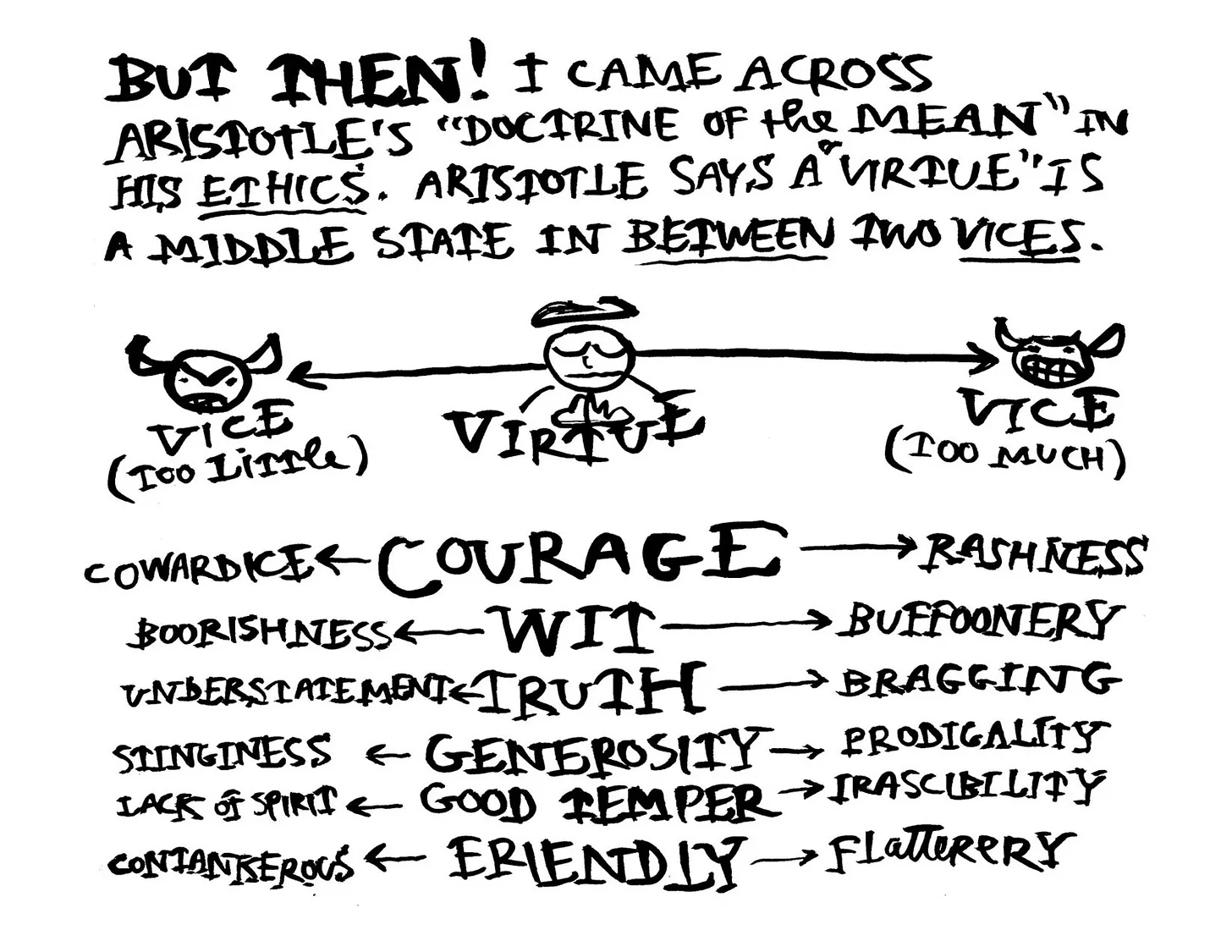
What to Do When Enthusiasm Fades — The Writing Coach Episode 157

Writing a book is a long-term project with lots of ups and downs along the way.

While almost every writer begins work on their book brimming with enthusiasm for the project, the initial excitement inevitably fades over time.

In episode 157 of The Writing Coach podcast, I explore what to do at that critical moment in the creative process when your initial enthusiasm for a project begins to fade.

Listen to the episode or read the transcript below:

The Writing Coach Episode #157 Show Notes

Get Kevin’s FREE book: NOVEL ADVICE: MOTIVATION, INSPIRATION, AND CREATIVE WRITING TIPS FOR ASPIRING AUTHORS.

Click the above image to get the book for free now!

The Writing Coach Episode #157 Transcript

Hello, beloved listeners and welcome back to The Writing Coach podcast. It is your host, as always, writing coach Kevin T. Johns here.

I’d love to give you a free copy of my book, Novel Advice: Motivation, Inspiration, and Creative Writing Tips for Aspiring Authors. To get your copy of that book, head on over to www.kevintjohns.com/novel-advice, and there’ll be a popup, or you can click the tab at the top that says, free book,

In this episode, I’d like to talk about something that recently came up on a coaching call. A client asked, what do you do when your enthusiasm runs out for a project? And there’s still a long way to go, and I think this is a wonderful question because it’s something every book writer faces, and it’s not something artists face quite as much in other fields.

I always think of the example being a punk rocker. Growing up, I would write a song on Wednesday, bring it to my band on Friday, we’d practice it, rehearse it, and Saturday night we might be putting it into the set and playing that show at a club and have people cheering. That timeline from creation to getting positive feedback can be so quick with something like music.

It’s similar to, say, painting. You know, you can start a painting in the morning, finish it in the evening, show it to someone, and get that positive feedback again. Unfortunately, with something like writing a book, it’s a much more long-term project. And yeah, you can jam a book out really quickly, NaNoWriMo style, do it in a month or two, and whatnot. But most people that I know, or that I’m working with have jobs, have families. And so they’re working their novel writing or their book writing around a ton of other things, which means it just inevitably takes longer than if you were dedicating eight hours a day to writing a book, which very few people do.

And so when you are working on a long-term project, at some point, you’re inevitably going to run out of energy, out of inspiration, out of enthusiasm. At some point, it’s going to start feeling like a slog. In fact, this might happen in several cycles over the course of a project. You might lose that enthusiasm during the drafting and then regain it and lose it again at some point during revisions and then regain it and then lose it again at some point during the marketing process.

In fact, something called the “transition curve” or the “S curve” has been created to describe the emotional experience of learning a new skill or working on a long-term project. And how the transition curve goes is you start a project with uninformed optimism here going in, you don’t know what you don’t know, and you’re running on pure energy, on pure enthusiasm and pure inspiration.

But especially with a book, especially with a first book, maybe you get 20,000 words in maybe get halfway through the first draft. What inevitably happens is you reach a point of informed pessimism, and this means you are looking at the project and you’re going, wow, this is a lot harder than I thought it was going to be. And all that excitement I had at the beginning isn’t here any longer. And this is when you can really bottom out in the S curve. So if you think of this as a bit of a peak, the peak is headed toward our uninformed optimism, and then we start curving downwards with informed pessimism. At the bottom of that transition curve is the most important point. And that’s what we’re going talk about in today’s episode because it’s at that moment that you either give up, which is what most people do.

This is why most people never finish and publish their books because when they reach the bottom of the transition curve, when it’s no longer fun, when they’re no longer feeling energized about the project they give up. But if you use some of the techniques that we’re going talk about on today’s episode to push through that wall, push through that transition curve at the bottom at the dip, you actually start trending upwards again. And this enters a time in the project of informed optimism, very different from the uninformed optimism that you started with. You now know that this is a difficult project, but you also know that you’re going complete it and that you have the ability to do so.

Now, I think what a lot of people might assume I’m going to say when they say, when I’m asked the question, what do you do when you’ve run out of enthusiasm I’m going to say accountability, I’m going to say community, I’m going to say, you know, join a group coaching program, all those things . . . And all those things can help. But in reality, for someone like myself, I’m probably not going to join a group coaching program because I’m leading them, but I’m still going to experience moments in a project where I run out of enthusiasm, enthusiasm and need to keep working on it. And what I rely on at that moment when I hit the bottom of the transition curve is actually not cheerleading and coaching. What I rely on is craft writers craft the skills, the templates, the tools, the knowledge that I’ve attained over my writing career. I rely on that to get in there and get the work done that I need to get done, regardless of whether I’m feeling excited about it or not. The reality is, not every writing session is going to be utterly incredible.

You’re not going to go in it just utterly excited or utterly inspired to write every single scene in your book. So if you are writing, if you’re relying on pure enthusiasm, you are going to run out. But when you run out, fall back on craft. I know that if my scene has good scene structure, it’s going to be good. I know if there’s a clean, clear scene goal, if my character is agency driven, if they’re encountering progressive complications, if there’s a decision point, if there’s a nice hooky opening and a great cliffhanger ending, if my character geography is clear, if the environment is intriguing, if the characters have depth and if the reader feels empathy towards them, all of those things don’t require inspiration. They just require the mechanics of solid writer’s craft. And so if you educate yourself on your art form and if you practice it, and if you write several books, you’re going to be able to fall back on that knowledge with the confidence that even if I’m not feeling inspired, I can still write a great scene.

And this is what Stephen Pressfield talks about in several of his books, in his books Turn Pro, The War of Art, and Do the Work. I mean, that’s a great little motivational trilogy of books for writers and artists in general. But what Stephen Pressfield calls this is “going pro.” You know, not being a hobbyist, not being an amateur, being a pro writer. And that means going to work and putting words on the page whether you feel particularly inspired that day or not.

And think of athletes, especially athletes in a sport like, say, baseball or hockey where you have 80 or 120 games a season. Do you think Wayne Gretzky felt utterly energized, inspired, enthused to play every single game of hockey in every single 80, you know, eight every single 80 games in every season? No, athletes, like the rest of us, have good days andc bad days. They have times when life is trouble. Maybe their kids are getting in trouble at school, and their minds are elsewhere. So what do great athletes do when they’re not feeling inspired? Well, they get on the ice, they go pro, and they rely on the skills that they’ve developed to get in there and still put in a great game. And yeah, maybe not every game they’re going to score a hat trick, but they’re still going to get in there and do their job.

You don’t have to be a professional athlete to get into this mindset. Most people listening to this podcast, probably have a job of some kind. And do you only go to your job when you’re feeling inspired? When you’re feeling energetic? <Laugh> No, because you would get fired. Or if you’re running your own business, your business will go under. Having a job is about getting up and going to work every day or whatever your schedule is for work, whether you want to do it or not.

I once ghost-wrote a book where the author was telling me this really great example of this. He was talking about his father being a dairy farmer, and he was saying that if his father didn’t get up and milk the cows in the morning, the cows would be in pain. They actually need the milk expressed or they can get sick, and they can be in a lot of pain. And so as a dairy farmer, it didn’t matter whether it was a nice day out or a horrible day out, it didn’t matter if there was a storm or sunshine. It didn’t matter if he was feeling sick or feeling really great either way, no matter what, his dad got up and milked those cows every morning because he had to, because it was his job and the health of his cows depended on it. And the health of your book depends on it. In the same way, if your book is going to get done, you have got to get in there and milk it every day, whether you’re feeling excited about it or not.

Now, another way to approach this is to get into this goal and milestone-focused mindset. Rather than saying, “I’m going to wait until this book is published and everyone is celebrating it, and I’m selling a million copies to get my satisfaction.” You can create smaller chunks of activity that give you a reason to celebrate. And this is why I often recommend my clients to break their story up into acts, not just because we need those turning points in our story to signify changes in the narrative structurally, but also because when you finish writing an act, it’s time to celebrate. You know, yeah, the book’s not done, but you’ve got a big chunk of story done. And that’s something worth celebrating. That’s a goal that feels much more attainable than just writing an entire book. And it gives you a reason to celebrate and recharge, right? Maybe if you did run out of energy writing act one, well, maybe turning, crossing that threshold, going into the extraordinary world, starting to write Act Two is something that can re-energize you and you can say, “Hey, okay, I did get that first act done. Now maybe I can write the second one.” Now, of course, milestones and timelines and deadlines, give yourself an excuse to celebrate, but also to show up and do the work every day. But of course, self-imposed deadlines can be challenging. Even if you have a regular writing routine, even if you have certain days or times that you are committed to writing every week, you can still fall behind in projects.

And so this is where I bring the accountability aspect into it. This is where having a writing buddy, having a writing group, working with a writing coach, this is where the account accountability does come in. It’s not so much about getting you jazzed up and excited to write. It’s about you holding yourself accountable to the timelines, milestones, deadlines that you’ve created for yourself. And so, yeah, community coaching, these things do come into it, but I really think craft is where it all starts. If you know what you’re doing, you can sit down and write with the confidence of a professional.

The final thing, perhaps I want to say here is that so many amateurs and beginner writers, and even some more advanced artists, their process is to sit around and wait for inspiration to strike. And then when it does, they sit down and write. I think this is a very dangerous way to go about creating your art. As I said, it’s like having a job and only showing up when you feel like it. Whereas what I find is way more productive. A way to go about your writing is sit down and just start writing. Do the work, turn pro, and then guess what happens? The inspiration of rises in the writing. It’s when you’re sitting there putting words on the page, doing the hard work of executing on your writer’s craft that inspiration strikes, and then you can embrace that, and then you can pursue that, and then you can turn that into a creative fuel to keep you going. But so many people do the opposite. They don’t start writing and allow the inspiration to arrive through the process. Instead, they sit around waiting for inspiration in order to start writing, and then they’re surprised why their story moves so slowly in the creative process or why they never get anything done.

So sit down, do the work, learn your craft, and then execute on it. And you won’t have to worry so much about enthusiasm, about creative energy, about inspiration.

All right, my friends, that is it for this episode. To grab a free copy of my book, Novel Advice: Motivation, Inspiration, and Creative Writing Tips for Aspiring Authors, head on over to www.kevintjohns.com and click that button or tab at the top that says, free book.

Thank you so much for tuning in. It has been a great discussion about hard work, and where hard work needs creativity. It’s fun stuff. If you want hear more like this, make sure you hit that subscribe button, and I will see you on the next episode of The Writing Coach.
Tomorrow Never Comes — The Writing Coach Episode 156

One of my favourite bands, Rancid, recently announced their forthcoming album will be titled Tomorrow Never Comes.

The title of the album and the song it shares its name with got me thinking about time.

In episode 156 of The Writing Coach podcast, I explore time — how we use it, how to reclaim it, and when the “right” time is to take on a project like writing a book.

Listen to the episode or read the transcript below:

The Writing Coach Episode #156 Show Notes

Get Kevin’s FREE book: NOVEL ADVICE: MOTIVATION, INSPIRATION, AND CREATIVE WRITING TIPS FOR ASPIRING AUTHORS.

Click the above image to get the book for free now!

The Writing Coach Episode #155 Transcript

Hello, beloved listeners, and welcome back to The Writing Coach Podcast. Guess who it is? As always, your host is writing coach Kevin T. Johns.

It’s a launch week for me. You probably heard last episode that the doors are open to my group coaching program, First Draft. This is the first time I’ve welcomed a new cohort of writers into the group in six months. I’m so excited to get some fresh blood in there and to meet a whole group of amazing authors, get working with them, and introduce them to the amazing people we already have in our community.

First Draft is amazing; it’s a group coaching program, but it’s also a community and a collection of resources for authors.

When you join, you get weekly question-and-answer office hours calls so that you can ask questions specific to your project in your situation. We get on these calls as a group and help one another out.

We also have weekly office hours hot seat calls so that you can get the kind of one-on-one coaching and editorial advice that I provide to my one-on-one clients, but, obviously, it’s at a fraction of the cost because it’s part of a group program.

We also have a fantastic Slack community so writers can communicate with each other and ask questions and share resources totally separate from social media. That was so important to me . . . that this bee on a platform completely divorced from the distractions of social media.

First Draft also features access to a training library of over 20 writer’s craft courses.

In fact, I’ll let you know something . . . I actually added an additional one. And so even though in my marketing I say there are 20 courses, there are actually 21 courses, each of which comes with a sketch note. It’s a one-page document that combines illustration with notes and captures all of the critical content in that course.

When you join First Draft, you also get matched up with a new positivity partner each week. This is another writer in the group with whom you exchange up to 2000 words.  You read each other work, and you provide each other with only positive feedback. It’s not a critique partner; it’s a partner to provide you with positivity and give you that good energy to keep going and working on your manuscript.

The goal of the program is simple: get a first draft of a book written in six months or less, and we’re going to help you do it in a fun and focused manner that allows you to avoid all that frustration that comes with writing a first draft.

All right, so that is the program that I have been pitching this week, and because of that, I’ve been thinking a lot about the response I sometimes get from writers or aspiring authors and aspiring writers about why they don’t join the program.

They say, “You know, that sounds amazing, Kevin. I know you could help me. I know I could do well in this program, but the time’s not right for me. It’s not the right time. I need to wait till next year,” or “I need to wait until a couple of things align in my life.”

It always makes me think about those friends we all have. If it wasn’t a friend, you had a sibling or someone in your life, and they’re a happy couple. Maybe they’re married, they’re clearly in it for the long haul together, and they’ve decided they will have a baby.

They will start a family, but they’re waiting, and you are like, “What are you waiting for?” And they respond, “We are waiting for the perfect time.” <Laugh> It’s this idea that at some point, your life, your career, your family, your health, your exercise goals, all of these things are going to align perfectly, and that’s when you have your baby.

Now I’m a parent; I’m a parent three times over. And I can tell you, having children turns your life completely upside down and changes it forever. There’s no point in waiting for “the perfect time” to have a kid because the second you’re pregnant, the second those kids are born, everything changes forever, and nothing is ever perfect again. You’ve got nothing but excitement and chaos in your life for the next 18 years, at least.

The idea of waiting for that perfect moment to have your baby is silly.

And I think that concept applies perfectly to writing your book.

Many people spend so many years of their life thinking about a story, planning a story, starting it, but never completing it. And with this program, the First Draft program, I’m saying, “I’m going to work with you to get that first draft of that book done while avoiding the frustration and time suck that so many people experience.” Some writers say, “Well, now’s not the right time. I’ve got to wait a couple of months. I’ve got to wait a couple of years. I have to wait until the time is right.”

But the thing is, when is the time right?

When will things ever calm down or perfectly align in your life?

It’s interesting because, for the first time in a very long time, life did calm down for all of us during the pandemic. There was a long period of time there when we didn’t have responsibilities outside of the house. A period of time where we were stuck at home and we had all the time in the world, or so it seemed, or so we were told.

And yet, I want you to ask yourself, how productive were you then in that moment when life stopped, and you could have written your book?

Did you write it?

And if you didn’t . . . why not?

I know the answer, at least from my perspective, because life didn’t calm down during the pandemic. I was stuck at home with three children, <laugh> and as I alluded to at the beginning of this talk, life with kids is crazy. And you know, we had online work, and we had a house to take care of, and we had to plan to buy groceries differently than we were used to because there were big lineups to get into the store.

And I don’t know about you, but my life didn’t feel any less busy during the pandemic.

Life is always coming at you, and life is always getting in the way of what you want to achieve.

A band I love, a band I’ve loved since I was a kid, is the punk rock band Rancid, and I saw online this week that they announced that they have a new album coming out, and the album’s called Tomorrow Never Comes. And they played a little clip of a song from the album, and it sounds like the album’s title is named after this song. You can hear the guys in Rancid singing, “Tomorrow, tomorrow never comes.” And obviously, I had time on my mind, and I was thinking about the idea that tomorrow never comes, and I thought: it’s because when tomorrow gets here, it’s today, and today is always busy. There’s always something going on.

So if you are waiting for tomorrow to arrive so that you can write your book or you can join the First Draft program, tomorrow it ain’t coming. There’s only today, and there’s only a busy life.

And so you need to think about what’s preventing you right now from finding that time to write, finding that time to get the support you might need to write a first draft of a first book. There’s a time management expert named Laura Vanderkam. She has a book called What the Most Successful People Do Before Breakfast, and she has said. . .

When people say, “I don’t have the time,” it really means, “It’s not a priority.”

The only way to find the time to do anything in your life is by making it a priority.

So what is stopping you right now today from treating your writing as a priority in your life?

I know so many people who give so much of their time and their energy and their heart and their soul to their jobs, to their families, to their communities, to all of the responsibilities that are thrust upon them. And they never take that time to pause for a moment and say, “Hey, I’m going make myself a priority. I’m going to take back time to pursue the things that matter to me.”

How do you find the time to write? There are techniques we can use and ways for you to find the time. It’s not that hard.

I’m giving away a bonus when you join First Draft. We’re going to have a live workshop called “How to Find the Time to Write.” I’ll walk you through exactly how to do it because finding time to write isn’t hard.

What’s hard, what’s really difficult, is to look at yourself in the mirror and say, “My writing is a priority in my life.” It’s difficult to say, “I deserve to preserve three or four or five, or whatever it is, hours a week for me and myself in my creativity, in my development as an artist, as someone with something to say, with a story I want to give to the world.”

Tomorrow Ain’t coming. <Laugh>

Things are never calming down. If you really want to write a book, now is the time to do it.

Choose to make it a priority in your life because there ain’t ever a perfect time to have a baby, and there ain’t ever a perfect time to write a book.

If you’d like support while you’re doing it, if you’d like to be part of a community of authors pursuing the same goals as you, if you’d like coaching, if you’d like training, if you’d like to expand your writers craft knowledge, join the First Draft group coaching program.

The doors are open right now, and we are closing them at the end of the month. You might be listening to this past the date. I hope you’re not, though, I hope you’re listening to it right now because on May 2nd, we’re kicking things off. You have just a few days to join First Draft, and I hope you do. I hope you choose to make writing a priority. I hope you choose to make educating yourself in the craft your chosen craft, your chosen art form a priority, and I hope you choose to be part of our community.

To join First Draft,  head on over to www.kevintjohns.com/firstdraft. And if you get signed up now, I’ve got some bonuses . . . I mentioned one already, didn’t I? A live workshop where we’re going work together and look at your schedule and figure out how you can find the time for both the program and your writing.

I’m also providing as a bonus free access to my online course, Smash Fear and Write Like a Pro. This is a mindset-focused course to get you believing in yourself and overcoming all those fears and trepidations that hold back so many authors.

I’m also providing, as a bonus, a free copy of my book, The Novel Writer’s Blueprint: Five Steps to Creating and Completing Your First Book. When I was thinking about providing that as a bonus, I pulled the book down off the shelf, and I looked at it, and I realized I wrote it ten years ago.

I’ve been teaching the craft of writing for over a decade now. It’s incredible.

I’ve learned so much along the way, and it’s been such a pleasure to be able to provide support and resources and advice and information and to be a creative partner for so many authors who are now getting their books out into the world and writers who are just achieving things they always wanted to in their lives. It’s a really cool special thing.

The final bonus I’m offering is a free one-on-one coaching session. My schedule is pretty book solid these days. I’m not taking on a lot of one-on-one clients at this point. If you want me to look at your material closely, the best way to do it is to join the First Draft program, where we have those hot seats where I go through the material with a fine-toothed comb.

When you do join, you get a free one-on-one session with me. We’re going to sit down, and we’re going to go over where you’re at, where your story’s at, any obstacles you anticipate, and we’re really going to nail down a plan to ensure that you find success in the program and that you get the first draft of your book written in a fun and focused manner.

All right? That is it.

Can you tell I’m feeling a little heated? That I’m feeling a little passionate about this stuff?

I really want you to take action and listen . . . Would I love it if you joined First Draft?

Yes.

But what do I really want you to do?

I want you to write that book.

All right?

Make the decision to say, “That thing that’s been in my heart for so long . . . I’m getting it out. I’m getting it out of my heart. I’m getting it out of my head. I’m getting it onto the page and sharing my story with the world because stories matter, change lives, educate, entertain, and reframe the way we experience reality. They are powerful and profound tools.”

And so I urge you to stop waiting for “the perfect time.”

It’s never going to come.

Now is the perfect time.

Maybe I’ll close on an old Chinese proverb: When was the perfect time to plant a tree? Ten years ago. When is the second best time? Today.

Now.

You can’t go back in time. You can’t plant that seed any sooner than right now.

And so now is the time to plant the seed. Now is the time to write the book.

All right, that is it for this episode. Did I give you the url? www.Kevintjohns.com/firstdraft. That’s where you can get all signed up.

I’ll have the links, of course, in the show notes for this episode.

Thank you so much for tuning in. It’s always lovely to get to talk to you. I hope you also hit that subscribe button so that I can see you on the next episode of The Writing Coach.
Just Follow the Protocols! — The Writing Coach Episode 155

On Monday, April 24, 2023, I’m hosting a webinar called First Draft Secrets: How to Write a Fun and Focused First Draft, and it got me thinking about my first book and the role protocols played in helping me get it finished and published.

Writing and publishing a book sure isn’t easy, which is why learning from those who have already achieved what we want to accomplish is so important.

In episode 155 of The Writing Coach podcast, I dig deep into the concept of protocols and how they can help you write your book.

Listen to the episode or read the transcript below:

The Writing Coach Episode #155 Show Notes

Get Kevin’s FREE book: NOVEL ADVICE: MOTIVATION, INSPIRATION, AND CREATIVE WRITING TIPS FOR ASPIRING AUTHORS.

Click the above image to get the book for free now!

The Writing Coach Episode #155 Transcript

Hello, beloved listeners and welcome back to The Writing Coach podcast. It is your host, as always, writing coach Kevin T. Johns here.

Next Monday, April 24th, I will be hosting a live webinar training called First Draft Secrets: How to Write a Fun and Focused First Draft, and I’d love for you to be on that training. Head over to my website at www.kevintjohns.com. Find the show notes for this episode, and I’ll have the link in there where you can get signed up to attend the webinar.

Now, because I’m teaching this webinar on writing a first draft, it got me thinking about my experiences writing my first book. And like so many people out there, it took me a very long time. I finished university, started writing that book, and seven or eight years later I was still writing it <laugh>.

Meanwhile, some other things were going on in my life that ultimately led to me being able to finish and publish that book and launch my writing career.

Largely, it was an interest in minimalism. Growing up as a punk rock kid, I never had that drive for material wealth or things at all. And I’ve also just never been a fan of clutter. I like my desk super organized, I like my computer desktop super organized. And so, for whatever reason, I started exploring minimalism a little bit and reading articles and things. And it led me to the author Tim Ferris. And at the time, Tim Ferris had just released his book, The Four Hour Body. Now Four Hour Body is a book about a lot of things, one of which is nutrition and exercise, but from a minimalist perspective. “Minimal Viable Dose,” I think is the terminology that Tim Ferris uses in that book.

But anyway, this is a long time ago and I remember I was riding a bus somewhere and I was at the bus station waiting for the bus to arrive and I kind of saw myself reflected in the glass of the bus station and I was wearing a tie, and I noticed that the tie was kind of curving <laugh>. It wasn’t going down straight over my belly. It was curving. And I realized I had developed a belly.

I was always someone who was pretty lean, pretty athletic, and never thought much about what I ate other than I was a vegetarian for a very long time, but I wasn’t doing that for nutritional reasons. I was doing it for moral reasons.

Anyway, <laugh>, I noticed I was getting a little bit fat. And so I’m interested in minimalism, I found Tim Ferris, he happens to have a book that includes a weight loss protocol so I decide to try out the protocol. I think it’s called the Slow Carb Diet. It was really kind of a standard Atkins low-carb diet, but where you’re adding legumes to every meal so that, it’s not as hardcore as a traditional low-carb because you’re still getting carbs, but they’re coming from things like peas and beans primarily. Anyway, <laugh>, I start this crazy diet and the weight just falls off, and there’s all sorts of protocols related to the diet. You know, there’s some little exercise things here or there, and there’s also a cheat day.

So one day a week you just go insane and eat anything you want, <laugh>, which was perfect for me, because it’s not like you’re never going eat pizza again. It’s not like you’re never going to eat Kit-Kats again. You know, you eat whatever the heck you want, you just gotta wait till Saturday to do it.

So the weight just started pouring off. Like, I was losing tons and tons of weight, like 40 pounds in four months, maybe. Like something unbelievable like that. And of course, I was getting so skinny that then I started getting really interested in exercise and I’d had this huge success following a diet and losing all this weight. And so I thought, well, there must be a protocol for putting on muscle. I’d never been to a gym, I didn’t know anything about lifting weights, but this became my new interest.

And I started reading about exercise and I started reading about weightlifting. And surprise, surprise, there’s a ton of protocols out there, all sorts of different protocols depending on what your goals are. Do you want to get, you know, strong and, and nimble that you’re better at hockey? Or do you want to get big and bulky so that you look like a bodybuilder? Or do you want to just lose more fat and gain more lean muscle? I mean, if there’s something you want do, there’s a protocol out there for it. And so I picked a couple of protocols, followed them and found huge success.

So you’re probably wondering like, Kevin, we’re five minutes into this podcast on writing and all you’ve talked about is weight loss and exercise.

Well, here’s the thing, as I said, I’d been writing that book for like seven years, not getting anywhere, banging my head up against a wall, not quite understanding why it wasn’t working, but I’d followed a protocol and lost all this weight. Then I followed a protocol and learned how to exercise and gain muscle and feel really great.

And I was like, well, maybe there are protocols for writing.

Like so many people, I thought writing was kind of, you sit in a cabin in the woods, you type up your book and it’s brilliant. Or not <laugh>, but this experience with protocols has kind of made me realize, oh, there are some people out there who have already done what I want to do. And a lot of them have laid out the advice, the steps, the things you need to do to achieve what they achieved. And so I thought maybe I could apply this to my writing and to being an author. And I started exploring the internet, and low and behold, there’s endless amounts of advice, of support, of step-by-step processes and protocols.

And I really discovered this whole world of writer’s craft.

I had studied literature in university, but I had studied it from an academic perspective, looking at literature, and thinking about it. No one had ever taught me the mechanics of actually writing fiction.

So I educated myself on it. I looked at what other people are doing, I looked at the protocols, and lo and behold, in no time at all, I published my first book.

And from there everything changed.

My author career launched, and I started meeting all these other authors. I started pumping out books because they were so much quicker to write once I had a protocol in place. I got work as a ghostwriter. I got to meet all these amazing leaders through that job. Eventually, I ended up coaching and teaching. And, again, how did I launch that business? I followed the small business protocols that are out there. I joined coaching communities. I ended up hiring an amazing business coach, Jason Billows, who taught me the protocols for how to build a small business.

And so what I’m getting at here is there are protocols to writing a great book and doing it in a fun and frustration-free way. But not only are people often not taught them, people actively resist them. And I think this is why a lot of people have trouble with say, weight loss as well. They don’t follow the protocol to a T and then they’re surprised when they don’t get the results that the protocol offers.

So going back in time, this whole protocol idea is how human beings learned. Elders passed on their wisdom to their family and children or apprentices. Apprentices worked under masters who taught them the protocols of the trade. But I think somewhere . . . you know, I love Bob Dylan so much, but I think I’m going blame Bob Dylan for this <laugh>.

I think somewhere in the 1960s there was such a disconnect between generations. The teenagers of the sixties had so little faith in the protocols of their elders, of the preceding generation. And there was really 20 years of kind of rejecting wisdom and embracing freedom and weirdness, and you know, kind of figuring things out for yourself.

And I think Nixon — it’s not all my hero Bob Dylan’s fault — it’s also the evil villain Nixon’s fault. People lost faith in authorities, in the government. When your president is a criminal and is being caught in doing that, people lose faith in authority. And so I really think the sixties and the seventies were really this age of, “You gotta do it your own way, man. You gotta forge your own path. Don’t trust the elders.”

And while I don’t think that attitude wasn’t as much there in the following 40 years, you know, eighties, nineties, two thousands, I still think there’s a certain resistance to protocols. And I think that’s one of the reasons why so many people don’t find the writing success that they’re after.

There’s so many writing books out there. I have a writing book called The Novel Writer’s Blueprint that says, “do these five things to write your first book.” And I guarantee if you do them, you’re going to be really pleased with the results. But the thing is, we don’t do them. We don’t follow the protocols, we follow some of the protocols, or we combine six different protocols, and then we’re surprised when we don’t get the results that we’re after.

I guess what I’m trying to get at in today’s podcast is that almost anything you want to achieve has already been achieved, has already been done.

And so stand on the shoulders of the people who came before you. We don’t have to be so suspicious of the wisdom of our elders, of the wisdom of the people who came before us. Yes, “the times are constantly a change-in” like Bob Dylan says, but fundamentals stay the same. What makes a great story isn’t all that different than when Shakespeare was writing stories. We still like the same stuff. We still like sex and violence and comedy and drama and character arcs and cool settings and intriguing characters, and all of these things are not going to change.

Our last episode was about Artificial Intelligence. Even if AI takes over and starts writing all our stories for us, guess where it’s going to be its ideas from? The stories that came before it. That’s all AI is. It’s a tool that really quickly sorts through the existing wisdom and output of the people who came before us.

And so that’s what’s on my mind. There’s so many people struggling to write a first book and taking years and years and years to get it done just like I did because they either don’t know that the protocols are out there or they’re not following the protocols.

And so that’s what I’m going be doing his webinar on Monday night, First Draft Secrets: How to Write a Fun and Focused First Draft. I’m going to go over how you can avoid all that frustration that I went through and that so many writers go through when writing a first draft. I’m going lay out some protocols that you can follow to write a quicker, more fun, higher quality first draft of your book.

Now whether you follow those protocols or not are up to you. But I urge you to attend the webinar and take a look at what I have to say about how to get your first draft of your book written, and consider applying these protocols, consider taking what I learned and what I learned from the people who came before me and what they learned from the people before them to make life a little bit easier. You don’t have to be the lone wolf out on your own figuring everything out from scratch. Most of this stuff has already been figured out.

And when you’re working from the protocols, it frees up your creativity. It frees up your ability to discover and play and have fun and express yourself in your art because you’re not struggling to execute on the basics. You’re not struggling to figure things out as you go.

So don’t figure it out as you go. Come to my webinar Monday night, learn the tricks and secrets of the trade to writing a really great first draft of your book and make the process fun along the way. To get registered for that webinar, just head on over to www.kevintjohns.com, hit the show notes for this episode, and I’ll have a link there where you can get signed up for the First Draft Secrets: How to Write a Fun and Focused First Draft webinar.

All right, that is it for this episode. Thank you so much for tuning in. I will see you on the next episode of The Writing Coach.