On today’s episode of The Writing Coach I’m joined by someone who has spent decades on the front lines of publishing, helping writers turn rough drafts into real, reader-ready books. Candace Johnson is a long-time editor, now a first-time novelist, with deep experience in traditional publishing and years of success as a freelance editor working primarily with indie authors.
In our conversation, Candace pulls back the curtain on how traditional publishing really works, what editors are actually looking for in a manuscript, and why it’s so important for writers to remember that publishing is, at its core, a business. We talk about the realities of slush piles, the search for that “magical breakout book,” and how the industry’s upheaval around 2008 pushed many editors (and ultimately, the entire editor/writing-coach ecosystem) into the freelance world.
We also dig into what a copy editor really does and how that role often blurs into other kinds of editing when you’re working independently with authors. Candace shares what makes for a healthy, productive author–editor relationship, why some writers resist revision, and how to know when your manuscript is truly ready to send to an editor. If you’ve ever worried an editor will “steal your voice” or “rewrite your book,” this episode will give you a much calmer and much more accurate picture of how good editors really work.
Finally, we explore Candace’s own transition from editor to novelist: the challenges of “taking off the editor hat,” drafting without over-editing every sentence, and embracing revision as a vital, creative stage rather than a punishment. Along the way, you’ll hear practical advice on feedback, critique partners, page counts, and why doing the best you can before you hire an editor can save you a lot of money and heartache.
If you’ve ever wondered what your editor is really thinking when they open your manuscript for the first time or how to become the kind of author editors love to work with, this episode is for you.
Check it out now:
Audio:
Video:
In this episode
- Get critical feedback from someone other than your mom or spouse, ideally a reader in your target audience, before hiring an editor.
- Save money by revising first: anything that takes an editor’s time costs you, so clean up punctuation and rough-draft problems before sending pages.
- Review copyedits with a calm method: accept every Track Changes edit, read straight through, then reconsider only the changes that feel wrong.
- Expect a professional copy editor to preserve your voice while making prose clearer and smoother, and remember you keep the final say on every suggestion.
- Put what you mean on the page: readers will not call to ask what you meant in Chapter 27.
The Writing Coach Episode #230 Show Notes
Candace’s Website
Kevin’s Book Marketing Course
Signal Boost – An 11-module book marketing system that shows you how to get your book in front of the right readers without becoming a full-time marketer.
—
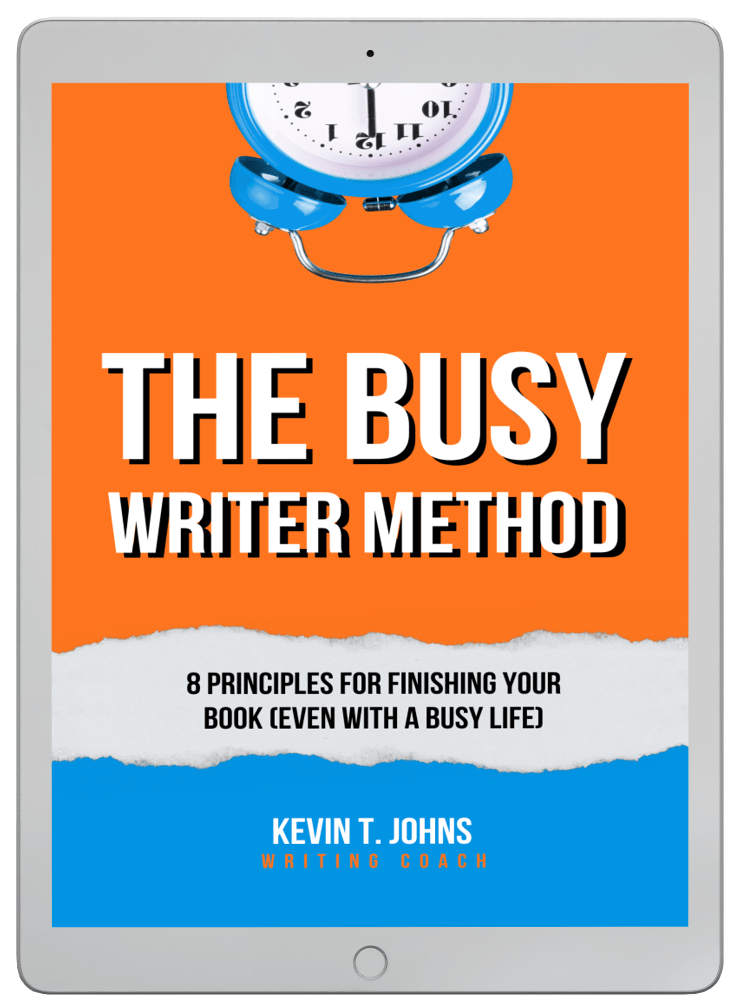
Grab your FREE copy of The Busy Author Method here.
The Writing Coach Episode #230 Transcript
Read the full transcript
Today on the podcast, I have Candace Johnson. Candace, welcome to the show.
Thank you. Thanks for having me, Kevin.
So you’re an editor, a longtime editor. You’re now writing your first novel. Your daughter has a published book, so clearly writing is in the family. Has it always been that way?
I think so. I mean, the arts are definitely in my family. My grandparents were both fine artists—they sketched, painted in oils and watercolours, that sort of thing. My parents were musicians. My brother, sister, and I were all musicians. My brother was a great artist as a child. I think he kind of dropped that for other things.
But we’ve always been in the artistic world. One of the things I’ve always loved was writing, and I can’t even tell you how many pen pals I had over the years, back in the day when we used to write letters to people and postage was expensive. I’d buy those really thin airmail letters that you’d write on, then fold up and mail. I had pen pals all over the world, and I think that was probably the start of my love for getting my thoughts down on paper. I wasn’t much of a journal keeper, but I wrote a lot of letters.
How would someone find a pen pal like that?
Oh, in those days there were services that would connect you with people, or somebody would know somebody who had a daughter or cousin looking for a pen pal in the U.S. It was fun. I found them in a lot of different ways.
Did that come from an interest in hearing about other cultures, or where did that desire to connect come from?
Yes, I’ve always loved the idea of travel, and once I was old enough to start doing it, I travelled a lot. One of my favourite things to do was go to an airport and just watch people. I’ve always been fascinated by how different people are—the things they do and say, the way they walk, how they dress.
Having pen pals in other countries gave me an opportunity to get to know young people my own age, or within a couple of years of my age, and learn about their culture. We’d talk about our families, the things we ate, what school was like. It really was a great education.
Well, that natural curiosity about other people absolutely lends itself to being a novelist now, right?
Yes, absolutely.
I think that natural curiosity about people and what makes them tick is really at the core of novel writing.
I think so. I’ve always been really interested in psychology, and really in anything that has to do with what makes us tick as humans. It’s just fascinating to me.
What sort of things did you study in school?
I was always planning to go to college. I actually did dual enrollment in high school so I could finish high school faster and get into college. But my parents were right in that income bracket where they made too much for me to qualify for scholarships and financial aid, but not enough to really pay for what I needed.
So I ended up going to a community college, and after I had a couple of years under my belt, I was just tired of school. I thought, “I’m going to take a year off, work full-time, save some money, and then go back.”
I think it was 25 years later when I finally went back. Life kind of got in the way.
You probably heard me tell this story. I did my master’s in 12 months rather than two years. But what that meant was I couldn’t apply for my PhD in the fall semester because I had just defended. So I thought, “Okay, I’ll take three months off and apply in the winter semester.”
That was 20 years ago, so we’ll see. Maybe in another five years I’ll circle back around.
Well, I did end up going back to school. My plan was to be an English major. Well, actually, I originally went in with the idea of doing a medical degree. I’ve always been really interested in optometry. My mother worked for an optometrist, and I just thought it was a fascinating field.
But the math killed me. I got as far as trigonometry, and I was done. I couldn’t hack it.
So I thought, “Okay, I’ve always loved English. I love to read. I love to write.” But my parents—bless their hearts—they had my best interests in mind, and they really discouraged me from pursuing anything artistic because “you can’t make a living doing that.” They’d say, “If you want to write, by all means write, but get a degree in something you can use.”
So when I went back to school, I decided to major in English and probably teach. I did some substitute teaching and some internships, and while I think I was good at it—I was offered jobs—my heart just wasn’t in teaching.
During my last semester as a senior, I decided to do a work-study program, mostly to figure out whether there was something else I could do besides teach. One of the opportunities was working for a small publisher, so I applied, got the job, and absolutely loved it.
I was doing the gruntiest of grunt work, and I couldn’t get enough. I thought, “Okay, publishing might be where it’s at.”
And it was. Once I graduated, I stayed with that publisher, first part-time and then full-time. By the time I left eight years later, I was the managing editor of the editorial department. I learned a lot.
I come from the indie world, so most of the people I know are self-published authors or small business owners helping self-publishers. You’re one of the few people I’ve spent a lot of time with—and had on this show—who comes from a traditional publishing background.
So I’m really curious. What were the biggest lessons you learned? I think traditional publishing can sometimes feel like an opaque industry. What insights can you share with someone like me, who spends most of his time in the indie world?
Sure. Good question.
First, I have to preface it by saying I’ve been out of that world for a couple of decades now. It’s been a while. I decided to hang out my shingle and become a freelance editor around 2008, when the publishing world really kind of imploded with e-books.
Of course, everyone thought that was going to be the death of books. As it turns out, far from it. But that was the fear at the time, and publishers were shrinking. The Big Seven—or was it the Big Eight?—kept getting smaller through mergers.
The company I worked for was a family-owned, mid-sized publisher. They tightened their belts, and things got pretty rough.
But the basic goal was always the same, and I think it still is today: find that magical book by an unknown author that’s going to become a huge success and make millions of dollars. It’s a business.
I think authors need to remember that. When you get a rejection to a query, or you get into an argument with an editor about your vision versus theirs, it’s not personal. It feels personal, but it’s business.
So the best advice I have for someone pursuing traditional publishing is to treat it like a business, and be professional.
Being the person on the team looking for that magical breakout book, did you ever spot one? Or is it more often a surprise when something breaks out?
I think it’s probably a little of both.
One of the first things I did—and one of the things that made me fall in love with publishing—was helping one of the editors with the slush pile.
You can probably imagine, based on what you’ve heard, how many manuscripts editors receive. And these were submissions that had already come through agents.
Back then, everything came by mail. This was almost 20 years ago. Manuscripts arrived in big manila envelopes, printed double-spaced according to the submission guidelines, and they just piled up on the credenza behind your desk.
If an editor was lucky enough to have an intern like me who could read through submissions and say, “Nope, this doesn’t fit,” or “Yes, you might want to look at this,” it was a huge help.
For me, it was fascinating because I’d only ever read polished, published books. Suddenly I got to see what manuscripts looked like long before they reached that stage.
Some were great. Some were horrible. Even I could tell they were horrible.
2008 was really the birth of my job. The writing coach industry really grew out of the publishing industry changing. So many professionals like yourself left traditional publishing and moved into freelance work.
Out of that came not only freelance editing careers but also writing coaches—people helping writers get books written—because that editorial support just wasn’t there anymore in the way Hemingway or Fitzgerald would have experienced it.
Very true.
But looking back with the benefit of hindsight, it really was the birth of a whole new way of publishing.
What I like best about being independent is that I can focus on the things I enjoy and that I’m good at. I can’t lay out a book. There are plenty of things I don’t do well. But I know my area of expertise, and I love working with clients who want to learn.
Helping them realize their dream has probably been the best part of my job. As a published author, you know what it’s like to hold your book in your hands and say, “I did this.”
I get to enjoy that from the sidelines, helping someone else say, “Look at this book I made.” It’s incredibly exciting.
Absolutely. I get that joy every time a client publishes—but even before that, just seeing their manuscript improve or watching their technique get better. It really lights me up. It’s a pleasure to play a small role in helping someone achieve their dream.
It really is.
One thing I heard over and over in testimonials was that working with an editor is like getting a crash course in writing.
It’s very focused on your particular manuscript rather than writing in general. Ideally, you’ve already learned the basics, but working with an editor often elevates your understanding to another level.
I primarily worked with nonfiction authors. Many of them were experts in their field; they just didn’t know how to communicate that information effectively.
I could help them package their expertise into a book that showcased what they knew in a way readers could understand and value. That’s a wonderful thing to be able to do for someone.
I really enjoy it.
I think there’s sometimes confusion about what an editor actually does because there are so many different kinds of editors—from acquisitions editors to developmental editors, line editors, and copy editors.
From your perspective, how do you define the work of a copy editor?
As an independent editor working primarily with indie authors, I tend to combine services.
In the traditional publishing model, one editor worked on developing the content. Another focused on the paragraph or sentence level. Then another handled copy editing, and still others handled proofreading. A manuscript might go through two or three proofreads before publication.
Today, most authors can’t afford to spend $10,000 or $20,000 on editing.
An editor has the professional expertise to understand the market and help get your book where it needs to be.
Oh—and I’ve forgotten the question.
It’s funny because sometimes clients tell me, “I know I need a copy editor, but I’d also like some developmental help.”
And I tell them, “Just hire the copy editor.” They can’t help themselves.
Every copy editor I’ve ever worked with has given me every other kind of editorial feedback too.
That’s so true.
I can’t let something slide if it isn’t right.
I might get hired to do a copy edit—which is more language-based, looking at sentence structure, word repetition, and those kinds of things—but if there’s a glaring story issue, or the author assumes the reader understands something that isn’t clear, I’m going to point it out.
I’ll leave notes like, “Consider expanding this,” or “This concept isn’t clear,” or “Have you looked at this resource? I think it explains this better for your audience.”
There are a million things an editor might comment on.
You’re right—we can’t help ourselves. We want to help make the book better.
You mentioned earlier people arguing with editors.
From my perspective, this person’s entire job is to make your work better. They’re not someone to argue with.
So, from your experience, what makes for a good author-editor relationship? What are you hoping to build with your clients?
That’s an excellent question.
I think one of the biggest fears authors have is that an editor will change their writing so much that they’ll lose their voice. They worry an editor is trying to rewrite the book or make it sound like something the editor would write.
That’s simply not how professional editors work.
We’re not trying to take your story, your ideas, or your voice.
If an author genuinely feels that’s happening, then it’s something that needs to be discussed right from the beginning, because that’s not acceptable.
That said, I’ve also had authors come to me for a sample edit and then say, “I don’t want to change anything. Just fix the periods and quotation marks.”
At that point, the editor has to decide whether they can put their name on something they know isn’t as strong as it could be.
If you’re going to reject every suggestion, there isn’t much point in hiring an editor.
As the author, you always have the final say. In traditional publishing that wasn’t always true, especially in fiction. Sometimes authors were overruled because the publisher believed a different ending would sell better.
That’s hard when you’ve poured yourself into a book.
But the goal is always to make the book the best it can be.
Now, that’s different from copy editing.
A copy editor is trying to make what you’ve written clearer, smoother, more melodic, and easier to read while preserving the feel of the manuscript.
All of those changes should be made with Track Changes.
If I don’t like a suggestion, I don’t have to accept it. But if the editor tells me I’ve used the same word 60 times in 40 pages and I decide to ignore that advice, that’s my choice.
Still, I think it’s worth having a conversation if you disagree with something significant.
Nobody’s infallible. A good editor should be able to explain why they made a change.
Absolutely.
One technique I often use is to accept every Track Changes edit first, then read the manuscript straight through.
If something feels wrong, then I know that’s a change I don’t agree with.
If everything reads well, then clearly those edits were helping.
Maybe I’m just lazy, but the idea of arguing over every single change doesn’t appeal to me. When I hire a copy editor, I trust their expertise.
If they changed something, I assume there was a reason.
Right. That’s really the bottom line.
Does it still sound like something you would write?
Maybe they’re not exactly the words you originally chose, but if it sounds right, it’s probably a good change.
I’ve had clients say, “Don’t even use Track Changes. I trust you. Just fix it.”
I can’t do that.
It’s your work, not mine. I want you to see every change I made.
So I always send copies with Track Changes.
It’s funny—I spend so much time working in Track Changes that when I’m revising my own work without it, it feels wrong.
Deleting a sentence without leaving a historical record almost feels uncomfortable.
That’s so true.
It’s also really hard to take off the editor hat, put on the author hat, and then switch back again.
You’re using a completely different part of your brain.
Well, let’s get into that because it’s one of the questions I wanted to ask you.
You’re an author now. You’re deep into your first novel.
Yes.
How hard is it to take off the editor hat and put on the author hat? How do you manage that?
I find it very difficult not to keep editing my own work. That’s probably the most challenging thing for me. I just can’t write a sentence without trying to make it as good as I can make it, and that slows me down. I know it does.
And I hear your voice in my head saying, “Just keep moving forward. You can edit it later.”
Now that I’m in revisions, I am editing it later, and it’s so much better. Like, it’s so much better. I think I just have too many years in editing not to be trying to fix things.
But I think all that experience in editing also gives you the understanding that this thing gets better in stages, right?
So many first-time novelists don’t even know revisions exist, or they say, “I’m going to be the magical unicorn who gets everything perfect the first try.”
It’s got to be at least somewhat relaxing to be able to go into it thinking, “Hey, I know editing is as big a part, if not a bigger part, of the creative process than first drafting.”
Oh, that is so true. It is a huge part of it.
As an editor, when I’ve received something that’s obviously a first draft, I do try to very gently suggest to the author that, since they haven’t had anybody but me see it, they might want to do a little revising first. Maybe have a trusted colleague read it.
It will save them money because if I’m doing everything—including their revisions for them, suggesting changes, and going through two or three drafts—it’s going to cost them a small fortune.
There’s so much they can do on their own and should do on their own because it’s an important part of the process. Just having a great idea isn’t a book. It just isn’t.
What are some of the signs that a book is ready to go to a copy editor?
Say I’m an indie author. I’ve been working on this book on my own, maybe reading some craft books. I’m in Kevin’s coaching program or whatever. How do I know when the manuscript is ready for you to look at?
I think it helps if the author has had feedback—maybe from a critique group, a trusted friend or two, or an English professor. It almost doesn’t matter, as long as it’s not your mom or your spouse, who are going to love everything you write.
It should be somebody with a critical eye. Ideally, I think it could be someone in your target audience.
Maybe, if you’re writing nonfiction, it’s a coworker who knows the topic. Or if it’s fiction, it’s somebody who loves reading those kinds of sci-fi novels and can give you good, critical feedback.
That’s the minimum: having somebody else’s input.
That can be a little dangerous because what you’re not looking for is somebody to tell you how to rewrite your book. You’re looking for feedback on whether the plot is working in fiction. In nonfiction, does the structure make sense? Is it helpful? If it’s a self-help book, for example, does it actually help?
Having feedback is a very positive thing.
It doesn’t take much feedback for any of us to realize, “Oops, that’s not what I thought I wrote. I thought that was very clear, and it’s not.”
Or, “I thought I was telling a compelling story, but my friend pointed out that there’s no dialogue in this entire chapter.”
There are so many little things like that. If you trust someone else to help you, you’ll be able to get the kind of feedback you need to do some of those revisions.
When are you ready for an editor? I think when you feel you’ve done everything on your own that you can do.
I’ve thought about that a lot with my own book. When is it ever going to be good enough?
I do think I’ll know when that is, and I believe it’s going to take about three revisions, just based on what I’ve done and where I’m headed.
I’m on my first revision now. I think I’ll have two more after this one. But this is the big one. This is the one where I’m really struggling in many ways because the story has changed.
Then the next two will be enhancement revisions.
At some point, you have to say, “This is the best I can do with this. It’s my first book, or it’s my third book, or it’s the tenth in the series, or whatever it is. Now it’s time to put it out into the world and hire an editor.”
Yeah, I think what you said there is key: when you feel like you’ve done the best you can do.
If you can really look in the mirror and say, “With the time, energy, and talent I have for this particular project, this is as good as I can get it on my own,” then it’s time to reach out to an editor for some support.
But I think so many of us are rushing or hurrying. We want to get things done, or we don’t want to do revisions, so we’re not giving it our all the way we perhaps could.
Giving it your all doesn’t mean quitting your job so you can write your book. Giving it your all means giving it the time and energy you reasonably can in your life and where you’re at.
Yes. Absolutely.
And I think if you really shouldn’t be spending money on publishing a book yet, an editor will try to gently let you know that your book might need a little more work first.
Many editors also work as coaches—not in the same way that you do—but in helping an author take whatever book they have, at whatever stage it’s at, and bring it along so it’s more publishable.
That’s coaching. That’s different from editing, as you know. But many editors do offer that service.
Those who don’t usually have colleagues they can refer someone to for that extra help.
Again, though, it’s your book. As an independent author, you get to say, “Nope, this is it. I want to publish it. Just make it look good.”
Okay. That’s your call.
Yeah, absolutely.
When you’re looking at a manuscript for the first time—say you’re doing that sample edit—what are the things you’re looking for?
When a new client sends me pages, I’m always on the edge of my seat thinking, “Okay, let’s see what we’ve got here.”
There are certain things you can often spot within one paragraph. A lot of people, for example, just aren’t familiar with point of view. I can read one paragraph and go, “Oh, they’ve already head-hopped, and we’re one paragraph in.”
So what sort of things are you on the lookout for as a copy editor?
For fiction, that’s a really great example because you can usually tell on the first page whether this is going to be a good story or not.
You may not even understand what’s going on in the story yet, but the way it’s written can tell you a lot about whether this is a talented author, someone who’s ready to be publishing, or someone who needs a little more training or a little more time to develop their skills.
People often get angry with literary agents and say, “How can they tell? They only read one page.”
But you really can tell if you’ve read enough.
As readers, we all open a book, read a page or two, and go, “Nope, not for me.” It’s the same thing with agents and editors.
So, as a copy editor, I’m looking at what I’m going to have to do to bring this book up to the standard it needs to be publishable.
Word choice, sentence structure, punctuation, even the way it’s laid out. How does this author work?
I’m a very flexible editor. If you want to use Google Docs, or you don’t want indents and prefer line spaces between paragraphs, whatever you want. It’s your book. You get to make that choice.
If you’re trying to submit a book to an agent or publishing house, that’s a different story. Then it has to conform very specifically to submission requirements.
But I’m not somebody’s teacher or parent who’s going to impose things on them.
I really do discuss with authors what their goal is for the book and what their goal is for the editing process.
Are we on the same page?
I’ve read your first ten pages, or whatever I used for the sample. Here’s what I think it needs, and here’s why I think it needs it.
Then we have a conversation.
Maybe the punctuation is a mess, and you need to go through it before you hire me and do the best you can to improve it. It’ll save you money.
Anything that takes my time costs you money, and people respond to that because nobody wants to spend more than they have to.
It’s a great motivator.
Yeah. Listen, it’ll cost you X number of dollars if I do it for you, and it’ll cost a whole lot less if you do it first and then send it to me.
So those are the kinds of things I usually look for.
If it’s nonfiction, it really depends on the genre. Memoir is so different from self-help, which is different from history or a textbook. There are so many different genres that it’s hard to generalize.
But page count is often a good indicator to me of how strong or weak a writer is because if you know what the page count should roughly be for your genre and you’re way over or way under, the book might not be ready.
Great. I’ve never thought of it in those terms before, but it’s absolutely true.
So let’s say you’ve agreed to work with someone and they’ve agreed to hire you. There’s that conversation of, “Here’s how we’re going to approach things. Here’s the agreement we’re going to come to.”
What does that look like?
Is it a Zoom call like this? Is it an email conversation back and forth? Is there a style guide or some other document you land on at the end?
What does that negotiation process look like in terms of how you’re collectively going to approach the manuscript?
That really depends on the editor. Everybody has a slightly different process.
Personally, I provide a sample edit, which is usually around 1,000 words or about ten double-spaced pages, to give the author an idea of how I work.
I do it all with Track Changes. I do exactly what I would do if I were editing the entire manuscript.
I leave comments. I make corrections with tracking. I make suggestions if there’s something in the content that needs to be enhanced. If something goes off on a tangent and doesn’t really need to be there, I’ll suggest deleting it.
If it’s the kind of book that might benefit from callouts or boxed text for supplementary information, I’ll point that out if it comes up in the sample pages.
So I try to give them a really full picture of what an edit is going to look like.
There are editors who prefer to do everything on Zoom. I don’t.
I think having a written record of everything is really important. The agreement is in writing. The book is in writing.
One thing I’ve found over the years is that authors who aren’t very confident in their writing will sometimes want to go over everything with the editor and explain what they meant.
But you’re not going to be there with the reader to explain what you meant.
If it’s on the page, then that’s what you said. If it’s not there, the reader is going to have to guess whether you meant it or not.
I think that’s an important lesson editors can help authors learn: what’s on the page is your only opportunity to influence the reader.
If you’re not getting the concept across—in fiction or nonfiction—they’re not going to call you and say, “Hey, did you mean this in Chapter 27?”
How many times have you heard me talking with an author on a hot seat or coaching call and then saying, “Take everything you just said to me and put it on the page”?
Yes! And I laugh every time because it’s such a common problem.
“But, Kevin, I meant this.”
“But that’s what I said.”
“No, it isn’t what you said.”
“Well, I meant it.”
Then write it.
Indeed.
Well, having worked with me for quite some time now, you know I have a long list of personal pet peeves—things that drive me crazy in people’s manuscripts.
Do you have a particular pet peeve, or a few of your own? Is there anything that always rubs you the wrong way when you’re reading through a client’s work?
Well, I’m not sure whether I have to thank you or scold you because you’ve added some of yours to my list.
I’m sending my neuroses out into the world.
Yeah.
It’s really interesting because we don’t realize the word crutches or sentence crutches we all have.
We all have pet words. We all have certain ways of doing things that seem perfectly normal to us because we do them all the time.
But when somebody else points out that you’ve had your character turn six different times on one page—that’s one of your words, I know—and now it’s one of mine too. I can’t not see it anymore.
I’m trying to think if I have any specific pet peeves. I know I do. I’m just not thinking of any off the top of my head. I’m sorry.
Well, that’s good because, you know me, they keep me up at night.
If you can push them away until you’re actually working, all the better.
Tell me a little about this transition in your life into being a novelist.
Before we hit record, you were saying you’re not even actively marketing for more clients anymore. You’ve got so many referrals coming in that you’re paying the bills with your editorial work, and most of your focus now is really on your career as an author.
So tell me how that process has been so far.
Oh, it’s been great. It’s been a lot of fun.
Several years ago, as I was approaching retirement age, I decided I finally wanted to try doing some writing.
I’d done a lot of writing when I was younger. I’ve had a couple of pieces published many, many moons ago, but I’d never done anything as extensive as a novel.
I had an idea in my head—a story I wanted to tell—and I wrote a couple of scenes. Then I got stuck.
I didn’t know what to do with them.
I knew how I wanted it to end. I had a couple of interesting scenes I wanted to include. But how do you get from the beginning—which I had no clue how to start—to the ending way, way down there, maybe 70,000, 80,000, or 90,000 words from now?
I was truly stuck.
So I thought, as I always do, “I’ll just teach myself how to do this.”
Some people watch YouTube videos to learn how to fix their plumbing. I watched them to learn how to write a book.
I started with that. Then I started taking courses and joining groups.
I joined a local writing group that was very motivating. It wasn’t even a critique group. It was just a “let’s sit down and write for an hour together” group, which was fun.
It gave me the social outlet I wanted, along with the structure of writing at least once a week. But I wasn’t doing a lot more than that.
I was just trying to learn.
Eventually, I realized I needed a lot more knowledge before I could write a full novel. So I decided to start with short stories.
I did that for a year. I wrote a lot of short stories, entered some contests, and had a lot of fun with it.
I also learned that I love to torture my characters.
That’s a good writer showing.
It’s so much fun.
Then I was watching a webinar you were teaching at, and coincidentally there was another instructor, another coach, who I also felt a connection with while I was watching her.
I thought, “I’m going to hire one of these two people. I’m not sure which one, but I really like both of them.”
It must have been karma or something because, within about 48 hours, I got a newsletter-type email from you announcing that you were opening a new group.
I thought, “Okay, this is my sign.”
So that was it, and the rest is history.
Fantastic.
Is it ever challenging for you to be on the student side?
You’re an expert in this industry. You even did some teaching back in the day.
How does it feel to be on the student end of things and listen to me lecture on?
I consider myself a lifelong learner.
I’ve always loved learning new things and developing new skills—preferably not math-oriented. That’s definitely still not my forte.
This is probably why we connected.
Yeah.
But I just love learning new things, and this has been such an amazing education for me—to learn how to write a book.
Your training has been so helpful.
One of the things I love about working with you, Kevin, is that you’re so positive all the time.
Even when I know somebody—maybe me, maybe another member of the group—is making you want to tear your hair out, you never lose it.
You’re always very calm about it, and you’re always so encouraging.
I think that’s what we need when we’re learning something new, whether it’s how to ride a bike when we’re five or six, or how to write a novel a couple of decades later.
It’s important to feel like you have that support underneath you saying, “I know you can do this. Yeah, you’re not there yet, but you’re getting there, and I’m going to help you get there.”
It’s a wonderful feeling.
Well, it’s been such a delight working with you as well, particularly on the group calls.
As you know, at times I defer to your expertise.
For a long time, I would never even call myself an editor. I was like, “I’m just a coach. I don’t have the eye to be an editor.”
I do feel like I’ve evolved to a point where I can pretty confidently say I can edit, but I’m still not a copy editor.
So at times, as you know, I’ll say, “Candace, do you agree with me here?”
It’s so nice having another expert on the calls to share your opinions and either back me up or point it out when I’m getting things wrong.
Either way, I love having you there.
Oh, thank you.
I think you could call yourself a coach who also edits. I’m an editor who also coaches.
They’re kind of two sides of the same coin because if you’re good at one, you at least have to have a pretty strong knowledge of the other. Otherwise, you can’t be as effective at your job.
In my case, if I can’t explain to an author why I made a choice, I’m not as much use to them as I would be if I could.
For you to take the work of the students you have and say, “Look, if you do this or try that, it’s going to be stronger”—that’s worth ten classes.
It really is.
To be able to see the improvement in something you’ve written, in your own words, and have somebody who knows more than you do or has more expertise in that area say, “Look at what this small change does to improve your work”—that’s golden.
That’s golden.
Well, Candace, I know you’re not actively seeking more clients.
Should we send people to your website, or should we tell them to just leave you alone and let you write your novel?
No, no, no.
I’m not retired because I can’t seem to get myself to retire.
I love what I do. It’s really fun.
Every time I think, “Oh, good, I’m going to have a break now. I finished this project,” something new comes along and I think, “Well, maybe just this one more because it’s such an interesting idea.”
I don’t seem to be able to say no.
I don’t think I’ll ever completely retire because I really do love what I do.
Writing is just another part of that, and it’s a more creative part for me because I’m writing fiction.
But it’s still fun to work with other people’s work and help them realize their dreams—to help them improve their work to the point where they’re incredibly proud of what they’ve published.
That’s a wonderful thing. It really is.
My website—it’s ancient—is changeitupediting.com.
I created it when I became a freelancer, and I haven’t really updated it in a long, long time.
I used to do a weekly blog. I took all those posts down years ago because I didn’t want to have to go through and update everything. The world changes, and so do rules of grammar and all those things.
So I don’t have any of that up there anymore.
What I do have is an introduction to me, a list of books I’ve edited, and some of the things authors I’ve worked with have said about me.
One of these days, when I get a little closer to the end of writing my book, I’ll have a more updated website, and the editing part will just be one part of it.
But right now, that’s what I have.
So if somebody is looking for an editor, I can’t promise I’m the right person for them.
I do think it’s important to find a good fit with an editor. You have to really trust somebody if you’re going to turn over your baby.
I know I’ll have that situation coming up, and I’m going to look long and hard for the right person to work with.
But if I am the right person for somebody, I’m still interested in some new projects.
They’re fun.
Fantastic.
Well, as I said, it’s been such a pleasure working with you and such a delight to finally get you on the podcast and have this conversation with you.
Thank you so much for taking the time to join me on The Writing Coach podcast today.
Thank you, Kevin. I’ve had such a great time, and I really appreciate you having me on.