Welcome back to The Writing Coach podcast.
What if the people giving you editorial feedback on your novel were paying you for the privilege?
That’s how Matty Dalrymple has been publishing lately. Matty writes the Ann Kinnear Suspense Novels and the Lizzy Ballard Thrillers, and has been publishing independently since 2013 under an imprint named after her father, who sold short fiction to Collier’s and Cosmopolitan in the 1950s. Matty also hosts the Indy Author Podcast, which has been running since 2016, runs The Indy Author, a website Writer’s Digest has named one of its best indie publishing websites, and spent a year and a half as campaigns manager for the Alliance of Independent Authors. She has also co-written books on podcasting, including The Podcast Guest Playbook.
Lately Matty has been serializing finished novels on Substack, one chapter a day, with paid subscribers and expert reader feedback along the way. We talk about that in detail, along with the difference between suspense, mystery and thriller, why “indie or traditional” is the wrong question, how she went from expertise to authority, whether you should worry about your work being stolen if you publish it online first, and how a full-time author-entrepreneur uses ChatGPT to take the grunt work off her plate.
Here’s Matty Dalrymple.
Audio:
Video:
In this episode
- Indie or traditional isn’t a one-time choice. Decide format by format, geography by geography and time frame by time frame, based on who should be making the decisions.
- Serialize a finished book, not a draft. Matty publishes a polished novel one chapter a day, so there’s no pressure of writing as you post.
- Serialization can work like a paid beta read. Subscribers give thoughtful editorial feedback, and they pay for the privilege.
- A daily chapter forces a close read, a level of editing that a full read-through or a typo pass doesn’t give you.
- Keep asking what’s serving you. Matty scaled back a separate brand when it wasn’t paying off.
- Offload the grunt work. Matty uses ChatGPT for jobs like swapping out hundreds of book links, which frees up creative time.
The Writing Coach Episode #248 Show Notes
Matty’s fiction, the Ann Kinnear Suspense Novels and the Lizzy Ballard Thrillers: mattydalrymple.com
Read Matty’s current serialization on Substack: Lizzy Ballard Book 6
Matty’s resources for authors, including the Indy Author Podcast: theindyauthor.com
Matty’s books for authors, including The Podcast Guest Playbook (with Mark Leslie Lefebvre) and The Indy Author’s Guide to Podcasting for Authors: all of Matty’s nonfiction
Mentioned in the episode: the Alliance of Independent Authors, Joanna Penn’s The Creative Penn and Royal Road
Matty’s comments on publishing publicly as proof of authorship are her own view, not legal advice.
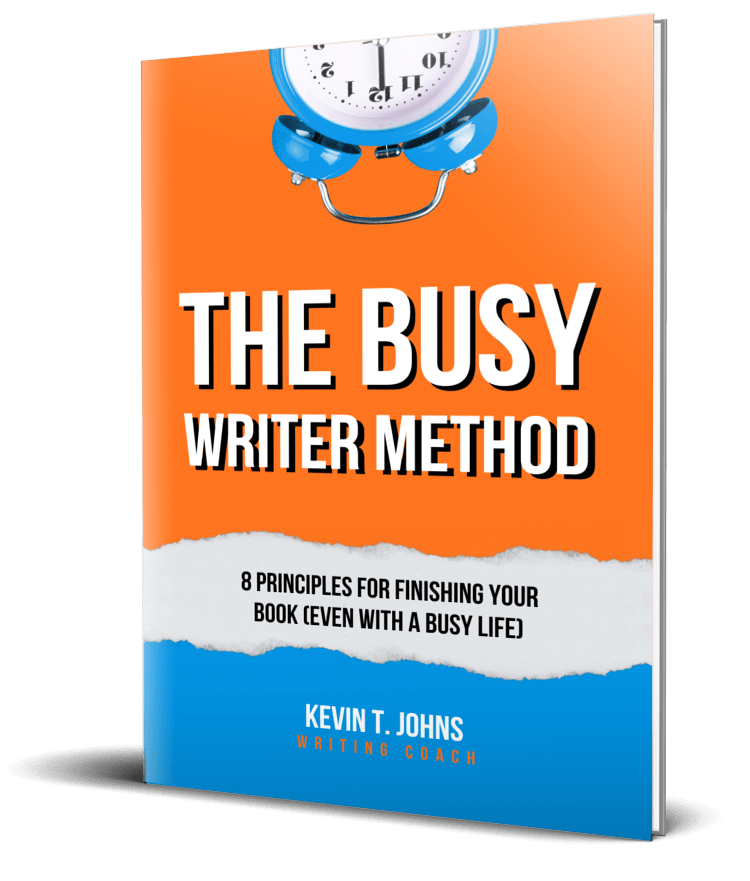
Click the image below to grab your FREE copy of The Busy Writer Method:
The Writing Coach Episode #248 Transcript
Read the full transcript
Kevin Johns: Matty, welcome to the show.
Matty Dalrymple: It is lovely to be here. Thank you so much for the invitation.
Kevin Johns: I know you’ve got a lot going on, but I thought maybe we’d start by talking about your father, because I know you named your nonfiction imprint after him. So clearly he played a big role in your life. Tell us a little bit about that.
Matty Dalrymple: Yes, he did. My father was a writer, and way back in the ’50s he had some short fiction published in Collier’s and Cosmopolitan, back when those kinds of periodicals still published short fiction, so he was doing very well. Then he decided to turn his attention to novel-length works, and I think he was more of a short-fiction guy than a long-form guy. Unfortunately, it was the era before independent publishing. But he loved to write, and he passed that love along to me. Although he never framed it this way, I knew he would have loved to have a child who was a professional author.
So when my first book was ready to come out, The Sense of Death, the first Ann Kinnear suspense novel, and I decided to publish it independently, I was trying to decide what I wanted my imprint to be called. My father had written under the name William Kingsfield, and I ended up naming my imprint William Kingsfield Publishers.
Kevin Johns: Beautiful. When you say he instilled in you a love of writing, what does that look like, other than setting the example of being a writer himself?
Matty Dalrymple: I think it was an interest in the written word, a focus on the written word, and an acknowledgment, which I was fortunate to get early on, that being a writer was a perfectly respectable goal to have in one’s life. Maybe it wouldn’t pay the bills right off the bat, maybe it would never pay the bills at all, but it was something to be celebrated, not something to be discouraged.
Kevin Johns: As an author, you write thrillers and suspense novels. For someone who doesn’t know the intricacies of the genre, how do you differentiate the two?
Matty Dalrymple: I started out with suspense. By that I mean that in the first Ann Kinnear book, The Sense of Death, you know right away who the killer is. The murder happens in an early chapter, right on the page, so it’s not a whodunit, as a mystery would be. It’s more of a “what will happen” kind of story. There’s a storyline featuring Ann Kinnear, the protagonist, and a storyline featuring the known killer, and you can see their trajectories coming together throughout the book. You wonder what the outcome will be for the killer and for Ann when their paths finally cross.
The first one was strictly suspense. The second one had a mystery aspect to it, but it was also mainly suspense, and after that they’ve almost all been mystery. I kind of regret that I didn’t start out that way, because I think mystery is an easier sell than suspense. After that, they all had a true whodunit aspect. So that’s suspense versus mystery. Thriller, the way I define it, is “Will the protagonist survive the encounter?” It’s a little more action-oriented, a little more plot-driven. Those are the distinctions I make for myself.
Kevin Johns: In addition to being an author, you’re also a prolific podcaster. This is probably going to be episode 250 or something of my show, and you’re 100 episodes beyond that. Tell us about your podcasting journey and what you love about the medium.
Matty Dalrymple: If I go back to the time leading up to 2013, when my first book came out, I’d finished the book and was trying to decide how to publish it. I was talking with a lot of the people in my local writers group, the Brandywine Valley Writers Group, and I found that many of them had specific areas of expertise that I was very interested in. One person was very good at author readings. Another was very good at local media outreach. Somebody had formed a kind of publishing co-op with some of his fellow authors. I was really interested in having the opportunity to talk to these people and find out what they knew.
Almost as a courtesy, a thank-you for spending time with me, I ended up recording those conversations, many of which happened in person, and putting them up as the early episodes of the Indy Author Podcast. That drove the podcast from 2016, when I put out my first episodes, to about 2019. It was fairly regular, but not strictly regular. Then in 2019 I left my corporate job and went to a more regular schedule of every other week, and in 2020 I went weekly.
A driving force was always the opportunity to talk to people who knew things I was interested in finding out more about. Over time it also came to include the benefit of the relationships you can build with people through conversation, relationships that can serve both of you in other ways. I’ve now co-authored two books with Michael La Ronn and two with Mark Leslie Lefebvre, and I met those folks in part through my podcasting experience and theirs. Many opportunities have opened up to me as a result of the relationships I formed with my guests, and I hope I’ve been able to open up many opportunities for them, too.
Kevin Johns: The podcast is the Indy Author Podcast, correct?
Matty Dalrymple: That’s right. I actually have two, although one is much less regular. My other podcast, From Expertise to Authority, is at about the stage the Indy Author Podcast was at in 2016. It was an opportunity for me to talk with people who are not necessarily in the writing and publishing worlds about their journey from expertise to authority. I wanted to open up my consulting practice to make it more appealing to people who didn’t primarily identify as authors. If someone goes to somebody called the Indy Author for consulting help, they probably think of themselves as authors. I wanted something that stepped away from the explicit author branding, and that’s what prompted me to spin up From Expertise to Authority.
Kevin Johns: And I know you see those as two different things. Can you tell me a little about this idea of moving from expert to authority?
Matty Dalrymple: I think expertise is something internal that you build, and authority is something that’s recognized by other people. Expertise is the foundational thing you need. If you want to build a reputation as someone who knows a lot about independent publishing, for example, then you need to develop expertise in independent publishing. But you also have to become recognized as an authority on it, and authority is the status that others confer on you once your expertise is recognized.
Kevin Johns: I know Writer’s Digest has recognized The Indy Author as one of the top 100 websites for authors every year for five years now or something. Tell me about how you became an authority in indie publishing.
Matty Dalrymple: Oh my goodness, it was just something that interested me so much. I became a deep student of it. Everybody has to mention Joanna Penn of The Creative Penn. I was a fan of hers from way back, and I think I was one of her last one-on-one consulting clients, back when she still did that. I just found it fascinating, and the more I knew about it, the more I wanted to know.
I spent a year and a half as the campaigns manager for the Alliance of Independent Authors, a global nonprofit supporting indie authors. It was learning about it both because I needed to know it to run my business and because I find it a fascinating business model, with fascinating people. It was something that was intrinsically of interest to me.
Kevin Johns: Over your publishing journey, has there ever been the temptation to go traditional, or are you proudly indie all the way through?
Matty Dalrymple: I am proudly indie, but what I like to say to people is that being indie or traditional is not a choice you should make for a career. It’s not even a choice you should make for a book. It’s a choice you should make format by format, geography by geography, time frame by time frame. Whenever I have another book coming up, I ask, is this something I want to pursue a third-party publisher for?
I think the term “traditional publisher” kind of doesn’t make sense anymore. I think of it as indie published when you, as the creator and the entrepreneur, are making the decisions, and third-party published when somebody else is making them. So far, third-party hasn’t been appealing to me on a book level. I can imagine I would always want to keep my ebook rights, especially my U.S. ebook rights. But if someone came to me and said, “Hey, we can help sell your print books in Germany,” I’d say, “All right, over to you.” I would absolutely be happy to partner with someone who could reach audiences I couldn’t. It hasn’t happened yet, and it hasn’t appealed to me to pursue, but I would never say never.
Kevin Johns: I have a client who is publishing on Royal Road. Are you familiar with Royal Road?
Matty Dalrymple: Very generally, not a lot of detail.
Kevin Johns: It’s a serialization website primarily used by LitRPG authors. I think it’s where Dungeon Crawler Carl was originally published.
Matty Dalrymple: Okay.
Kevin Johns: And he keeps pushing me: “Kevin, you’ve got to learn serialization. You’ve got to teach serialization. There are so many authors out there. It’s so great.” So when I saw that this is a space you’re working in, I thought, okay, great, he’ll be happy. I at least got an interview with Matty, and we can talk about serialization. For an author who’s maybe not that familiar with it, can you introduce the topic and let them know how you’re using this style of publishing, or platform, I suppose?
Matty Dalrymple: Sure. I am very excited about serialization, and that’s something I wouldn’t have expected even a year ago. It started with the confluence of two things. One is that, as a result of spinning up From Expertise to Authority, I felt I needed some personal experience on Substack. I did a lot of consulting with clients, many of whom already had a book when they came to me but needed help getting the word out, and they’d ask, “Should I publish on Substack?” And I’d say, “Yeah, sure, why not? Who knows?” It was really the only thing that came up frequently that I didn’t have personal experience in or hadn’t written a book about. A lot of my conversations were with people who wanted to pursue podcast appearances, and I have a book about that, or speaking engagements, and I have a book about that. I felt bad saying “Yeah, sure, why not check it out?” when it came to Substack.
So I thought, I’ll experiment, using From Expertise to Authority. I established a Substack profile, and I really enjoyed it. It was also a time when I was backing off social media, because I just didn’t want to be there anymore. Substack offered a lot of great supporting assets, like email list management and the ability to do podcasts, and I really liked the platform.
At about the same time, I was finishing my seventh Ann Kinnear novel, which was my twelfth novel. A friend and colleague was encouraging me not to make the investment in a full professional edit. I’d resisted that for years, because I was always banging the drum that you can’t assess your own work. But I realized that not only did I have quite a bit of novel-writing experience under my belt, I had also developed a really sophisticated pool of people who could provide editorial input, a very deep beta reader pool. So I thought, okay, I’ll try this for this one.
I finished the book, went to my first trusted reader, got her input and incorporated it. Then I thought, I still don’t feel like enough eyes have been on it yet. So I decided to experiment with Substack. I serialized my seventh Ann Kinnear novel, one chapter a day, for what turned out to be about two months, and it was such a great experience.
The reason I hadn’t pursued serialization before is that I always heard it in the context of writing as you’re posting, which sounded horrible to me. I’m sure it works for some people, but knowing I was doing that would have ruined my whole two months. But the idea that I had a finished product, as polished as I could possibly make it on my own, and I was going to put it out one chapter at a time, was very appealing to me.
Kevin Johns: What would you say to authors who are scared about their content being stolen if they publish it online first? I had another interview today, and the guest was talking about AI and how AI just stole everyone’s work. I think more than ever, authors are cautious about publishing online. How would you ease someone into dealing with that fear?
Matty Dalrymple: That’s a hard question to answer, because it’s never bothered me, so I’ve never thrashed it out in my own mind. But first of all, if you put it out on a public forum like Substack, you’re demonstrating that it’s yours. If somebody copies your work, and some legal entity goes back and sees that you published it on Substack in 2026, and they published a book that looked a lot like it in 2027, guess who’s going to have the legal benefit? I think sharing in that forum is actually helpful if that’s something you’re concerned about.
And in the scheme of all the things writers have to worry about, worrying that someone or something is going to steal your work, I understand the moral concerns about AI stealing our work, but from a practical point of view, it’s just not productive energy to burn. So that was never a consideration when I was thinking about serializing.
Kevin Johns: A lot of authors have paid upgrades on Substack. Is that the approach you’re using? Do you have paid subscribers who then get access to the serialized story?
Matty Dalrymple: Yes. And this is great, because not only did I get great editorial input, but people paid me to provide it. I’ve tweaked the approach. I used a slightly different approach for my first one that I wouldn’t redo, because it turned out to be administratively onerous to maintain. Basically, I charge $10 a month, and most of my novels, and I plan to keep doing this, are going to take two or three months, so I can guarantee people who sign up at the beginning that they’ll never pay more than $30.
One of the things I didn’t like about Substack is that I figured it would be like Patreon, where you say “do this and you’ll get this thing.” It’s clunkier on Substack. I hope that by the time this airs they’ll have fixed it. If you don’t have something ongoing, it’s confusing, because Substack requires you to provide a yearly option. If you’re charging $10 a month but the thing will be done in three months, it doesn’t make sense. The $10 a month works out nicely because I believe Substack’s minimum annual amount is $30, so it’s easier to explain to people. It’s intrinsically confusing, so it’s tricky to explain the whole thing.
But people can join at any point. When the last chapter comes, I suspend charging them and comp them lifetime access, so they’ll never pay more than $30, or $20, or $10, depending on when they join. That was the best solution I came up with for a manageable and understandable way of monetizing this effort.
Kevin Johns: Are you getting feedback on the chapters as they go up, day to day or week to week? And if so, is that affecting future edits?
Matty Dalrymple: Yes. The first one especially was very productive in terms of editorial input, very thoughtful, expert edits, not just people saying, “Hey, I love that chapter.” Really useful input. I never commit to when the final book is going to come out, because I don’t know what will come up in the comments. Fortunately, for Ann Kinnear Seven, which became the novel Something Rich and Strange and launched in August, the input was mainly tweaky things. When I got done, I could have launched the book the next day, because there weren’t any overarching concerns like “I don’t understand why the villain did this.” I’m now serializing my sixth and final Lizzy Ballard thriller. So far I haven’t gotten anything that makes me think I’ll have to be doing a lot of ripping and tearing, and that’s been great.
One of the things I really value is that in the worst possible circumstance, where I throw a party and nobody comes, I like to ask, is this still going to be useful? It absolutely would be, because there’s something about committing to look at each chapter, one chapter a day, at that level of detail. When I do editorial passes, I’m usually reading through to get the flow of the story and check whether the arc is working, or I’m checking for typos. This forces an in-between level where I’m looking closely at 1,500 to 2,500 words in a day. The chronology forces me to do that, and it’s proven very useful, both for the input I get from people and the input I can give myself with that kind of focus.
Kevin Johns: The book is originally published serialized via Substack, and then you publish it as a paperback. Are you also publishing it as an ebook at the same time?
Matty Dalrymple: Yes.
Kevin Johns: And does the audience carry over? Do they say, “Oh, I’m good, I read it,” or do they go, “Now I have to buy the paperback or the ebook”?
Matty Dalrymple: Well, I give away the ebook, so anyone who supports me at any level gets the ebook.
Kevin Johns: Oh, great.
Matty Dalrymple: So if people wait until the last reporting period, it’s a pretty good deal, because you get to…
Kevin Johns: Cut this part from the interview, or no?
Matty Dalrymple: No, no, please! I’m happy for anyone to join at any point. But if you join in the last 30 days, you get the whole serialization, and then you get an ebook that’s going to retail for $7. I think it’s a pretty good deal for people, and I hope they’ll cash in on it.
Kevin Johns: So you’ve got your suspense series, the Ann Kinnear series, and the Lizzy Ballard thriller series. You have The Indy Author website and podcast. You also have From Expertise to Authority, the newer service, with somewhat regular podcasts for that one as well. You also write articles for Writer’s Digest. You’re doing all of these things, so the inevitable question is: how do you go about managing that? How do you put on different hats? What does an average week or day look like for you?
Matty Dalrymple: I’m doing this full time now, so that helps. I’m not trying to jam it into evenings and weekends. One of the keys is always assessing what’s serving you and what’s not, and the From Expertise to Authority effort is a really good example. At the end of 2025, I saw an opportunity: people were coming to me who already had books and didn’t primarily identify as authors, and I saw a chance for the From Expertise to Authority platform. I pictured opportunities with organizations like AARP, or professional organizations of people who were more senior in their careers. Basically, I saw an opportunity to help people who were moving into a second-act career, or spinning up a sideline or side hustle, people who had been in their profession long enough to establish expertise.
I spent a good chunk of this year, 2026, exploring those opportunities. Eventually I found that the opportunities I was getting were ones I would have gotten even if my platform had the word “author” in the name. I wasn’t getting the bang for the buck I expected from separating From Expertise to Authority. It’s not that I’m retiring it. If I went to AARP Pennsylvania, say, and they were looking for webinars for their members about professional development after retirement, I’d feel comfortable. I have a pool of articles on Substack, a pool of interviews I’ve done, and a description of the presentation I’d give if somebody hired me. I thought, that’s enough. I don’t have to keep banging on this, because I think it has served its purpose. I’d still interview people. If I came across someone with a really cool story of moving from expertise to authority, I’d love to talk to them. I just felt I didn’t need to keep sinking separate time into it.
I’m also tapping very deeply into using AI to automate the procedural parts of my business. A good example: earlier this year I decided to move my universal book links from Books2Read to BookFunnel, and I was slogging through updating those links on my website. I thought, you know what? So earlier today I went into ChatGPT and said, “Look at my website and find all the places where there are still Books2Read links,” and it found them all. I said, “Change them all to BookFunnel links,” and I was doing other stuff while it did that. I’m very excited about the creative time it frees up for me to offload that kind of thing: podcast production, all that grunt work, offloaded to a tool.
Kevin Johns: Obviously AI is changing everything, especially in the entrepreneur and small-business space. But looking back over 15 years as an independent author, how have things changed for authors over the last decade and a half?
Matty Dalrymple: I think the biggest change is that it’s much less of an either/or. We started out this conversation with indie versus traditional, and for the reasons I talked about, it’s much less of a dichotomy. Early on, indie authors, who at that time were called self-published authors, a phrase I hate, but I think we grew out of it, were figuring it out, and we’d look at what traditional publishers were doing and try to emulate that. Then it got to the point where traditional publishers were seeing what the indies were doing very successfully in terms of direct reader relationships.
I remember years ago talking with Leslye Penelope, who is very successful in both the indie and the traditional space, and one thing she said still sticks with me: the customer of the traditional publisher is the bookstore, and the customer of the indie author is the reader. I thought, that explains so much.
Kevin Johns: What a great way of putting it. It’s obvious, and I’ve never heard someone put it like that.
Matty Dalrymple: Exactly. And I think traditional, or third-party, publishers are recognizing the value of the relationships indie authors have built with their followers. So it’s becoming a spectrum, one where people can move back and forth without it being as much of a dichotomy, or as polarizing, as it was in the past. And I think that’s good for everybody.
Kevin Johns: If folks want to check out your fiction, where do we send them? Actually, let’s say your fiction and your nonfiction.
Matty Dalrymple: If people want to find out about my fiction, they can go to mattydalrymple.com, and that’s Matty with a Y, M-A-T-T-Y. And if they want to learn about everything I offer to authors on my nonfiction platform, that’s theindyauthor.com, and that’s Indy with a Y, I-N-D-Y.
Kevin Johns: Fantastic. Matty, was there anything else you wanted to make sure we got out to listeners today?
Matty Dalrymple: I’d just say I’d love to see people over on Substack. If you search for Matty Dalrymple, you’ll find me. I’m going to continue to have serialization be a part of my book rollout. I already have a couple of serializations scheduled after the current one, which is Lizzy Ballard Six. So whenever people listen to this, please pop on over to Substack, see what I’m up to, and jump on in. The first seven chapters are free, so at least check that out. That would be great fun.
Kevin Johns: Matty, thank you so much for joining me on the Writing Coach Podcast today.
Matty Dalrymple: This has been great. Thank you so much for the invitation.