Welcome back to The Writing Coach podcast.
What would your writing practice look like if you let a little of it decompose?
That’s one of the ideas Bailey and I dug into in this conversation. Dr. Bailey Lang is a writing coach who runs a business called the Literary Witch. They spent years in marketing at a multinational HR company before earning a master’s and a PhD in rhetoric and writing studies. Today they coach thought leaders, solo business owners, academics, and memoir writers, plus the occasional genre-fiction author, pairing practical craft strategy with tarot, oracle cards, and ritual.
I’m on the “not that woo” end of the writing-coach spectrum, so I had a lot of fun with this one. We start with mushrooms. Bailey makes the case that the shaggy ink cap, a mushroom that turns itself into black liquid, is a better model for a creative practice than most productivity advice. From there we get into marketing to the right people instead of everyone, why so many writers struggle to trust their intuition, and what to do when you’re logging sixteen hours of screen time a day. We also talk about the difference between a ritual and a habit, and Bailey explains their firm line on generative AI. And yes, I had to ask about bibliomancy and sigil making.
Here’s Dr. Bailey Lang.
Audio:
Video:
Live workshop with Bailey and Kevin
Creative Sigils: Make Your Mark, co-hosted by Dr. Bailey Lang and me.
If the sigil segment caught your attention, here’s your chance to make one. Bailey and I are co-hosting a live workshop on it. Bailey covers where sigils come from and how a little magic in your writing routine can support your creativity. Then they’ll walk you through making your own, so you leave with a personal writing intention and a tool you can keep using.
Saturday, December 5, 2026 · 1:00 to 2:30 p.m. Eastern · Live on Zoom · $47 USD · Every buyer gets the replay
In this episode
- Let things decompose. Thank the parts of your writing practice that have stopped working, let them go, and trust the next growth cycle.
- Don’t compare your writing life to someone whose only job is writing. Their circumstances aren’t yours.
- Market to the right people, not everyone. Send a clear signal about who you and your book are for, and don’t water yourself down.
- Rebuild your creative intuition by making room for boredom, even one phone-free cup of tea.
- Ritual beats habit. It keeps you paying attention, so your practice can change as your skills and goals do.
- Your stories are spells. “I’m not good at writing” shapes how you show up, so tell yourself a different one.
The Writing Coach Episode #249 Show Notes
Learn more about Dr. Bailey Lang and the Literary Witch: literary-witch.com
Join Bailey’s monthly newsletter, Ink + Alchemy: Sign up here
Bailey’s offerings: The Ceremony (monthly writing circle), The Potion Bottle (90-minute strategy session), The Coven (group coaching), The Grimoire (1:1 book coaching), and The Cauldron (developmental editing)
Bailey’s AI policy
Mentioned in the episode: Empire of AI by Karen Hao
As an Amazon Associate I earn from qualifying purchases.
Learn more about Signal Boost, my book marketing program: Signal Boost
Bailey’s comments on AI and copyright are their own view, not legal advice. Copyright rules vary by country.
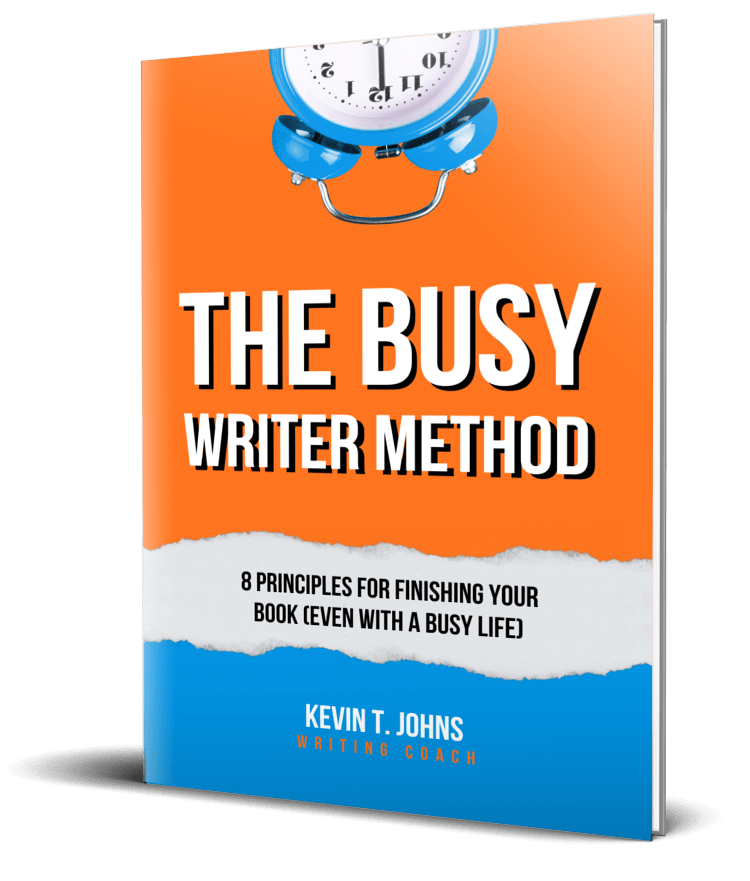
Click the image below to grab your FREE copy of The Busy Writer Method:
The Writing Coach Episode #249 Transcript
Read the full transcript
Kevin Johns: Bailey, welcome to the show.
Bailey Lang: Thank you so much for having me. I’m really excited to be here to talk about writing.
Kevin Johns: Well, Bailey, I was looking at your website, and I thought a good place for us to start this conversation might be mushrooms.
Bailey Lang: Always a good place to go.
Kevin Johns: Tell me about mushrooms.
Bailey Lang: Yes. For the past several years, I’ve been really fascinated by mushrooms. I think they’re very interesting, and I think they provide a really useful metaphor for thinking about writing. Mushrooms grow out of mycelium, this interconnected subterranean layer. All of those interconnections are our intuition, our inspiration, all of the things we draw on, all of the nutrients for our creative practice. And then they fruit into mushrooms. That might be a story or a book, the thing you’ve created that you show people publicly.
Mushrooms are also a really good metaphor for the creative practice itself. They need compost to grow. They need things to be decaying and dying back, and then they create new life out of that. There are always parts of our creative practice that are blossoming at different points, growing and showing up, and parts that are in more of a fallow period, things we need to let sink in before we can do anything with them.
So from a metaphorical perspective, I think mushrooms are really useful, and they’re also just really fun. If you’ve never gone out in the woods and looked for all the cool, different and unique mushrooms that are out there, I highly recommend it. It’s very fun.
Kevin Johns: I have a client who introduced me to the concept, or the metaphor, of a fallow period in our writing. You went a step further here, not just saying we need a fallow period, but really a period of decomposition. Can you lean into that a little more? I think most people are familiar with the idea of “I want to grow my creativity,” but I’m really interested in the idea that something also has to fall apart for that to happen.
Bailey Lang: One of my favorite mushrooms is the shaggy ink cap. It’s a really cool, scaly white mushroom, and it does what’s called deliquescing. It turns into liquid, this really inky black liquid, and it happens really fast, sometimes over the course of hours. That’s a necessary part of its reproductive cycle. It has to do that so that in the future there can be more mushrooms.
I think the same is true of our creative practices. We don’t often like to acknowledge that sometimes we were doing something that doesn’t work anymore, and we need to let it go. We need to thank it for the benefits we got from it at that time, but we can’t keep trying to force something that’s not working, or we’re going to lose out on the next growth cycle.
So I think that recognition, that sometimes things just need to decompose, is really powerful and really permission-giving. It lets us acknowledge that a writing practice is not going to stay static forever. Our lives are going to change, our circumstances are going to change, we’re going to work on new projects, and sometimes that’s going to demand a new way of being in relationship with our creativity. That whole cycle has to happen, and it’s really important that we let it and that we trust it.
Kevin Johns: I love it. It also makes me think of someone I interviewed recently. I asked, “How do you get everything done?” and she said, “Work is all I do.” I think it’s important for people to realize that when they look at someone who’s really productive, a writer who puts out a ton of work, they think, “Why can’t I do that?” And it’s because you have nine other things going on in your life, and that person does just that. So there’s also the idea that you can’t put the pressure on yourself to say, “I’m going to live life as I’ve always lived it and become a successful author.” Something needs to let go to create space to bring that into your existence.
Bailey Lang: Yes. And we can’t compare ourselves to other people. Looking to other people for inspiration is so powerful, but we always have to remember that their life circumstances are different from yours. If someone is able to make work their exclusive focus, that’s amazing for them. That doesn’t mean you can do the same thing, or that you should put that same expectation on yourself. I think that’s a really helpful reminder.
Kevin Johns: Okay, let’s go in a whole other direction now.
Bailey Lang: Sure.
Kevin Johns: Hair.
Bailey Lang: Yeah.
Kevin Johns: These days I often have a beard, but I still use old author headshots without one, and it can really throw people off. I’m like, “Hair grows. Sometimes I have it, sometimes I don’t.” I noticed on your website that you had a couple of headshots with hair and a couple without. Do you just say, “Hey, hair grows, the way I do,” or how do you grapple with the image side of hair or no hair?
Bailey Lang: Oh my gosh, such a good question. I keep mine buzzed most of the time right now, but that means it also grows really fast. So by the time I’m having a picture taken, it might have been a couple of weeks since I last shaved my head, and I’m going to look very different than I do right now, two days after the last time I shaved it. It’s all part of the cycle. I like to have a few different pictures of myself out there just to let people know I’m going to show up the way I show up. It might look a little different than you’re expecting, but it’s all part of it.
Kevin Johns: I love that. I’m a huge Bob Dylan fan, and one of the most fascinating things about him is that for most of his career he was a chameleon who reinvented himself every three years. That’s a great way to go about being an artist, saying, “I’m not this static brand. I’m an evolving being.”
Bailey Lang: Yeah, and that’s been a huge theme for me this year. My business became the Literary Witch earlier this year, which has been a big change. It was previously the Writing Desk, and I realized it was time to step into a new identity with the business. My theme for the year has been “let it be weird,” and really bringing all of myself and all of that journey to the forefront. I think that’s permission-giving for writers, too, to step into a new identity as an author, or as someone who can build a writing practice that works or finish a book. Modeling that feels really helpful for people, and it’s also been a lot of fun for me.
Kevin Johns: You have a marketing background, and I’m teaching book marketing for the first time this year. I piloted some material with a one-on-one client last year, and then launched Signal Boost, my book marketing program, this year. One of the very first things I try to do in that program is say to people, “We’re not for everyone, and you’re not trying to convince anyone of anything.” Given your experience with marketing, and what you’ve just said about letting it be weird, how do you embrace the idea of not being some bland brand that appeals to everyone, and instead being some aspect of your authentic self?
Bailey Lang: I think it’s really important, whether you’re marketing a business or a book. You didn’t write a book for every single person in the world. You don’t need every single person in the world to read or like your book. You need the right people to find and like your book. It’s the same with marketing my business: I need to send the right signals to the right people.
I had a really powerful experience with that. I joined a new group, and at an in-person meeting they invited everybody to come to the front of the auditorium and introduce themselves. This is Central Ohio, a kind of buttoned-up organization. So I got up in front of this room and did my little introduction. I said, “Hi, everybody. I’m Dr. Bailey Lang, they/them. I’m the Literary Witch.” And I could see a ripple of reactions go around the room. Some people leaned in and looked very interested, and some people leaned back and seemed very put off. And I thought, “Okay, now I know who in this room I need to talk to.” You don’t always get that clear a response, but when it happens, it’s really, really helpful. It’s helped me make good connections in that group and find people I really vibe with.
That’s the goal of marketing. It’s not to reach everybody. It’s not to water yourself down. It’s to send out the signal: this is who I am, this is what this book is, and if you’re into this, let’s talk. Let’s hang out. That is a way more fun approach to marketing than trying to appeal to everybody, which you’re never going to do anyway.
Kevin Johns: Take me through that journey of working in marketing and then saying, “No, I’m going to get a PhD.” How did that happen?
Bailey Lang: I was working in marketing for a multinational HR company. I got a job with that company right out of my undergraduate degree and worked my way into the marketing role based on my writing background. Then I started a master’s program on the side while I was working. It was in rhetoric and writing, and I really fell in love with that field. I loved getting to work with academic texts and do all of this analysis, and I was doing really interesting research. My first published book came out of my master’s thesis, and faculty members were telling me, “I really think you should consider pursuing a PhD. I think you’d be a really good fit.”
The company I worked for had also undergone some changes, and I wasn’t happy in that job anymore. So I reached a crossroads. I’d been accepted to a couple of PhD programs, and I could either go do that or stick it out and try to make the job work. I chose to pursue the PhD, so I left the full-time job and went on to do the program. I continued to really love the field of rhetoric and writing studies. It’s a fascinating place to work and do research, and my research focus changed pretty dramatically over the course of my PhD, which was fun.
I finished during the very early years of COVID, so I did my dissertation defense over Zoom, sitting in my sad little home office. It was very depressing, and I was really burned out at the end of that process. I knew I wasn’t going to stay in higher ed, and I knew I wanted to take all of the cool stuff I’d been learning about writing and do something with it that let me work directly with writers. That’s the journey I’ve been on for the five years since I finished the PhD: how can I continue to help people get in touch with their writing and put more cool books in the world?
Kevin Johns: I have this theory about writing coaching. You know how romance books have a spice rating? I think there should be a woo rating. “I’m a two-woo writer. I’m a five-woo writer.” I’m kind of on the not-that-woo end. As I think about branding myself, I’m really into craft, so lately I’ve been calling myself the nuts-and-bolts writing coach. I get the impression you’re on the other end of the woo factor, perhaps. Is that correct? And if so, tell me a little about how you bring the metaphysical into creativity and writing.
Bailey Lang: Oh, I love that question. With my academic background, I’m able to bring a really good blend of the very practical and strategic. I know how to build a writing process that works, and I have a lot of deep craft knowledge. We will do all of that practical stuff. The other layer, which has become really important to me, is the woo side of things. I want to help people tap into their creative intuition, because I think having that relationship with your creativity, building that level of self-trust, is a really important piece of the puzzle for sticking with your writing long term.
I use a lot of magical tools: tarot and oracle cards, a lot of rituals, some spell work, and I bring that into coaching sessions. For one thing, it’s just fun. “Let’s pull a card and see what it brings up for you.” But it also gets people thinking very deeply about their practice very quickly. It shortcuts a lot of the self-critical stuff in our brains, the “I need to just bully myself into writing.” No. What if we look at what’s under the surface that’s actually keeping you from showing up fully at the page? If we do that, you’re going to be able to do the writing so much more easily, and it’s going to feel so much better.
So it’s a marriage of both. We need the practical, but adding the intuitive, magical side has opened doors for the people I’ve worked with in some incredibly powerful ways. This has been part of my personal practice for a number of years, and it’s been very cool to work it into my coaching in a very deliberate and strategic way. So yes, I’m definitely on the woo end of the scale.
Kevin Johns: I love what you said about using these tools to trust your creative intuition. Why do you think that’s so difficult? Why do so many writers struggle to trust their gut or believe in themselves?
Bailey Lang: Well, we’re told not to, over and over and over again. We’re told that working on your creative stuff isn’t practical, you’re never going to succeed at this, you need to be realistic. We get all of these messages that our creativity isn’t even valuable. So when you get intuitive signals like, “Ooh, that’s a really interesting idea for a story,” or “Ooh, what if I approached my writing in this other way?”, we’re taught to suppress that, to ignore it, to downplay it.
Particularly in the U.S., and in the West broadly, we’re very disconnected from our bodies. Your gut is so smart, but we’re not taught to sit with those signals and listen to them and act on them. So it’s really hard to trust yourself when everything outside of you is telling you that it’s a bad idea and a mistake and you need to be practical and realistic. We all need a little bit of whimsy. We all need a little bit of delulu in our creative work. It’s a really important piece of it.
Kevin Johns: Can you expand on that relationship between the body and creativity? I looked at my screen-tracking tool last week, and I was logging 16 hours of screen time a day. I intuitively know that’s not good for my body or my creativity. I know it’s a problem, and it sounds like you might have some solutions. Hit me with them, if you don’t mind.
Bailey Lang: Oh, for sure. I think a big piece of it is learning to sit with ourselves and be bored sometimes. We’re really bad at that, and our phones are really good at chiming in with “Hey, you could just scroll for an hour. You could look at the analytics on your last post, or check your email, or look at TikTok.” There’s a never-ending stream of stuff vying for your attention. If you never have space for your attention to wander, or to settle in that unfocused-but-not-distracted way, you’re cutting off a lot of where our inspiration comes from. That’s why you get really good ideas in the shower, or on a long walk, or out in nature. You’re not being bombarded with all the other stuff that’s trying to steal your attention, which our screens are very, very good at doing.
So part of getting back in touch with our creative intuition is weaning off of that a little and making even a few minutes of space for your mind to wander. Building that practice isn’t going to feel great to start. When we’re really used to being on our screens, and I am not by any means great at managing my screen time either, it can feel almost itchy to just sit and think. “What do you mean, I’m just sitting here thinking my thoughts? I should be doing something, reading something, responding to something.” It’s a muscle we have to rebuild. If you need to reincorporate this into your practice, be really gentle with yourself. Give yourself a lot of grace. Understand that it’s going to take a while before it feels natural and good again. And as with everything, find ways to make it enjoyable.
I start most of my mornings at an altar downstairs, where I pull some cards for myself and then sit and do a meditation. Or I’ll take my first cup of tea and go sit on my front porch and leave my phone inside. I’m just going to sit here and look outside and not feel like I have to do anything until I’ve finished this whole cup of tea. Giving it that little bit of structure can be enough to start rebuilding the habit. The more you do it, the easier it gets, and the more you notice, “Oh, ideas are starting to come together, and I’m having these flashes of insight, and it’s starting to feel really good and productive.”
But it takes time, because everybody is so distracted all the time, and with good reason. There are multibillion-dollar companies whose whole goal is to frack your attention. So it’s not a personal failing that our attention is scattered.
Kevin Johns: I had a client who was a Wiccan priest, so I’m familiar. I think sometimes people merge the Wiccan religion and general witchiness. As the Literary Witch, what are you projecting through that? Are you actually embracing the Wiccan religion, or are you saying, “Hey, are you a little bit woo-woo and into witchy stuff? Come hang out with me”? Which direction are you going?
Bailey Lang: That’s such a good question. I’m more on the eclectic end of witchcraft. I’m very interested in the folk magic practices that would have been in my lineage, a lot of Scottish, German and French, which is where my family comes from historically. I try to be really mindful of not drawing on practices that aren’t open to me. In magical spaces, we talk about closed and open practices. There are a lot of Indigenous practices in the Americas, for example, that would be closed to me as a white person, and I try to be mindful of that when I’m working with someone.
I’ll tell them, “These are the typical kinds of tools I usually use,” and we start a conversation from there. If some witchy stuff is part of your practice, what does that look like? What do you want us to draw on? How can I be supportive of that? Then we create something custom for the folks I’m working with. So I have my personal practice, which is very land-based and tied to my lineage, and then I have the ways I work with writers, which is very focused on what’s part of that person’s practice, what I can introduce them to, and how we’re being mindful of what we’re looking at and using.
Kevin Johns: Tell me more about the writers you work with. I believe it’s largely experts in their field. Is that correct?
Bailey Lang: Often, yes. I work with a lot of solo business owners. I also occasionally work with academics who are writing a crossover book, one that’s not exclusively for an academic audience but is looking for a broader readership. Recently I’ve had a lot of memoir writers, which has been super duper fun, and occasionally some genre fiction sneaks in, which I also enjoy. So I’m working with a lot of folks who are doing some type of thought leadership. They have something they want to teach, or they’ve had an experience or a life story that taught them some really powerful lessons, and they want to share it. Those are the folks who tend to find me.
They also tend to be more on the woo side of things. They show up and already have their own tarot or oracle card practice, and one of my clients is a full-on practicing witch. So there’s a spectrum, but it’s a lot of people who are very open to making intuition and that creative connection a core part of how they work on their book and what that looks like in their practice.
Kevin Johns: We’ve used the word magic a few different times now over the course of the interview. In these sorts of interviews, we often use magic metaphorically, like the magic of art. What specifically does magic mean to you in the context of writing and creativity?
Bailey Lang: The magic of art is definitely part of it. I think writing a book is a magical act. You have summoned into existence a story that did not exist before. That’s really cool. That is a magical creative act. And magic in the witchy sense is drawing on intuition, connection, power, whatever your type of working is, to make a change in the world. That is also writing. There’s a reason it’s called spell work: words are really powerful.
The stories we tell ourselves about our writing practices influence how we show up and do the work. That’s a type of magic. Every time you say, “I’m not good at writing,” or “I procrastinate all the time,” that’s a spell. You’re casting a spell, and you can create a self-fulfilling prophecy by repeating those stories to yourself. So some of the work I do is intervening in those stories and asking, how do we cast a different spell? How do we create this type of writing alchemy that looks very different? That can be as simple as working with that internal narrative.
Kevin Johns: Do you see a difference between habit formation and ritual, or are those different words for the same practice?
Bailey Lang: There’s a lot of overlap. I love research on habits. I think it’s fascinating. But the goal of habit formation is often to make something automatic, in a way that I don’t always think is great for a writing practice. We have to be attentive to what’s working and what’s not. If you’re showing up in a routine, unthinking fashion, you’re going to miss signals about where something isn’t working and why, and it’s going to be a lot harder to figure out what’s going on and change it.
I like the framework of ritual and practice because it brings an element of mindfulness. A practice is going to change over time. As you build new skills, level up in your writing and start pursuing new goals, the way you practice also needs to change to account for that. So there’s a lot of overlap, but I think there are some distinctions that can be helpful, especially if you’re thinking, “Something’s not working and I can’t figure out why.” It’s probably because something’s off in the practice, and you’re looking at it as a static habit.
Kevin Johns: You have a specific policy that says you don’t work with writers who write with AI.
Bailey Lang: Correct.
Kevin Johns: Could you dig into that a little and tease out what it means? What’s the line for you in terms of writing with AI?
Bailey Lang: In my personal practice and life and business and everything, I don’t use generative AI at all. I have very, very strong feelings about it. They stole from me. I’m not going to use a tool based on work that was stolen from me. So there’s a little bit of “I’m in high dudgeon” about the existence of generative AI and the theft of so many people’s creative labor, the ways that it’s not being compensated, and that it’s not treated as valuable or worthy even as this technology is being treated as the most valuable thing on the planet. There’s a value mismatch there for me.
I know not everybody feels that way about AI. I know there are genuine use cases for large language models. I’ve seen Karen Hao’s work in Empire of AI, where she talks about how large language models can be used to preserve languages that are on the edge of going extinct, which is really cool. So my personal stance on AI has some give when people show up looking for help. Writers regularly show up telling me, “I was using AI as a thought partner. I was trying to brainstorm. I wasn’t using it to generate text, but I was using it as a support tool, and then I realized it was taking me way off track.” They start feeling really disconnected from their own ideas, their own intuition, their own control over the project. That’s often the crisis point, where they realize, “I need people to help me with this. The robot is not doing it. I need a person to really challenge me, help me understand what I’m trying to accomplish, and do things that are actually going to be effective.”
So I tell people, if that’s where you’ve been coming from, come on in. Let’s chat. I want to help you rebuild that connection to your intuition. If you’re showing up and saying, “I’ve been using generative AI to create the whole draft,” I’m not touching that with a ten-foot pole, for various reasons. First, it’s a nightmare to work with. I don’t know if you’ve ever tried to edit AI-generated text. It’s awful.
Kevin Johns: Well, that’s my take on it, too. When people say, “We need to stop AI-written books,” I’m like, can AI even write a book? I can’t even get it to write an email for me, let alone a book. So I don’t know if it’s as big a problem as people worry about, because I don’t think it can do even a close approximation of writing a book.
Bailey Lang: No, I don’t think so.
Kevin Johns: Right now, anyway. Give it six months and it’ll probably, whatever. But…
Bailey Lang: We’ll see. I think people are more discerning than that. As we’ve seen with so many things, when people figure out that something is AI, their reaction is aversion and disgust: “I’m not interested in this anymore.” I think people still have a real love and desire for human-created work.
The other piece, particularly for the types of clients I’m working with, especially thought leaders, but really every writer, at least in the U.S. and at least right now, given all of the copyright disputes about AI: you cannot copyright AI-generated text. If you’re a thought leader and your IP is going into this book, and this is what you’re trying to build your business or your reputation on, a speaking career or a coaching business or whatever the case may be, you can’t copyright it if AI wrote it for you. That’s an existential threat to your whole business model. If you can’t copyright your IP, that’s a major problem, and a lot of people aren’t aware of it. They think they can just put it out there and it’ll be fine, and that’s not the case. If you’re generating a book with AI, anybody else can come in and take that text, and you don’t really have any legal recourse, from a copyright perspective, to stop them. That’s a big issue, especially for the writers I’m working with.
Kevin Johns: Well, what sort of programs or services do you offer? If folks are listening to this and thinking, “I love Bailey, I’ve got to do this,” where do we send them, and what’s available to them?
Bailey Lang: You can find me at literary-witch.com. That’s my website. I have a few different offerings right now. One is a monthly writing circle called the Ceremony. Every month, on or around the full moon, we gather and do a little creative ritual. I might pull some cards. We’ve done bibliomancy. We’ve done sigil making. So just something to…
Kevin Johns: Okay, wait, wait, wait. Sorry. You’ve surpassed me here. I can guess what sigil making is. What was the thing before that? Biblio…
Bailey Lang: Bibliomancy. Yes.
Kevin Johns: Tell me what that is.
Bailey Lang: Oh, it’s so fun. It’s a type of divination where you take a book. Historically this was often a book like the Bible or a religious text, but you can do it with any type of text. I often encourage people to bring a book that’s meaningful to them in some way, either something they’re reading or a book that’s had a really profound effect on them. As with a tarot or oracle card reading, you come up with a question. I often encourage people to ask a question about something they’re writing, something they’re stuck on in their creativity. Then you open the book to a random page, and you read it, and you divine meaning from whatever random spot you’ve opened the book to. It’s so much fun, and every time, somebody has a pretty significant breakthrough about a project they’re working on.
The first time I did this, I had someone who was feeling really stuck on a major project. She was trying to figure out, “Am I providing too much information? How am I going to not lose people in the weeds on this?” She opened a book to a passage about guiding people along a forested trail and giving them guideposts so they don’t get lost, and she said, “Okay, I know what I need to do now.” It’s wild. It’s a really, really fun tool to use.
Kevin Johns: I love this idea. Next time I have a life problem, I’ll go to Virginia Woolf and say, “Mrs. Dalloway, show me the way.”
Bailey Lang: Yes.
Kevin Johns: Cool. Okay, and then what about sigil making?
Bailey Lang: A sigil is a combination of writing and art, a little bit. The method I use was developed by a practitioner named Austin Osman Spare. You take a word or a phrase, and you take out all of the vowels first, so you’re left with all consonants. Then you take out any duplicate letters, so you’re left with this weird string of consonants. And then you turn that into some sort of shape. You can break the letters apart, combine them, layer them, twist them around until you find a shape that feels right to you. That’s where the intuitive piece comes in. You’ll probably do a few different versions until something clicks.
Then you can charge that sigil. That could look like sleeping with it under your pillow, or stirring it into your coffee in the mornings and reflecting on the intention you’re setting with it. Instead of the literal meaning of the word or phrase you started with, you let the symbol stand in for that intention and keep you on track. I know folks who work with sigils a lot who will embroider them into an item of clothing, or put one on a sticky note by their computer monitor to remind them of that intention. There’s all sorts of fun stuff you can do. You just get to make a thing with your hands, and then you have this artifact that you’ve made. It’s a really powerful strategy for accessing your intuition.
Kevin Johns: Amazing. So interesting. I totally interrupted you, but I’m kind of glad I did, because that was really interesting stuff. You were saying you have the Ceremony.
Bailey Lang: Yes. We start with a little bit of ritual, and then there’s writing time. We usually have 30 to 40 minutes where people bring a project, whatever they’re working on, and we go on mute and get some work done. Then we wrap up with group coaching. It’s so powerful every time. I would love to take credit for all of the amazing insights that come out of that, but people show up and they’re so creative and so generous. It’s a really cool hive mind. If you’re stuck on something, you can bring a question to that group and get incredible support. It’s once a month, you can just pop in when it fits your schedule, and it’s really accessible.
The next level up, if you want to work with me in a very one-on-one way, is what’s called the Potion Bottle. That’s a one-time, 90-minute coaching call, very strategic, very magical. We start again with some sort of ritual, probably a card pull or something that feels useful for that person to connect with their intuition. Then it’s 90 minutes of digging into what’s keeping you stuck. What are you trying to accomplish with your book? What’s your publishing goal? You bring your questions, and we figure out some solutions. After the call, I provide a spell book, where I recap what we talked about and offer additional resources and other magical ritual things you can try in your practice that feel like a good fit based on our conversation.
Then I have a group program called the Coven, which is for up to five writers. It’s a very small group, and we work together for six months. The goal is that you bring a draft, and we work on finishing it, or getting you as close to that finish line as we can over those six months. We meet twice a month, I bring in some guest speakers, everybody meets one-on-one with me a couple of times, and we have a shared community space where we put drafts up for feedback, share resources and keep encouraging each other.
My big one-on-one program is called the Grimoire. If you really want to go deep and spend some real time one-on-one, it’s a three- or six-month coaching program. We meet one-on-one twice a month, I give you developmental feedback on your draft, and I put together a box of magical supplies and mail it to you so you can set up a little altar space for your book. It’s super fun. That’s the space where we go really, really deep into what you need to build a writing practice that’s actually going to help you finish this book.
Kevin Johns: Great. And they can find info about all of that at literary-witch.com.
Bailey Lang: Yes, correct.
Kevin Johns: And that’s where they can get on your mailing list as well?
Bailey Lang: Yes. The newsletter is called Ink and Alchemy, and I send a new moon missive every month. The Ceremony is at the full moon, and the main email for the month comes out at the new moon. It’s generally a deep dive into what I call the elements of writing alchemy: mindset, practice and craft. I’ll choose one of those, or people will vote on one, and I’ll do a deep dive: here are some practical and magical things you can try. I do an oracle card reading for the newsletter every month, and I always try to pop in some fun resources and book recommendations. Ink and Alchemy is a lot of fun.
Kevin Johns: Fantastic. Well, Bailey, thank you so much for joining me on the podcast today. This has been such a fantastic discussion.
Bailey Lang: Yeah, thank you. This was so much fun. I love getting to talk about everything from mushrooms to magic and everything in between.