It’s something writing coaches like me hear all the time:
“I’ve been working on a book for quite a while but I think I might have a better idea. Should I jump ship to this new project?”
It’s a tempting thought, and one that strikes nearly every writer at some point during the process of drafting a book, especially a first book. You’re knee-deep in your manuscript when suddenly, a new idea glimmers on the horizon. “This one,” you think, “will be better.”
But should you walk away from your current project?
Well… that depends.
What Kind of Writer Are You?
Before deciding, you need to ask yourself: What are my writing goals?
- If writing is a creative hobby, something you do for fun or personal growth, then yes, chasing new ideas can absolutely be part of the joy.
- BUT… If your goal is to publish your work, build a writing career, or even explore writing as a potential income stream, your decision-making process needs to look different.
Let’s assume you’re in that second group of aspiring professionals.
Here’s the truth: jumping to a new idea almost always stems from one thing:
The Myth of the “Better” Book
Writers tend to jump ship because they believe their current manuscript isn’t working, and the new idea seems more promising.
But here’s the catch: OF COURSE, it doesn’t feel like it’s working. You’re probably only on the first or second draft!
Writing a book takes many, many drafts to get good. In fact, I often tell writers to expect around ten. That’s not an exaggeration.
Author Alex Hormozi, for example, mentioned being on the 15th draft of his book a while back. That’s the level of commitment great work demands.
So if you’re feeling unsure at draft one or two, that’s not a sign your book is broken.
It’s a sign your book is still being born!
Why It Feels So Tempting to Quit
Here’s another reason writers abandon their projects: the thrill is gone.
If you’ve ever collected something like vinyl records, action figures, or rare books, you know the early adrenaline rush is incredible, but eventually the novelty fades.
It’s the same with writing. The idea that once felt electric now feels like work.
So the shiny new book idea? That’s just another dopamine hit. It’s a distraction masquerading as inspiration.
If you chase that high over and over, you end up with a manuscript graveyard of half-finished drafts and no completed books.
What You Miss When You Don’t Finish
Anyone can write part of a book.
Far fewer people finish one.
And even fewer go on to publish.
But finishing matters.
The process itself is an education in:
- Drafting
- Revising (again and again)
- Working with editors
- Getting feedback from beta readers
- Publishing and launching
- Learning to market your work
- Building an author platform
You don’t learn those things by writing chapter one.
You learn them by seeing a book through to “The End.”
“But I’m Just Putting It on Hold…”
I hear this one a lot, too.
Writers tell me, “I’m not quitting. I’m just pausing it while I work on something else.”
In my experience?
That usually means goodbye.
Coming back to a project after months away is like dragging yourself back to the gym after a year off. It’s not like riding a bike. It’s hard. And worse, you’re not the same writer anymore. You’ve changed. Your style has evolved. Your goals may have shifted.
Most of the time, the project never gets finished.
Multitasking Kills Books
Some writers say they work best juggling multiple projects, but research shows that multitasking drastically reduces the quality of your work.
In fact, working on two books at once doesn’t double your timeline… it quadruples it.
Want to do your best work? Embrace focus.
Cal Newport’s excellent book Deep Work lays it out beautifully: the best creative work happens when we go deep, not wide. When we focus, not flit.
The Rare Exception
Are there cases where I’d advise pausing a project?
Rarely… but yes.
In my Final Draft group program, author Helen Pilz pressed pause on her main manuscript to write and self-publish a holiday novella.
It had a tight deadline, a clear purpose, and she came away with new skills and publishing experience that ultimately helped her return to her main book better equipped.
The key?
Specificity, structure, and intention.
Not vague hopes of maybe returning to it “someday.”
Don’t Let Perfection Hold You Hostage
So when someone asks, “Should I give up on my book?” my answer is almost always “No.”
Even if you know the book won’t be perfect, even if it won’t be a bestseller, finishing it matters.
Going through all the steps of writing and publishing a book gives you perspective.
You stop obsessing over draft two of chapter three, and you stop polishing prematurely because you understand the full scope of the journey.
And you become a real author.
Ready to Finish What You Started?
If you’re stuck, floundering in your first draft, or tempted by shinier ideas, I invite you to check out First Draft, my group coaching program designed to help you finish your draft in a fun and focused way.
With coaching, courses, and a community of writers cheering you on, it’s the perfect place to build momentum and get your book done.
👉 Learn more about First Draft here.
—
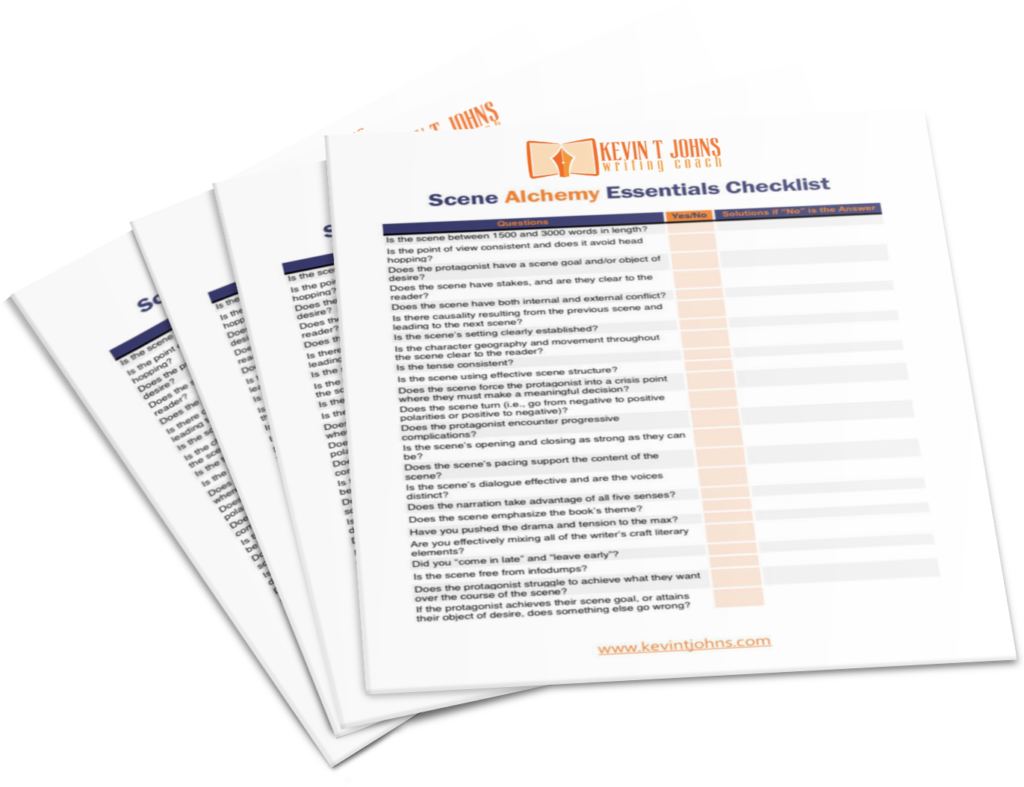
Kevin T. Johns is a no-BS writing coach who helps writers stop chasing shiny new ideas and finally finish their book. He’s all about ditching distractions, embracing deep work, and becoming the kind of author who actually publishes. Grab his free checklist for turning ordinary scenes into literary gold:
Download the FREE Scene Alchemy Essentials Checklist Now!