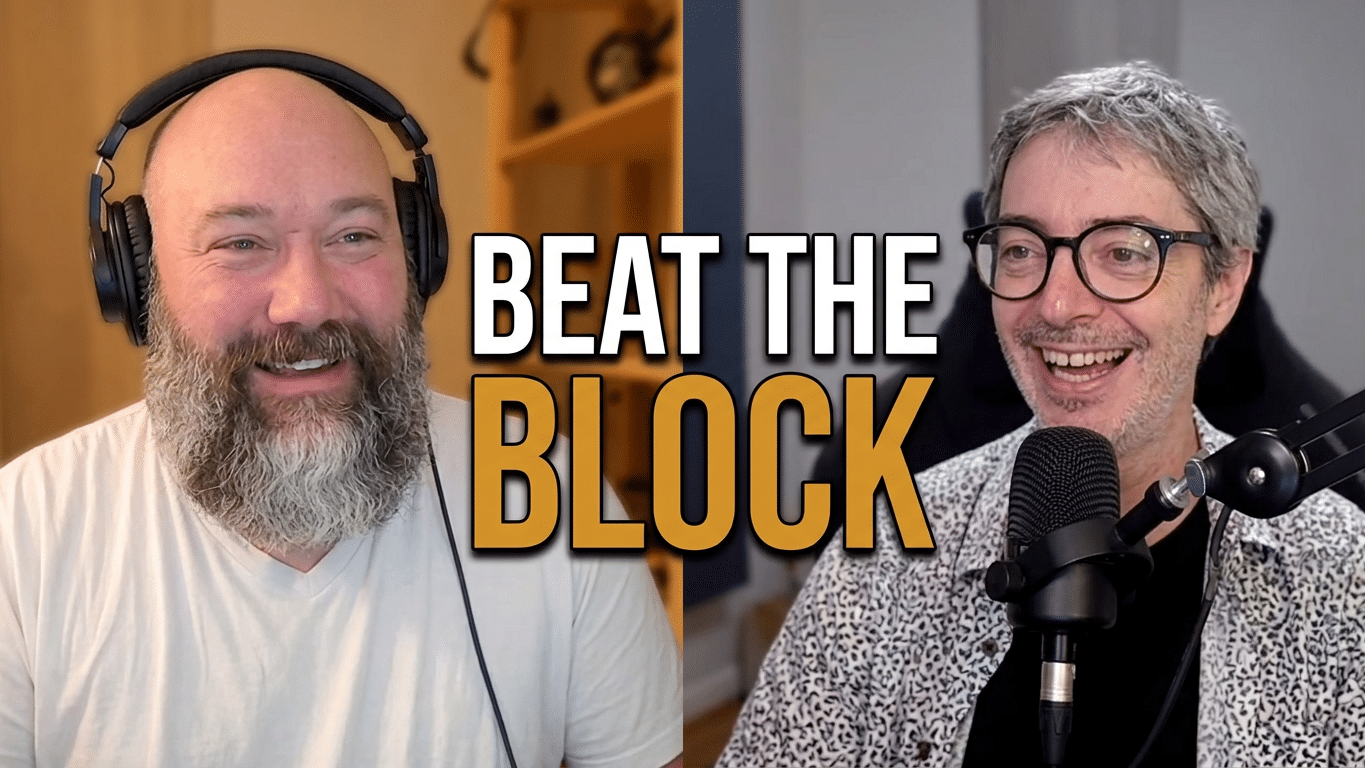
Welcome back to The Writing Coach podcast.
Today I’m talking with Mia Garay, a professional beta reader who has read for several of my own clients. Her feedback is some of the most thorough I’ve seen.
Mia never set out to become a beta reader. She was born in Puerto Rico and didn’t speak English until second grade, which is right around when she fell in love with books, starting with The Giver. She went on to serve seven years in the U.S. Army as a medical lab technician, and while she was deployed, she talked her local library into mailing boxes of books to her camp. About two years ago, she sat down to write the novel that had been sitting in the back of her mind, got three chapters in, and went looking for help in Facebook writing groups. She stumbled into one full of authors begging for beta readers, volunteered for a manuscript, and never looked back.
In this conversation about how to work with beta readers, we talk about the difference between a beta reader and an editor, the system Mia uses to take notes without leaving the story, the two most common mistakes authors make when they go looking for feedback, how to write a questionnaire that gets useful answers, how to get a beta reader interested in your manuscript in the first place, and her project beta reading Bram Stoker’s Dracula in public.
Here’s Mia.
Audio:
Video:
In this episode
- A beta reader reacts to your book; an editor helps fix it. Know which one you need.
- Don’t send your manuscript out too early. Revise until you can’t improve it, or until you can’t stand to look at it.
- Beta readers are like matches: once they’ve read a draft, you can’t get their first impression back.
- Decide what feedback you want before the beta round, and tell your readers.
- Give readers a questionnaire with open-ended questions, about 10 to 15 at most. Yes-or-no questions get yes-or-no answers.
- Think of beta readers as a focus group: they show you the reviews you’d get if you published today.
- Looking for volunteers? Post the genre, word count, content warnings and a strong description. “DM me for details” gets ignored.
- For beta readers: be honest, but be kind. Your raw notes and the notes you send aren’t the same thing.
The Writing Coach Episode #245 Show Notes
Learn more about Mia Garay and hire her as your beta reader: miagaray.com
Follow along as Mia beta reads Dracula on her Substack, Mia Garay Writes: Beta Reading Dracula: Behind the Scenes
Read Dracula free on Project Gutenberg (the edition Mia is using): gutenberg.org/ebooks/345
Mia on YouTube: Mia the Beta Reader
Craft books Mia recommends for beta readers: Story Genius by Lisa Cron and The Story Grid by Shawn Coyne
Click the image below to grab your FREE copy of The Busy Writer Method:
The Writing Coach Episode #245 Transcript
Read the full transcript
Kevin Johns: Mia, welcome to the show.
Mia Garay: Thank you, Kevin. Thank you so much for having me here. I never thought reading books would get me on a podcast, so this is exciting.
Kevin Johns: Well, it’s funny. With my clients, as writers, they’re often focused on sales, right? “I want to sell a lot of books. I want to make a lot of money from my art so I can keep doing it.” But what I always say to them is that some of the biggest benefits of writing a book aren’t tangible. They’re relationships that arise that you never would have had if you hadn’t written it, or opportunities that happen because you’ve written a book. So the idea that just reading books has opened up opportunities for you is not new to me, because it’s amazing the impact a book can have on someone’s life, as a writer but also as a reader.
Mia Garay: Absolutely. You’re so right. It’s true.
Kevin Johns: So have you always been a huge book lover, or did you fall in love with reading later? Tell me about your relationship with books.
Mia Garay: I have always been a book reader. I was born in Puerto Rico, so I didn’t know how to speak English until I was in second grade, and it was really in second and third grade that I fell in love with books. My introduction to all the fantasy and sci-fi I normally read was The Giver. I just fell in love with it, and I haven’t stopped reading since.
Kevin Johns: I’m guessing you’re not in Puerto Rico anymore.
Mia Garay: No, no. I’m in Houston, Texas, now.
Kevin Johns: So when did you move to America?
Mia Garay: Oh, very young. My father was in the army, so we moved around a lot.
Kevin Johns: And I understand you were in the army as well, right?
Mia Garay: Yes, I was. I was in the army for seven years.
Kevin Johns: When you’re in the army, away from home and away from your family, do books still play a role then?
Mia Garay: Oh my gosh, yes! I actually contacted my local library to let them know I was deployed and that we had soldiers who really wanted some books, because we were tired of reading each other’s. And the library was kind enough to send us packages of books they were going to get rid of anyway. I’d say maybe once every other month, they would send us a box, and it was the best. I would have soldiers from all over the camp coming to our clinic just to pick up books.
Kevin Johns: When military personnel are reading those books, is it an escape from the work they’re doing, or is it maybe a connection back home while they’re deployed? What role do you see books playing for them?
Mia Garay: I think it’s more of an escape, because you get stuck doing the same thing over and over every day. The books let you forget where you’re at for a little while.
Kevin Johns: Well, you’re a professional beta reader. So when did reading make the transition from something you love to do to something you’d pursue professionally?
Mia Garay: Beta reading started completely by accident. About two years ago, I decided I was finally going to attempt to write the book that’s been sitting in the back of my mind, and I got through probably three chapters before I realized I had no idea what I was doing. So I decided, “Let me try to connect with some writers and see if maybe they have some advice for me.”
I went on Facebook and joined a few writing groups, and I came across one that was fiction writers looking for beta readers. I had seen the term “beta reading,” but I didn’t really know what it was. I joined anyway, and I was shocked that there were hundreds of posts from different authors just begging for feedback. So I found one I liked, I volunteered for it, and that’s really where it started for me.
Kevin Johns: For someone who isn’t familiar with the beta reading process, how would you differentiate a beta reader from, say, a developmental editor, or anyone else involved in developing a book?
Mia Garay: My simplest explanation is that a beta reader reacts to the book, and an editor helps fix the book. That probably sums it up best.
Kevin Johns: When you say “reacts to the book,” though: you’ve beta read some of my clients’ work, and you provided extremely in-depth responses. So it’s a little more than reacting, right? You provide an extremely in-depth reaction to the material.
Mia Garay: Yes. I’ve been doing this for two years now, so I’ve developed quite a system. The way I take notes is that I have a running document on my phone that I dictate notes into, and I’m reading the manuscript on my iPad and making comments in the manuscript as I go. That’s really why my notes are so long. But it’s the easiest way for me to get everything down. I just say something really quick and keep reading, so I can stay in the story, and that really helps me.
Kevin Johns: I love it. I use a very similar technique. As an editor and a coach, and as a writer, as you probably know, we’re always going back and forth between working at the micro level, asking, “Is this sentence doing what it needs to do?” and stepping back to look at it from that big-picture reader perspective.
So sometimes I’m right in there fixing sentence-level stuff. But whenever one of my clients finishes a draft of a book, we do something called the Big Read, where we try to read the whole book as quickly as possible, the way a reader might. My technique is very similar to yours. I have one document open where I take notes, but rather than reading the book, I listen to it, and I just take notes as I’m listening. It’s that idea of not losing yourself in the weeds, but letting yourself make notes from that big-picture perspective as you go.
Mia Garay: Yeah, that’s pretty much exactly what I’m doing. I’m just reading instead of listening. I’m going to have to see if there’s a way to listen, but I prefer seeing the words on the page. And like you said, you stay in the story. Much later, I go through all my notes and revise them before I send anything to an author.
Kevin Johns: Are there any common mistakes you see a lot in the manuscripts you’re reviewing?
Mia Garay: There are two big ones that seem to be pretty common. The first is that authors are sending their manuscripts to beta readers too early. My recommendation to authors is that they self-revise as much as possible, to the point where they can’t fix it anymore, or ideally, to the point where they don’t even want to look at their manuscript anymore. That’s when a beta reader is best brought in, because we’re able to give that fresh perspective and point out the things the author got lost in the weeds on.
The other thing is that a lot of authors don’t think about what type of feedback they’re looking for in that beta round. The more specific they are about it, the better it is for the beta reader, because then we can focus on what the author needs.
Kevin Johns: As you know, when I send manuscripts out to beta readers for my clients, we use a questionnaire to guide people’s feedback. You mentioned that you have a process in place now. Is your process similar to the form my folks are using? What does your process look like?
Mia Garay: The notes I’m taking while I’m reading are for whenever I get pulled out of the story, whether it’s good or bad. If I laugh, I write it down. If I’m confused, I write it down. That’s really what all of my notes are.
Once I’m done with the manuscript, that’s when I open the questionnaire the author sent me. I don’t read questionnaires beforehand, because I’ve had books spoiled that way. So I wait until after, and once I have all my notes for the entire manuscript, I’m able to answer it more clearly and more fully.
Kevin Johns: If you’ve seen several questionnaires, do you find some are more effective than others? Is there a preferred approach an author should bring to you when they’re looking for your feedback?
Mia Garay: First of all, I love it when an author gives me a questionnaire, because it gives me an idea of where to focus and what the author needs. And I love it when the author gives me open-ended questions. I get very frustrated with yes-or-no questions. As a professional beta reader, I know I need to expand beyond saying yes or no. But a lot of authors get really frustrated, because they send out their yes-or-no questionnaires and only get yes-or-no answers from people who have never beta read before.
So that’s my biggest thing: keep it open-ended, and try to focus it down to what you need, at about ten to fifteen questions maximum.
Kevin Johns: I agree with your comment that a lot of writers go to beta readers too early. The metaphor I use is that beta readers are like matches: once they’re lit, you can’t relight them. So many writers think they want critique or feedback on their books, but what they really want is for people to say it’s good and to keep going. And unfortunately, the people they bring that to are the people they love the most. They go to their spouse or their parents or their kids and say, “Here’s the very worst version of this book that will ever exist. Can you read it?”
So I totally feel you on saying to writers: we all want and need feedback along the way, but if you’re actually looking for a high-level perspective on how to improve the book, going to your mom with your first draft maybe isn’t the way to do it. Does that sound right to you?
Mia Garay: Oh, absolutely. I like comparing beta readers to the focus groups a company like Pepsi will have. They think of a new flavor of Pepsi, gather a bunch of people, have them test out that flavor and give feedback on it, and then Pepsi takes that information and decides what to do with that product. Do they want to put it out? Do they need to tweak the recipe a little bit?
That’s how I explain it to writers: beta readers are the focus group for your future reader. What we’re really good at is giving you an indication of what kind of reviews you would get if you were to publish that book right now. That’s how I explain it, and it seems to work.
Kevin Johns: I love it. I often look to cinema and the movie industry and how they go about making sure a movie or a script is good. As novelists, we have this amazing, unlimited production budget for our stories, to some extent, whereas Hollywood has to make a real gamble and say, “We’re going to put $200 million into this project.” So they have a lot of checks and balances in place to make sure the story works for audiences, including, as you said, going to test audiences. I think authors can incorporate a lot of those hundred-million-dollar checks and balances into our much more affordable projects, which can potentially have almost the same level of impact as a $200 million film.
Mia Garay: Oh, yes, absolutely. And there are levels to the critique or feedback you get along the way. At the very beginning, maybe you have a critique partner you can work with. And then, you know, give it to Mom or Dad to get the validation you need when it’s really, really bad, and keep revising. There are levels to it, and I feel like that mirrors the movies and how they do it, because they have a lot of steps along the way, like you said.
Kevin Johns: One of my favorite documentaries about the creative process is on Disney+. It’s something like a seven-episode series about the making of Frozen II, and the creators are struggling every inch of the way. You think, “It’s the exact same creative team as the original film, from the director, writer and songwriting perspective. They’re the ‘Let It Go’ people. They’re geniuses. This stuff just flows out of them.” And then you watch that documentary, and nothing’s working.
But there’s a great moment in it where, I think it’s six weeks before the film is scheduled to be released, they take it to a test audience of kids, and in response to what the test audience said, they throw together a scene. And that scene ended up being my kid’s favorite scene in the whole movie, and it was thrown together at the last minute.
So it’s a clear example of a test audience, in this case a room full of eight-year-olds, having a real positive impact on the creative process. Even the creators of Frozen, who you’d think would never second-guess themselves and know everything, need help from test audiences. Sometimes that’s an eight-year-old saying, “This part was confusing,” or “This part was boring.”
Mia Garay: Exactly. It’s true. And with books, there’s no limit either. If you’re a children’s writer, you’re going to want to test it out with kids before you publish it. So I feel like that goes for books as well. But I’m going to have to watch that documentary. I didn’t know it was out there.
Kevin Johns: It’s really great. You mentioned joining Facebook groups and seeing hundreds of authors looking for beta readers. I think it’s safe to assume there are a lot more writers looking for beta readers than there are beta readers out there. So if I’m an author and I want your expert feedback on my manuscript, what can I do to get you, or any beta reader, interested in my material?
Mia Garay: If you’re looking for volunteers (and I always suggest trying the free route before you have to start paying), especially in these Facebook groups, what really matters is the metadata. You want to give the reader the genre and the word count. Include any trigger warnings. I personally don’t like trigger warnings, but that’s okay. And then really focus on the description, because the description is what’s going to sell it. That’s what catches my interest.
When I see a post where an author says, “DM me for more information,” I’m not going to bother with that. What I am going to do is go to the person who really took the time to write a nice, detailed post, and if it catches my interest, I reach out to them.
Kevin Johns: So you mentioned earlier that fantasy and sci-fi are your areas of interest. Can you tell us a little more about which genres you like to review as a professional beta reader?
Mia Garay: My favorites are fantasy, sci-fi, mysteries and thrillers. I really like getting lost in the world. That’s not to say other genres don’t do that for me, but these are the ones I’m really drawn to. It also doesn’t mean I won’t beta read other genres. But those are the ones I gravitate toward, because I understand what the reader expects, and I’m able to give clearer feedback on those genres because I read them so much.
Kevin Johns: Did you study literature in university, or is this a skill you’ve developed from your own passion for books?
Mia Garay: At university, I studied applied mathematics.
Kevin Johns: So, the furthest thing from literature.
Mia Garay: And then in the army, I was a medical lab technician. So I know how to analyze things, and maybe that’s why beta reading really caught my interest. But when I first started, I had no idea. I’ve consumed so many writing books just so I can understand the craft of writing and make my feedback easier for the writer to understand and really take in. But no, it’s not something I was born with, and I definitely didn’t study it.
Kevin Johns: For the most part here, I’ve been assuming our listeners are writers who want to get the most out of working with a beta reader. But what about the beta readers listening? If someone out there is thinking, “Hey, I think I’d like to be a beta reader,” what advice do you have for them? What do you think is most useful for an author to hear after you’ve read their book?
Mia Garay: The biggest thing I caution beta readers about is to be honest, but be kind, because you don’t want your feedback to tear down the writer or discourage them. If you at least go in with that mentality, you really can’t go wrong.
And obviously, reading lots of books, especially in whatever genre you’re beta reading, will help you intuitively understand the structure. Then you can point out things like, “I didn’t like that plot twist. It came too late,” or “It came too early,” or “It was too predictable.” You can never go wrong with reading a lot.
I do recommend craft books, too, if you come across any, like Story Genius or The Story Grid. Right now, I’m in the middle of one from the Mystery Writers of America. Oh man, what’s it called? It’s a compilation of a bunch of essays from mystery authors, and there’s just incredible advice in there. So read a lot, and be nice.
Kevin Johns: As a coach, that’s absolutely at the forefront of everything I do. People hire me to inspire them and encourage them, so the mindset I try to bring to any sort of editorial work or analysis is “This is good. How can we make it better?” I think sometimes people believe their job is to find mistakes and point out what’s wrong, whereas I say, “Let’s assume it’s already great. What can we do to make it even better?”
Mia Garay: Yes. That’s a great way of approaching coaching, and I do that with beta reading as well. But I’m not trying to fix anything. I’m just reacting. What I do at the end is make sure every single one of my notes isn’t mean.
So when I’m taking notes for myself, I might dictate, “This really sucks. I cannot stand chapter three.” But I’m not sending that to the author. I’m going to tell the author, “I did not like chapter three, for these reasons.” That’s really the tweak I have to make when I’m giving feedback.
Kevin Johns: That’s really interesting, because my job is to tell them how to fix it. So for you to say, “I’m not trying to fix anything. I’m giving feedback”: I love that perspective.
Mia Garay: Thank you. It took a while to develop that one. In the beginning, it wasn’t so pretty.
Kevin Johns: Right at the top, you said you started writing yourself and realized you were totally lost and didn’t know what you were doing. Now that you’ve read who knows how many manuscripts and works in progress, and interacted with all these writers, how is it affecting your own writing?
Mia Garay: In all honesty, my writing has taken a bit of a back seat, because I’ve been so focused on beta reading and making it a real business. But after going through so many manuscripts (I’ve stopped counting), I’ve noticed I’m a lot more sensitive now to what a reader might want from me. What I’m struggling with as a writer right now is taking off that beta reader hat and putting on the writing hat. That’s really a struggle for me. But I’m still slowly working on it, in between manuscripts and dealing with a very grumpy fifteen-year-old.
Kevin Johns: Yes, your bio mentioned living with a grumpy teen. I am right there with you. I’ve got a sixteen-year-old, so I know both the challenges and the pleasures of raising a teen. I’m curious: is your teen interested in books? Is she a reader?
Mia Garay: No. I have two daughters. My oldest is a senior in college right now, and she’s a super nerd. She’s studying computer science and data science, and she’s a massive, massive reader. She loves collecting books.
Kevin Johns: Oh, wow.
Mia Garay: My youngest wants nothing to do with it. She doesn’t want to be like her sister, so she’s the complete opposite. She’s more my tomboy, more into whatever’s cool and on trend right now. So it’s really interesting. I keep trying to get her to read.
Recently, she was punished for an entire month. I took her phone away, and I told her she could earn one day back for each book she finished reading.
Kevin Johns: Oh! And it worked?
Mia Garay: Yeah. She read, I think, five or six books. So that was fun. At least I know my grumpy teen can read. But I don’t know that I’m ever going to get her to sit down with a book on her own, because she’s trying so hard not to be like her sister.
Kevin Johns: Well, I have a theory that kids seeing their parents read plays a really important role in demonstrating the value and importance of reading. It really takes time. You have to put the rest of your life on hold and say, “I’m going to engage with this story.” So whether or not your teen is into books right now, I bet that as she gets older, she’s always going to think, “I always saw Mom reading. That was Mom’s job.” It’ll rub off on her, I suspect.
Mia Garay: Gosh, I hope so. That’s a prayer I have. I really hope she starts being more of a little book nerd too.
Kevin Johns: Well, Mia, if there are authors out there who would love to hire you to beta read their books, where can they find you online? Where can we send them?
Mia Garay: I have a website, miagaray.com, and you can see all of my beta reading services there. I also have links to my Substack newsletter and a YouTube channel I just started. On Substack and YouTube right now, I’m showing the entire beta reading process, using Dracula as a client manuscript. So that’s really where I recommend you go: just miagaray.com, and you’ll see it all.
Kevin Johns: Fantastic. Okay, we’ve got to dig into Dracula. I was wrapping things up, but I read Dracula this summer for the first time in probably twenty years. So how far in are you, and what’s your take on the book so far?
Mia Garay: I haven’t started it yet. I’m still in the pre-beta-reading portion: how I set everything up and how I organize myself. And I haven’t quite decided yet whether I want to do each chapter as its own video, where I show the exact notes I’m leaving. So I’m still playing with it. And it’s been so long since I’ve read Dracula that I don’t remember anything.
Kevin Johns: It was a real delight for me to return to. All I remembered was that it was an epistolary novel. Other than that, I thought, “I think I remember some letters and recordings, and there’s a vampire in there somewhere.” But I found it, perhaps unsurprisingly, a great book. Shockingly, Dracula is wonderful. So I’m really looking forward to following your journey as you engage with it, because I had such a fantastic time returning to it this summer. I look forward to seeing your thoughts.
Mia Garay: Oh man, I’m so excited to start. I’m finally going to start the reading and documenting next week, so I’m thrilled. And like you said, I only remember little bits and pieces, so it’s a brand-new book for me, which is nice.
Kevin Johns: That’s exciting. Also, it’s a hundred-and-whatever years old, so as much fun as it is, I bet there are going to be parts where you think, “This is a bit of a slog.”
Mia Garay: “That wouldn’t fly right now.” But Bram Stoker seems to have known what he was doing. He did something great, that’s for sure. There’s a lot of good in there. But like you said, there may be a few things where I might be commenting, “That’s a little sexist,” or “That’s inappropriate.”
Kevin Johns: Oh, for sure. And there’s a moment where a character wakes up every morning feeling very tired and pale, and they’re like, “We’d better give her a transfusion.” Then a week later, she’s pale again: “Let’s give her another one.” There are something like four blood transfusions, and at some point you’re like, “Guys, something’s clearly going on here. Come on. There have been four blood transfusions now.”
That’s the interesting thing, though. As a modern reader, you think, “Duh, a vampire’s feeding on her.” But this is a vampire story, right? For Bram Stoker’s readers, it wouldn’t have been obvious what was going on, because this is one of the foundational texts of that subgenre of horror.
Mia Garay: Absolutely. And especially in that time period, they would explain everything. There are so many info dumps in the older books. So I’m very interested to go into it with a modern mindset and see how I take it in now. But I’m excited.
Kevin Johns: Me too. For anyone listening, I think it’s going to be a great opportunity to watch a very astute reader engage with an amazing book, and also to get that insider insight into how the beta process works. So I really encourage everyone to check out your stuff and, of course, to hire you to take a look at their books.
Mia Garay: Thank you. I appreciate it.
Kevin Johns: Well, Mia, thank you so much for taking some time out of your day to join me here on the Writing Coach Podcast.
Mia Garay: Thank you for having me. This is a huge honor, and I’m always happy to come back.