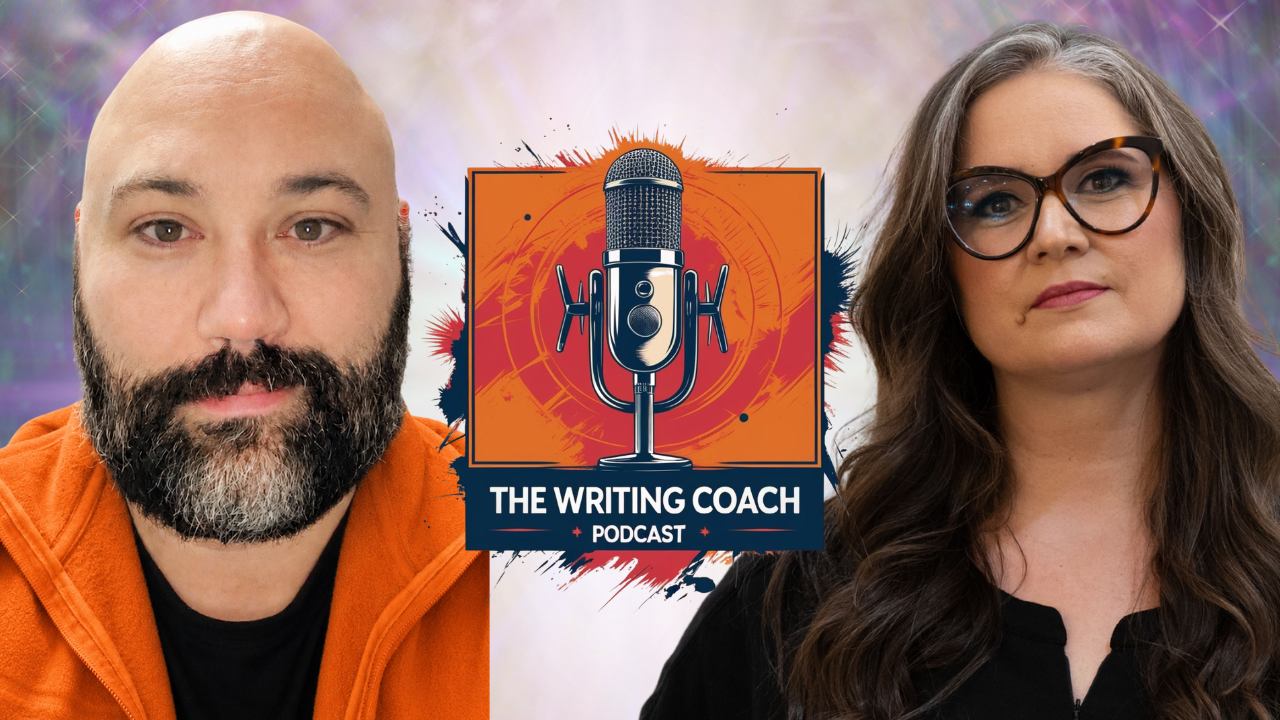
In this episode of The Writing Coach podcast, I speak with Charlotte Donlon.
Charlotte spent years training as a spiritual director, providing the kind of one-on-one guidance usually reserved for matters of faith, but somewhere along the way, her clients turned out to be writers. Lots of them. Enough that she started noticing the same conversations kept happening, whether the person across from her believed in God, doubted everything, or hadn’t thought about any of it in years.
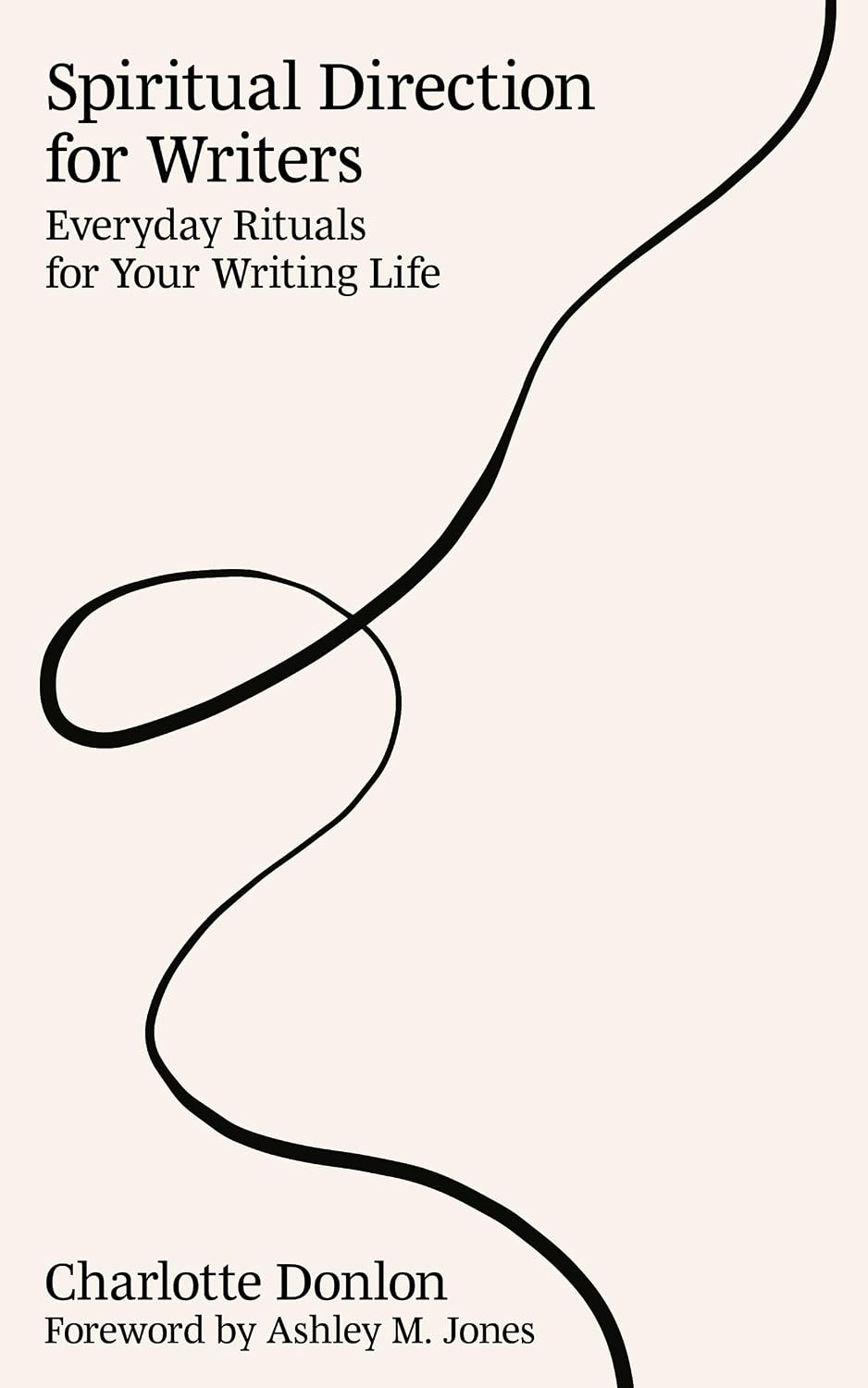
That’s the premise behind her book, Spiritual Direction for Writers: Everyday Rituals for Your Writing Life (out now!), and it’s the premise behind today’s conversation.
We get into why she thinks all of life is the writing life, grief and naps included. We talk about a two-minute ritual you can steal today. And we talk about burnout, and the permission so many writers won’t give themselves to just be where they are.
If you’ve ever felt like your writing life and the rest of your life are two separate ledgers, this episode is going to mess with that idea… because, as Charlotte explains, it’s ALL the writing life.
Check out the episode now!
Audio:
Video:
The Writing Coach Episode #235 Show Notes
Pick up your copy of Charlotte’s book: spiritualdirectionforwriters.com
Visit Charlotte’s website: charlottedonlon.com
Follow Charlotte on Socials:
Charlotte’s Instagram
Spiritual Direction for Writers Instagram
Charotte on Substack can be found at: https://www.spiritualdirectionforcreativesouls.com/
Learn more about the Barbados Writing Retreat:

Grab your FREE copy of The Busy Author Method:
The Writing Coach Episode #235 Transcript
Today on the podcast, I have Charlotte Donlon. Charlotte, welcome to the show.
Thank you so much. It’s good to be here.
I understand that you exist at the intersection, perhaps, of writing coaching and spiritual coaching or life coaching. Tell the listeners what that looks like.
So it happened accidentally. I earned my MFA in creative writing in 2018 and began my spiritual direction training immediately after I graduated from my MFA program. So when it was time to get my practice clients for spiritual direction, I went to my MFA Facebook group and said, “Who wants to be a client?” People volunteered, and so I was meeting with writers from the beginning for spiritual direction. Then in 2020, a lot of people started coming to me from different faith backgrounds. I’m a Christian, and I operate out of that framework, but I started meeting with Buddhist and Jewish clients and people from all over the faith-and-doubt spectrum. So I began using a belonging-and-connection framework. I’d ask a question like, “Since the last time we met, how have you belonged to yourself, your creative practice, and the world?” When I asked that question, the conversation would go to the same place as when I asked a Christian client, “How have you noticed God’s presence in your creative practice or your relationships?” That’s when I realized that the creative process and the spiritual life have a lot in common. The writers I was meeting with were having similar issues, similar themes — especially during the pandemic, when people’s insecurities about their writing practice came up, and worries about whether being at home more was going to affect a deadline. It can look logistical and practical, and also like soul tension. I personally believe everyone has a soul — that inner essence of who we are as humans — and a lot of people who hadn’t thought much about their inner world before the pandemic realized there was a lot happening there, especially with regard to their writing and creative process.
Is your average person’s relationship with their spirituality different when you’re dealing specifically with writers and artists? Do writers approach the metaphysical differently?
I think so. I mostly meet with people who are creative and who either make art of some medium or appreciate others’ art. The people who are drawn to me are more contemplative, more open to mystery, more open to gray space. They’re not into black-and-white thinking or needing to have everything figured out. That’s definitely the kind of person who’s drawn to me and my work, and that’s how I operate in the world — in my spiritual life, my creative life, everything else. I wouldn’t say people who aren’t creative aren’t like that, but most people who are creative are, I’d say.
Yeah, I’d think a mechanic doesn’t necessarily believe the spiritual realm will help him be a better mechanic, but I do think writers and artists often turn to a spiritual place for ideas, motivation, or confidence.
Right — and if a mechanic did think that, I’d also guess that mechanic listens to opera while he’s working on cars or something. There’s usually other evidence of that creative bent; he or she may view their work as a creative practice too. But I’d agree, the typical mechanic in downtown Birmingham probably wouldn’t care about this conversation at all.
Well, let me throw maybe a backwards question at you — I wonder if anyone’s asked you this before. Do you ever find writers blaming the spiritual for problems they’re having, as opposed to looking to the spiritual for help?
Sure. I hate to say there’s one answer to a question, but people who are in a very hard season — who are deeply spiritual and believe in God — might think, “Okay, God, what are you doing? Why are you doing this to me?” and view it as a higher power punishing them somehow. That definitely happens. If someone comes to me with that situation, I’d ask questions and listen, and hopefully they’d notice that’s not the whole story — even if it feels true — and end the session realizing it isn’t all of what’s happening. I’ll say it’s kind of harder to be a writer or artist who believes in God, because it really complicates things. People worry about how to inhabit a creative life from a “holy posture,” or feel they’re not allowed to desire certain things — like being famous or selling a lot of books. I had a client a few years ago whose first book had come out and hadn’t sold as many copies as she’d hoped. It was decent, and she was going to get another book deal, but she was really struggling with wanting more and feeling like a bad person for wanting more. Within one session, we discussed what it looks like to have desires, and how that’s normal and good. I even brought it back to her faith: if God gave you the desire to write and the ability to write and publish books, what if the desire to sell lots of books is coming from God too? It’s not a bad thing to want — I’d hope that if you wrote a book, you’d want people to buy it. So it took a conversation, and her processing that — having a paradigm shift about what it means to want things in the writing life, and that you’re not a bad person or “in sin” or discontent for wanting what most people in that field would want. If you’re writing a book, you want people to read it. I do have clients who write for themselves, not to publish — they journal or write poems, and it’s more of a spiritual or contemplative practice for them alone. Those conversations look different than the ones with clients dealing with publishing issues.
You mentioned working with a lot of contemplative people, and bringing the holy into writing. I understand you have a take on the contemplation process — that it’s not actually about emptying your mind. Can you tell me about that?
Yes. Some of what I explore in the book Spiritual Direction for Writers comes from trying to look at what happens during a spiritual direction session or a retreat I’m leading, and asking how I can translate that to the page. It’s sort of impossible to fully translate a one-on-one spiritual direction session onto the page, but a few things came to the surface. One is this idea that all of life is the writing life. That came out of a specific experience I had after my father died in August of 2020, from COVID, and the grieving process that followed. I didn’t write for several weeks, so I was struggling with, “Am I a real writer? Am I ever going to write again? What does it mean to be a writer?” For me, the only answer that made sense was that everything matters. Even my grief, my sleep, my conversations, my anger — everything was forming me into the writer I’d be when it was time to write again. If everything didn’t matter, who gets to decide what does and doesn’t? So for me, the easy answer — the one that makes the most sense — is that all of life is the writing life. If you’re an artist, or a basketball player, or whatever, it’s the same: all of life is the painting life, and if you aren’t painting in the moment, everything you’re doing still affects the next painting you work on. That’s a main theme throughout the book, and something my clients return to again and again. The other movement I noticed, where the spiritual life and creative process overlap — one way, not the only way — is through a cyclical, spiraling movement with different doorways in: belong, become, behold, bestow, and begin (and begin again) — we’re always beginning something. For me, belonging and connection are themes I return to constantly. People say you’re writing about one thing your whole life in different formats; for me, it’s belonging. That’s my thing. We’re always becoming new versions of ourselves. We’re always beholding things and making decisions about what we behold and what we put ourselves in the way of. And because we’re not completely self-obsessed — we’re making art for others — we’re bestowing good things on other people, and on ourselves. That’s how I see the similarities between the creative life and the spiritual life. With contemplative spirituality, I keep returning to those doorways — not just for my writing life, but my spiritual life, my mental health, my relationship with my husband and kids. How am I belonging? Who am I becoming? What am I beholding? What am I bestowing? Those words apply in all kinds of ways. I’m doing some close readings of poems right now using those words, and doing research for another book using them as a framework. And on the more practical, contemplative side, that framework shapes my approach to nourishing rhythms, rituals, and a solo-retreat practice. I keep using belong, become, behold, bestow when I’m examining how I’m doing right now as a human — do I need to take a nap? Do I need to eat something? Take a walk? Read a novel and zone out for three hours? Do I need to write? Whatever’s being disrupted in me — or if I’m checking in in the morning and deciding how I want my day to unfold, I’m looking at how I’ll use my time, energy, and attention through that framework.
You mentioned the book is called Spiritual Direction for Writers, but the subtitle is Everyday Rituals for Your Writing Life. Let’s dig into this idea of rituals. You’ve said everything is writing. I think you also argue in the book that everything could be a ritual, even a trip to the DMV. Tell us about that.
Yes! In fact, I just renewed my license today online, and it was glorious — I didn’t have to go sit in front of the DMV. But the last time I did that, I took a chair, went around 6:30 or 7 a.m. — a good hour before they even opened — and wrote for about an hour. I realized that going early, staying late, keeping a journal in my car, keeping note cards or a notebook in my handbag — those little chunks of time are always available for writing, for taking notes, for checking in spiritually. With rituals, I like to start with nourishing rhythms. My main nourishing rhythms are to read, write, walk, pray, and put myself in the way of other people’s art — music, film, a TV show, whatever. With rituals, I layer in sensory elements, or I’m more intentional about the order of the activity. For me, a ritual I use often before a writing session is to put on expensive hand cream and say a short prayer over my hands, blessing the work about to take place. A ritual I helped a client develop — she’d lost her job and was having relationship stress and felt disconnected from herself — was to sit in the same chair in her apartment, light a candle, take a few deep breaths, read one poem aloud (the same poem each time, or a different one depending on the day and what feels good), blow out the candle, and do the next thing. That ritual could take two or three minutes, but doing it multiple times in the same spot — at home or away — signals to your mind, body, and soul that it’s time to return to yourself, to pause and check in. It’s also a great ritual if you’ve moved recently. Place attachment is real, so as you slow down and connect with your home — even if it’s just one chair by the same window — and build a ritual around it, you’ll feel more connected to your home and have an easier transition to the new space. There are all kinds of benefits to rituals, and I’ve done research on it, so I try to bring in what I know works and use it in the writing practice, to help my clients have more of the writing life they want — which also means more of the life they want.
Are people surprised when they hear you in an interview or read your book, and think, “Oh, I’m a writer and I’m spiritual, but I didn’t make the connection before”? Or do people intuitively see a relationship between the two?
I think it’s both. Even with the nourishing rhythms I listed — I know a ton of people who already do those things, they’re just not as intentional or purposeful about them, so they may not be inhabiting the writing life or spiritual life in the same way I am. But when I talk about these things, they think, “Oh, I could totally do that — I already do X, Y, and Z.” So if I call those my main nourishing rhythms, and I have a ritual before my writing practice, or if I move to a new apartment and want to feel more connected to that place, I can adopt some of these ideas and benefit from them. I think a lot of it is very natural and organic to how we live. There’s a study that says when you’re more thoughtful and intentional about positive actions — whatever you feel is a positive action that would help you have more of the life you want, or be more of who you want to be — you receive more benefit on the back end than if you did the same activities willy-nilly, without thinking about them. I was fascinated when I came across that study, because it put scientific proof around what I experience as a human. I always like finding scientific evidence that supports what I’ve experienced. I think if we can be a little more intentional, a little more purposeful, we benefit — and the math doesn’t always make sense. I have one client who lives with chronic pain and is a professor at a major university with a full course load. Once she started being more intentional about nourishing her body, mind, and soul — especially slowing down and taking breaks when the pain flared up — her overall amount of writing and work increased. It’s not that we take care of ourselves so we can do our work; I think we take care of ourselves because we’re human, and all humans need care. But if we’re taking care of ourselves, what I see with my clients — even though it takes time, energy, and attention — is that productivity actually increases, usually because you learn your own personal ebbs and flows: your energy, your attention, how you prefer to sleep, when your most awake times of day are, and you work with those things instead of against them.
Something very much on my mind right now is the concept of retreats for writers. I’m hosting a writing retreat in Barbados in November, and I got into hosting retreats a couple of years ago — I did a lot of research beforehand to really understand what I could do, what the mechanisms are, what intentionality I could put in place to make the experience as effective as possible. Since that’s where my mind is right now, I’d love to hear your thoughts on retreats.
I have all kinds of thoughts on retreats, so we can talk about this for however long you want. And a retreat in Barbados sounds amazing. What I’m looking for personally, when I go on a group retreat or one hosted by someone else, is plenty of time to be on my own — to do what I want with my writing and my art, and to take care of my body, mind, and soul. When I’ve participated in group things — I went to a conference a few years ago, fairly expensive, with someone you’ve probably heard of — there was a three-hour session in the morning, then lunch, then a three-hour session in the afternoon. By lunch I was wiped out, done. So I skipped all the afternoon sessions, and I had to really talk myself into it — convince myself, give myself permission to skip them — because I was getting so much good stuff out of those first three hours. What I needed most, as an adult who was paying to be there and wanted to make the most of the conference and retreat, was to go off and explore on my own every afternoon in that beautiful place — peak season in upstate New York, with all the leaves changing. It was so beautiful, and I let go of the guilt around missing those afternoon sessions, because that week I didn’t need them, and I was getting more than I’d imagined from the mornings. So I don’t know how you feel as a retreat leader about letting people make the retreat what they need it to be, but any opportunity for you to offer options — “for these three hours, you can do this, this, or this” — I think is fantastic. Encourage people to have downtime, enough alone time, so that when they’re with the group, they can be present, knowing they’ve done what they needed to move their project forward or take care of themselves while away from the kids or whatever. I also love having my favorite snacks and drinks — I like to splurge a little on my own solo retreats — and I think a retreat is a great time to give extra attention to your preferences: buy that favorite pen again if the other one ran out of ink, do something to make it special and set apart. That doesn’t always have to cost money. As the retreat leader, you can also incorporate rituals — each time you come together as a group, do a breathing exercise, read the same poem or meditation prompt — I think that helps people feel safe in the group and know what to expect. Another thing I love to do around a group retreat or conference is a solo retreat before and after — even just a few hours, however much time I can get. My definition of a solo retreat is ignoring everyone and everything else and doing what I want and need for my body, mind, and soul. A solo retreat can be fifteen minutes or fifteen days, and I know I show up better in a group situation when I’ve had plenty of solitude beforehand — my nourishing rhythms and rituals — and knowing I have more of that to look forward to on the back end. Even in the airport — I do solo retreats during a layover. I have readings and journaling prompts for people-watching that are very airport-specific. There are fun ways to work these retreat rhythms into your life that are easy, and again, probably not rocket science, but a little more thoughtfulness makes a huge difference.
I love that idea of the pre- and post-solo retreat — that’s wonderful. On the point about skipping afternoon sessions: getting ready for my first retreat, I did it with a partner, a marketing coach, and we kept saying, “We’re going to teach them this, we’re going to teach them that.” But we have a big network, and we talked to a lot of people, and across the board everyone said, “Do not overschedule them. Less is more. They’re not there for you to take them to school — they’re grownups getting away to spend time with themselves and their writing. Community and coaching can be a small part of it, but that’s not why they’re coming.” They’re coming for themselves and their work. So thank goodness people told us that ahead of time — now, on all my retreats, we give the entire morning to people to do whatever they want, and we do a couple hours of training in the afternoon, and every other hour goes back to being theirs. Even in Barbados, we decided not to include dinner, because I wanted people — if they’re coming with their spouses — to be able to go out for a romantic dinner on the beach if they want. So, like you said: treat people like grownups, give them the space to make it what they want it to be, create the environment where they can find that for themselves, but don’t impose a structure on them.
Yeah, I think that’s great, because then you don’t put them in the position I was in at that other retreat — having to convince myself it was okay to take the afternoon off, and thinking, “I paid for this, am I getting my money’s worth?” It becomes a stressful situation you don’t have to be in. Maybe you offer extra prompts, or a guided reflection outside, some optional things people can do on their own, but you’ve provided the prompts for it — I think that could be a great addition. Or if someone wants to go to dinner alone, provide an essay to read after they’ve ordered, and a writing prompt for after they’ve eaten — maybe something food- or place-focused. There are so many ways to make it fun and interesting when people aren’t with the group, doing something they definitely wouldn’t be doing at home.
Fantastic. Staying on the theme of retreats — I think a lot of people who decide to go on one are either feeling burnout coming on, or are already in the depths of it. Tell me a bit about your work and how it intersects with burnout, and how you see that and work with it in your clients.
Most people come to me initially because they’re not doing the writing they want to do, and most of the time it’s because they’re approaching burnout, are burnt out, or are just so busy they literally don’t have time. My approach with nourishing rhythms, rituals, and a retreat practice addresses all of that — it asks people to honor their creative life, respect it, and give themselves what they need, and to notice that when they’re writing more often, they like who they are more. I personally like who I am when I’m writing regularly. Even though I say all of life is the writing life, if I don’t write for two weeks, I’m still reading, still taking notes, still figuring out when I can write for three hours as soon as possible — because I need it to function and be who I want to be, and my family appreciates it too. So people say no to things. I have one client recently who told me, “I have to stop being so available to my mother,” and I said, “Amen.” It’ll help her write more, but it’s also helping her heal and grow in other ways. I had another client writing a pilot for a new television show — a really good idea — who was doing her writing but working full time, and said, “I’m not reading, I’m not taking walks. I’m doing the writing I want to do, and I love to sing — I’m singing on my way to and from work each day — but I don’t know how to start reading and walking more, because I know those things will help me be who I want to be.” I asked, “Well, what are you doing instead?” She said, “Honestly, things are pretty tough right now, so I’m taking a lot of naps and crying a lot.” I told her, “Those are your main nourishing rhythms right now. Let’s say your nourishing rhythms for this season are to write, to sing, to nap, and to cry — and when you come through this difficult time and aren’t napping or crying as much, you can weave in reading and walking.” She said, “Oh — I’m already doing it.” And I said, “Yeah, you’re doing it. You win.” I think that’s a paradigm shift, an expansion of permission — giving yourself what you need in the moment instead of what you think you’re supposed to need or want. Maybe if her life were easier, she wouldn’t need to cry and nap every day, but in that conversation, that’s what she needed. Giving yourself permission to be where you are, with your current circumstances, instead of needing to write a thousand words a day to feel like a real writer — I think that prevents burnout, and helps people heal from it. It becomes part of a bigger picture of how we inhabit all of life in ways that help us be the writer, the partner, the neighbor we want to be.
I’ve interviewed hundreds of writing coaches and writers on this show — this is going to be episode 240 or something — and I don’t think anyone has ever said, “I like myself better when I’m writing.” I think that’s so profound. Every one of my clients likes themselves better when they’re writing, but I don’t think we’ve ever talked about it in those terms. What a great takeaway. Thank you.
Let’s talk about that for a few more minutes, if you don’t mind. If that’s something you want to think more about — as a coach, a client, or a writer, whoever — one way in is: How do I belong to myself as a writer? How does writing help me belong to myself in ways I like? How does it help me become more of who I want to be, more of my full self? How does writing help me behold the things I want to behold — the research I’m doing, the poem I’m writing, the fiction I’m writing? What am I beholding outside my actual writing practice that helps me do the writing I want to do, so I have the energy, time, and attention for it? Maybe I say no to the trashy reality show I’m obsessed with right now — I probably need to press pause on that for a few weeks so I can write. The Phoebe Bridgers album, though, I’m keeping, because it’s amazing, it makes me happy, and it’s infusing good things into my writing practice right now. So thinking specifically about what we’re beholding is really helpful. And then bestowing — in the sense that I like myself more when I’m writing. When I’m writing, I’m bestowing a better version of myself on the people around me, because I’m happier. I’m doing more of what I was made to do, and I’m giving myself good things. And whatever I write, when people read it, that’s another good thing I’m bestowing. So that’s one way to take the idea you gravitated toward and go a little deeper with the framework from the book.
The book is called Spiritual Direction for Writers: Everyday Rituals for Your Writing Life. Is there a favorite ritual from the book, or if someone were to take just one away, which would you recommend?
Because I love poetry — and I think poems, for me, I accidentally say “prayer” when I mean “poem,” or “poem” when I mean “prayer” — I’d recommend the one I created for that client, the one I use almost every day myself: pick a comfortable spot in your home, light a candle, take a few deep breaths, read a favorite poem aloud. It does help to say it out loud — it’s a more embodied experience. Blow out the candle, and do the next thing. The more you do it — say, once a day — it calms you a little more each time. And if you’re in a hard season, you can do it a few times a day, and notice how it helps you return to yourself, to a more hopeful place.
Charlotte, thank you so much for joining me today. This has been a fantastic conversation. If folks want to learn more about you and the book, where can we send them?
The best place to go for the book is spiritualdirectionforwriters.com — you’ll find everything you need there. My main website is charlottedonlon.com.
Fantastic, and we’ll have those in the show notes for this episode. Charlotte, thank you for the fantastic conversation.
Yeah, thanks so much for having me. I enjoyed it.
—
Kevin T. Johns is a writing coach, editor, and author who helps writers strengthen their craft, find their voice, and build stories that truly connect with readers. Through coaching, courses, and The Writing Coach Podcast, he shares practical, encouraging guidance for writers at every stage of the journey. Need help finding more time to write? Grab his free guide: THE BUSY AUTHOR METHOD.
Podcast: Play in new window | Download
Subscribe: Apple Podcasts | RSS
