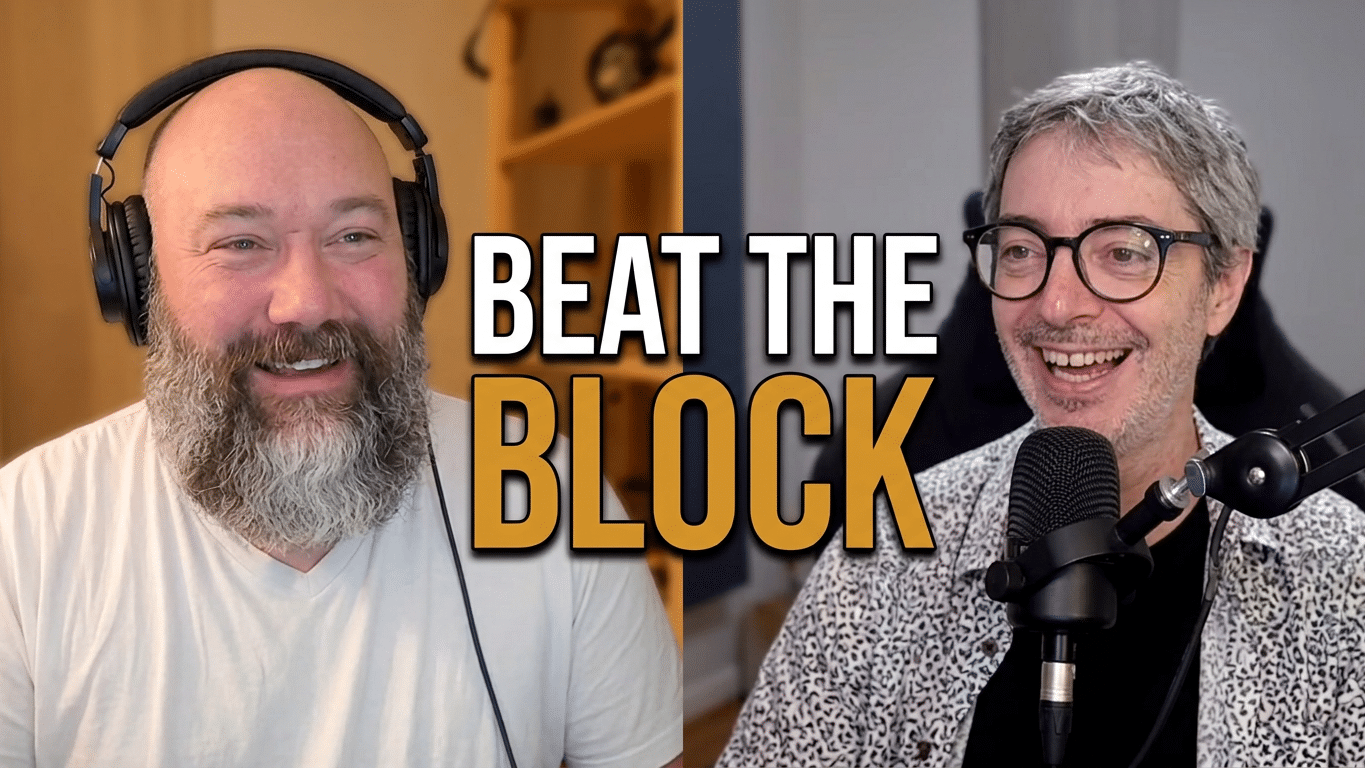
Welcome back to the Writing Coach Podcast. I’m your host, Kevin Johns, and today I’m sitting down with Rob Cole, a writer, an animal sanctuary founder in Hawai’i, and now, after thirty years, a published biographer.
Rob’s new book, For Once in My Life, opens with Arlinda Willis’s birth in 1951 in Toxey, Alabama, the granddaughter of sharecroppers, raised by her grandparents in the shadow of Jim Crow while her mother built a new life north in Cleveland. When Arlinda finally made that journey herself, she believed love was something you had to earn, and she spent the rest of her life earning it: dancing as a teenager on Upbeat, Cleveland’s nationally syndicated music show, alongside Stevie Wonder and James Brown; competing in the city’s first Miss Black Cleveland pageant; and building a distinguished career at one of San Francisco’s most prestigious law firms. It was there, in 1994, that she met Rob, a white British immigrant who would become her closest friend, caregiver, and biographer for the next eighteen years.
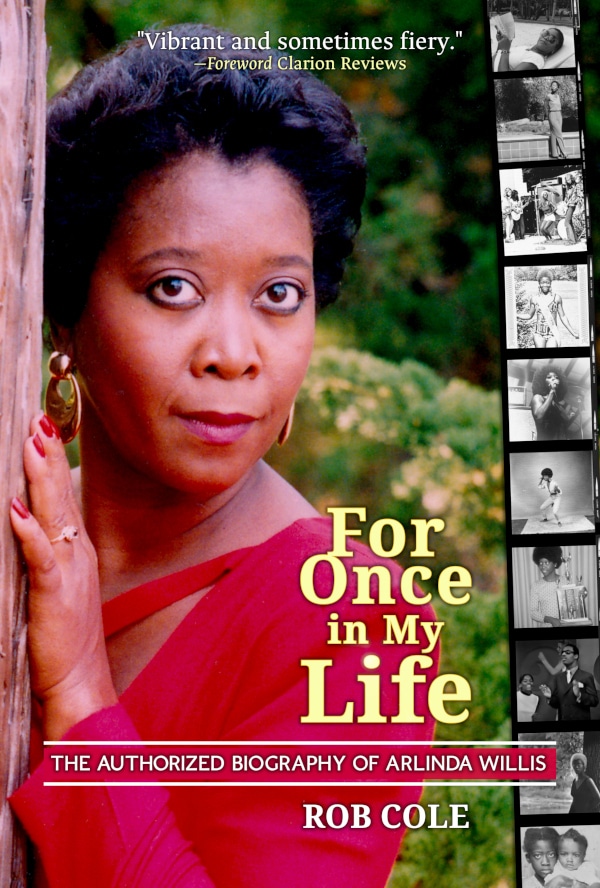
When esophageal cancer took hold, Arlinda ran into a healthcare system that dismissed her pain and told her one story while writing another in her medical chart, a pattern that, as Rob learned, has a name. For Once in My Life follows Arlinda from the sharecropping communities of the Alabama Black Belt, through the Great Migration and the stages of Cleveland’s Black entertainment scene, into the halls of San Francisco law, and finally to a chapter defined by medical racism, unconditional love, and the hardest lesson of her life: that she was enough exactly as she was.
The book releases August 27, what would have been Arlinda’s 75th birthday, and the 63rd anniversary of Dr. Martin Luther King Jr.’s “I Have a Dream” speech.
In this conversation, Rob and I talk about what it took to write an authorized biography over three decades: turning eighteen years of stolen lunchtime anecdotes into a narrative, and what it means to write across racial and generational lines as a white author telling a Black woman’s story. We get into how Rob’s own research into Arlinda’s medical records after her death uncovered the pattern of medical racism that reshaped the book, the emotional toll of revisiting the hardest chapters of her life on the page, and why (after querying more than a hundred literary agents) he chose to self-publish something this personal. We also talk about the work that comes after the writing: designing the cover himself, courting a Kirkus review, and the library and search-strategy playbook behind getting Arlinda’s story into as many hands as possible.
Check it out now.
Audio:
Video:
In this episode
- Add interiority to anecdotes: Rob’s collected stories lacked emotion, so he read scenes back to Arlinda, who explained her feelings and reasons.
- Plan around energy, not just time: Rob and Kevin both treat productivity as energy management rather than a clock-watching exercise.
- Experience your draft through different channels: Rob’s text-to-speech app helped him catch things he had missed when reading or speaking the pages.
- Self-publishing let Rob keep revising after 140 agent queries brought no deal, so he deepened the medical racism thread that made the book more current.
- Reach libraries and AI search: Rob uses IngramSpark and a Kirkus review for librarians, and repeats one consistent book description everywhere for generative engine optimization.
The Writing Coach Episode #233 Show Notes
Pick up your copy of Rob’s book: For Once in My Life: The Authorized Biography of Arlinda Willis
Visit Rob’s website: https://colerob.com/
—
Join Kevin in Barbados, November 2026
The Writing Coach Episode #233 Transcript
Read the full transcript
Rob Cole, welcome to the Writing Coach Podcast. It’s so great to have you here.
Oh, it’s great to be here. Thank you very much.
So you have a pretty unique situation in that you don’t just live on a Hawaiian island, but also on an animal sanctuary. So tell us about this animal sanctuary where you live and write.
Okay. Well, I’m no longer living at the sanctuary — I’m living with my wife Nikki about 40 minutes away. But the sanctuary got started when I moved to Hawaii to start it. It’s a plant and animal sanctuary. Initially, we were set up to do permaculture. This was back in 2017, and we took a year to see how the sun, the wind, and the rain affected the land. And getting ready to do the planting after a year of study, that’s when the lava flow hit — the 2018 lava flow. Being a nonprofit, our duty was to the community, and what the community needed were these animals rescued. So while all the organizations were airlifting out these animals, I was quickly cobbling together fences and shelters to keep them, and lo and behold, I got way more animals than I could hope to deal with — but I managed. All of my attention went to taking care of the animals, so the permaculture took a back burner until I could get more help.
Amazing, amazing! So, as a writer, how does writing in Hawaii compare to writing in England or other places?
Actually, I can do it here and there. During the day I do animal care activities, plant care activities — we’re currently in the process of moving the sanctuary to a new location, so I’m dealing with that. Wherever I can, I write here and there. The majority of the writing, though, was when I was living in California. I would interview Arlinda when we were working together — we’d steal away a conference room, and she’d tell me some anecdotes, or when we went out to lunch together, she’d tell me some anecdotes, and then when I got back I’d copy all of the notes down into a notebook, and I’d write scenes for her and read them back to her, and she’d correct me and make adjustments to some of the assumptions I’d made. It was a long process, and we really didn’t have a hard-and-fast schedule — we did it here and there as time would allow, and the news hit us later, so, you know, it took 18 years to get all these anecdotes down, and I wish I could have taken more, but that’s what we had. When I was reading back the anecdotes, I was trying to put together a through-line, a narrative, and I noticed that a lot of these anecdotes are like, you know, if you’re sitting at a dinner party telling stories back and forth — it’s all great in the moment, but it’s different when you’re reading it in a book. I noticed a lot of her emotions were missing. A lot of her insight — what we call interiority — was missing. So toward the end, I’d read these back to Arlinda and let her know, and she was able to dig a little deeper into the emotions and tell me the reasoning why she did things, and I integrated that into the narrative as well.
So you mentioned spending almost 15 years writing the book, but I believe it goes back even further than that, to when the initial idea started. Take us right back to the moment you realized this was a story you were going to tell.
This was back in 1995. Arlinda wanted to take me to this restaurant called Vertigo — it’s in the basement of the Transamerica building, and she used to dance there back in the late ’70s, when it was a disco. She wanted to see the space now that it had turned into a restaurant, and the service was really slow that day — it took two hours to get our meals out. So in that time, she started telling me a lot of her stories, and I realized that the person I was sitting next to — because we were cubicle mates at the law firm where we worked, and all I knew of her was that she was a legal secretary — was telling me these stories of dancing on a television show called Upbeat, which became nationally syndicated, dancing next to musical giants of the time: Stevie Wonder, James Brown. She later danced for Rare Earth — although, actually, it was probably Peter Rivera’s band, because Rare Earth didn’t have dancers on stage. And she was in Cleveland’s first Miss Black Beauty pageant in 1970. She had this star-crossed past that I never knew about, and there were these really amazing stories that she told.
And that was the beginning of what became the book.
Yeah, that was the beginning of it. Then, over the 18 years of knowing her, I took down the anecdotes, and toward the end, when this medical crisis happened with Arlinda, I took really studious notes. One time, her niece visited us from Cleveland — she flew out to help take care of Arlinda as well — and she took a photo of us, and Arlinda said, ‘Oh, this is for the book, right?’ And I said, ‘Oh yeah, yeah, this is.’ So that got me reading more of her anecdotes back to her, because I was on limited time with her. And when she passed away in 2012, it took me 14 years to get the story to where it is right now. I did have an incident at the sanctuary — I was held hostage and received three concussions one night — and I’ve been disabled ever since. So for the past seven years, it’s taken a really long time for me to do this work. It takes me about four times as long as it normally would. This book should have been out maybe five or six years ago, and just due to my disability, it took so much longer.
I’m so sorry to hear that you went through that.
Yeah, thank you.
What does that recovery process look like in terms of trying to get back to the page and do your writing?
I don’t know my limitations, so I overdo it. And when I overdo it, I’m walking and speaking like I’m drunk, and then it knocks me out for several days afterward. So Nikki, my wife, is constantly on me to limit my activities. Spoon theory — I have very few spoons to work with during the day. That way, if I limit myself, I can have enough energy to have quality time with her in the evening.
That’s a big lesson I learned fairly recently. For a lot of my time as a coach, I approached productivity as a time management issue — let’s time box, let’s get a schedule together, it’s all about managing time. And then I experienced my own major illness several years ago, and my energy levels were never the same afterward. Suddenly I realized: it’s not just about time management, that’s the easy part. What it’s about is energy management. I work with a lot of older writers, and, you know, I wish I hadn’t gotten sick — that said, having been through that has given me a lot of insight into the people I work with, who, as we get older, all of us have medical things. Learning how you continue to put your words on the page, do the writing you’re passionate about, while dealing with whatever it is that any of us have as we get older — managing that energy is such a huge part of getting a project like a book over the finish line.
Yeah, I completely agree with the energy management. There was also an incident shortly after Arlinda passed away — I went to the records departments of the two hospitals where she’d had her medical care. I was reading through the notes, and I noticed that what the doctors had written down about her prognosis was different from what they were telling us to our face. That got me really mad — I was like, why are they telling us different things than what they’re putting in their notes? I felt like we deserved the same information they were writing in their notes, so we could make the best decisions. I was furious. I wanted to integrate the doctors’ notes into the biography — I couldn’t see how, because there’s just all this different information, it would confuse readers, and I didn’t know what to do. So, in anger, I held off from writing the book for several years, and then I came to the conclusion that the story is really about Arlinda, and bringing her story forward. So I wrote the story as we experienced it, with the misinformation that was given to us.
And so you’re a white man, a British expat, writing the life story of a Black American woman. What is that process like? And do you anticipate any criticism, in terms of who is a white British man to write a Black woman’s story?
Yes, there is this cross-racial aspect to our relationship, our dynamic, and as a white man — as the non-targeted person in this dynamic — in speaking to you about race, and writing about racism in the book, I’m coming from how I was raised, with this privilege, and it’s just inherent. It isn’t necessarily bad, it’s just what is. What I’m trying to do in this book is raise awareness of this racism, because I wasn’t too aware of it as it was going on. There were some peculiarities — like getting served at Vertigo. It took two hours for us to get our food, and I remember at the time thinking, ‘Well, is this because Arlinda was Black?’ — that would cross my mind. But then I’d brush it away: ‘No, this is the Bay Area, this is the liberal bubble, that wouldn’t happen here.’ But as I was writing down what was happening — her medical journey, and talking to Arlinda about being raised in the Jim Crow South, in Alabama, a stone’s throw from Birmingham, where a lot of the civil rights protests occurred, and Montgomery, Alabama, which was the hotbed of the civil rights movement — racism informed everything Arlinda dealt with, from the time she was born until the time she died. It’s a natural part of her life — it’s kind of like a fish swimming in water. Does the fish know it’s in water? Because that’s all it knows, it doesn’t know anything else. And as I talk about race in the book and in interviews, no doubt I’m going to overstep my bounds, I’m going to say something insensitive, and that’s the risk I’m taking, because it’s so much more important to raise awareness and get the message out there. And even if I do make a mistake, I trust that people will have the courtesy to give me some constructive feedback and let me know where I’ve taken a misstep, and I’m willing to take responsibility for anything I misstate. It’s just naturally going to happen from time to time.
Yeah, and I think it’s also people’s responsibility to bring context into a situation. Who are you to write this book? Someone who loved her, was with her, interviewed her, cared for her — you experienced a big chunk of the story alongside her. Who are they to say you shouldn’t write this story? This is your story as well.
Yes, and I was a witness to it. I wasn’t sure what I was witnessing, but I was documenting what was happening to her. And just at the end of last year, I took two classes through the Mankind Project. The Mankind Project teaches emotional intelligence to men in the community, and there’s a women’s version called Women Within that does the same thing for women — together we’re looking to improve the awareness and accountability of the people in the community. One of these classes was Waking Up to Whiteness, and the second was Understanding Power, Privilege, and Diversity. In both of those, they mentioned medical racism, and gave the symptoms of it: long time for diagnosis, long wait times for medical care, disregard of the patient’s complaints, and dismissing the amount of pain being reported by the patient. Arlinda went through all four of those. I don’t know whether I can diagnose Arlinda as having definitely had medical racism — I’m not qualified to know that. All I’m doing is reporting what happened to her, and leaving it to the reader to ascertain: could this be something that’s explained? Like with the Vertigo restaurant — that could be explained, because they were having issues with the chefs at the time, they cycled through a number of chefs when that restaurant was starting up. So it could have just been something that happens in the back of the house of a restaurant. It might not necessarily have been racial prejudice.
Yeah. So, writing is always emotional work — we’re drawing from our own emotions, whether we’re writing fiction or nonfiction. We’re trying to evoke an emotional response in our readers, and how we do that is by pulling from our own emotions, which makes writing a very effortful process on an emotional level. In this case, you’re not just writing — you’re writing about someone you cared for, who had a terminal illness and experienced racism throughout her life. How did you manage your own emotions while spending years revisiting some of the most challenging moments of Arlinda’s life?
It’s different when I was writing it down — I could write it down and everything was fine. Sure, it was emotional when I wrote it and when I read it — like, oh, this is really powerful, this is really good stuff. But when I shared it with my wife, and she wanted me to read it to her, there were moments where I was just breaking down and crying. I couldn’t continue — that’s the end of the chapter, I can’t continue anymore. So we took a break and continued the next night. Experiencing the story through different channels is a great way to tap into the energy — when I’m reading it, when I’m writing it, it’s certainly different from when I’m speaking it or listening to it. I have a text-to-speech app that would read it back to me, and I could pick out things I hadn’t noticed when I would just read it or even speak it.
Well, the book is coming out August 27, which would have been Arlinda’s 75th birthday, but also the 63rd anniversary of Dr. King’s ‘I Have a Dream’ speech. So was that always the plan — to release the book on August 27, or at least in that window around her birthday?
Oh no — I wanted to be traditionally published, so two or three years ago I started querying agents. I wanted to be picked up by an agent and sell this book, and I thought it was going to be great. I read it to Nikki, and Nikki said, ‘This is just someone who was lesser known back in the ’60s — who’s really going to care about this?’ And after a while — after sending queries out to 140 agents and getting back 45 messages essentially saying ‘I don’t know how to sell this’ — I realized I needed to publish it myself. I didn’t want to, because it’s a lot of work — the promotion, the book design, the editing, all of that — and I really didn’t have enough time on my hands. But I wanted to get this out, and I realized her 75th birthday was coming up this year, so it was like, yeah, I just have to do it as best as I can, and that’s what it is. So I’m putting out the best version that I could do. And had I known everything I gathered in writing this project — which started way back in 1995 — I would have done things differently. I would have interviewed Arlinda a lot differently, I would have probed more for her emotions and reasoning a lot earlier on, and gathered more anecdotes and pulled together more threads. But this is just the best that I could do with the material that I have.
Yeah, yeah. Well, I’m a big proponent of self-publishing, so I was thrilled when I saw that you had decided to give up the traditional route and go with self-publishing. There are benefits and drawbacks to both traditional and indie, but I think for such a personal project like yours, as well as a somewhat complex one in terms of the various thematic elements being explored here — we’ve talked about racism, we’ve talked about medical racism, there’s a terminal illness story in here, but there’s also a celebration of Arlinda’s life, her time dancing, and in modeling competitions and whatnot — what have you found self-publishing has allowed you to do with this book that you might not have been able to do otherwise, had you gone the traditional route?
Well, it allowed me — because when I was querying the book, I wasn’t done editing it. I was continuing to tweak it, and even up until last year, when I found out about this medical racism aspect, I went back into the manuscript and teased out a little more of those aspects of her life. It was like, well, now it’s no longer just a story about this somewhat famous person 50 years ago — it’s more current, or as current as it was back then, in talking about the racism, the medical racism, that’s going on right now. So now it has pertinence — the book has teeth, and it’s a lot more promotable, which I might have missed had an agent picked me up.
Well, it looks like — you were saying you didn’t want to do all the work, but once you made the decision to do it, you’ve gone all in, in terms of doing a very professional job of it. Did you feel like, if you were going to do it, you just needed to do it right?
Yeah, yeah. I needed to make it as professional as possible, so I designed the book cover myself. I used to do internet marketing for a number of decades, so I have some graphic design capabilities, and I leveraged those to make a book cover that looks like it came out of one of the Big Five.
So who is the book for? Who do you think the readers out there who are really going to dig this book are?
I’m looking to reach Black women in their 30s and 40s, to let them know that their story, their struggles, are not going unnoticed. Me, a white man, sees them — recognizes what they’re going through, through seeing Arlinda go through it. I want this book to be like an ambassador to Black women, to let them know their struggle is not in vain, that there are people on their side, looking for them to be successful. That’s why I want to get this book into as many libraries as possible — it’s much more important to get the message out to as many people as possible.
What does that process look like, in terms of making a presence in libraries a big part of its release?
From what I’ve read, it’s definitely important to be published through IngramSpark, because a lot of libraries make their purchases through IngramSpark. It’s also good to get a positive review from Kirkus, because librarians go to Kirkus Reviews to see whether this is a book they’d want to purchase for their library. I want to say, Kirkus Reviews gave me a really stellar review — I’m really pleased with what they said.
That is fantastic. Something I often tell clients is not to go with Kirkus, because, one, it’s expensive, and two, there’s no guarantee they’ll give you a good review — in fact, they’re known as particularly hard reviewers. So the fact that you took that risk and got such a glowing review speaks to the quality of the book.
Thank you, thank you. Yeah, I did get reviews back from Foreword Clarion and BlueInk as well, and they were a little more critical, which was good — I took their criticism, or some of it, and used it to help make minor tweaks to the framing of the story. One of them thought the anecdotes of medical racism detracted from the story, and I thought, well, actually, medical racism is the story. So I wanted to make it a little more clear on the back of the book cover and in the descriptions I’m writing for Amazon and IngramSpark, to let readers know to expect a book that deals with racism.
You mentioned you have a background in internet marketing. I’d think that would come in handy doing a book launch and promotion campaign from an isolated place like Hawaii. Is that how you’re going to get the word out — rely heavily on online marketing?
Yeah, I’m going to have to. It’s going to be really expensive for me to go to the U.S. mainland and do a book tour, or go to conventions and market the book that way. So my strategy is going to be all online — through podcasts, through good SEO, search engine optimization, on the website. I just got a copy of the latest IngramSpark newsletter, and they had an article about generative engine optimization — they said people are using AI tools to search for books, like, ‘find me the next book about such and such,’ and AI comes back with suggestions. I thought, well, that’s perfect for me — I can do some GEO strategy, so the search engines will surface my book title for people who are searching for stories about medical racism, or how people lived in Alabama during the civil rights movement. Certain searches like that will bring up this book.
From what I know about you, I think your education was in literature — in English literature, wasn’t it? I think of you as this English scholar, living in Hawaii, taking care of animals all day. So when you said, ‘Hey, I could talk about generative engine optimization,’ during the interview, I thought, what? That’s not where I pictured you coming from. But it sounds like you do have some online experience — so how do you balance your skills as an online marketer with the reality of taking care of real animals in the real world every day? How do you find that?
It is a struggle, but I think the online strategy really doesn’t take too much time — it’s all about consistency. When SEO was king, people were talking about creating a well-structured web page with header-one, header-two, header-three tags, making sure all the content was clearly represented for search engine consumption. Generative engine optimization takes it a step further and says all of the websites that mention your book should carry the same message. So the same description I’m putting up on my website — because I want my website to be the authoritative source — a few days later I copy it and bring it to Amazon KDP, I put it on IngramSpark, I put it on my social media posts, so that every time the book is mentioned, there’s a consistent description of what it entails. Same thing with the categorization — categorizing the themes of the book, and making it clear on my website that it deals with certain issues, creating web pages that talk about the three or four main issues of the book — that sets me up as an authoritative source, so that if people are looking for those issues, the AI models will reference my work, because I have documents and web pages that describe these themes in detail. This is something people who write fiction can do as well — if a writer is working with social or personal themes, and posts a page on their website that writes with authority on that, they too can leverage some of that GEO.
A lot of people come to my Story Plan program to plan a story. Some come kind of halfway through a manuscript, but then there are other folks like you who come to the program with a completed manuscript and do this kind of reverse-engineering process using the Story Plan methodology. I’d love to hear, as someone who came into the program with a completed manuscript already — what did you take out of it, and how did it impact how you moved forward with the book?
It made the structure of the book much more intentional. When I came to the program with this story, it was pretty much written and the beats were there, but they were really obscure. So I took the Story Intensive, and the different models I could use for writing the book and identifying the beats — they naturally came up in the book, but I had to tease them out a little, make them a little more intentional and more prominent for the reader to pick up.
Yeah, well, this has all obviously been your focus for a very long time, and I assume you have — hopefully — a year’s worth of marketing activities planned around the book. That said, having completed the book, where are you looking to the future? Do you have a project you have your eye on, perhaps as the next book?
Yeah, I have two possible projects. I’m going to reach out to one of my wife’s friends who has a challenging story to tell, and I want to interview him and get his story and his take on writing a book. And there’s also always my own story — a memoir that could talk about my incident here in Hawaii and how I’m recovering from it.
Amazing, absolutely. Well, I can’t wait to see where you turn your energies next — it’s always interesting to see someone complete a passion project, something truly meaningful to them, and then have the whole blue ocean ahead of them in terms of where they go from here. So I can’t wait to see what you do next. The book is out on August 27 — where can folks go to pick it up and find out more about you and about Arlinda?
They can go to my website — it’s ColeRob.com, my name flipped backwards, because RobCole.com was taken. I’ll be updating the website with links to IngramSpark to get the book, or to Amazon, and I’m going to try Bookshop.org as well. I just have to go through all the account validation processes and get that squared away — I have about two weeks or so to do that.
For sure, for sure — and by the time people are listening to this, you’ll have completed all of that, it’ll be good to go. Congratulations on completing what was obviously a hugely important writing project, and a real testament to Arlinda and her amazing life and the relationship you two had together. Congratulations on getting it out into the world.
Thank you very much. It’s certainly been a long and challenging project, and I’m glad it’s finally going to be presented to the world to consume.
Well, I was so glad to have you on the podcast today — always great to speak with you. Thank you so much for taking the time to join me here today.
Thank you for having me. It’s great. Thank you.